
 Your Guide to Space
Routine
Soyuz MS-29
Soyuz MS-29 sends human exploration toward Low Earth Orbit.
This is an important but routine ISS crew-rotation flight. The supplied data indicates success and on-time station arrival, but it does not by itself signal a major roadmap change beyond sustaining ongoing station operations.
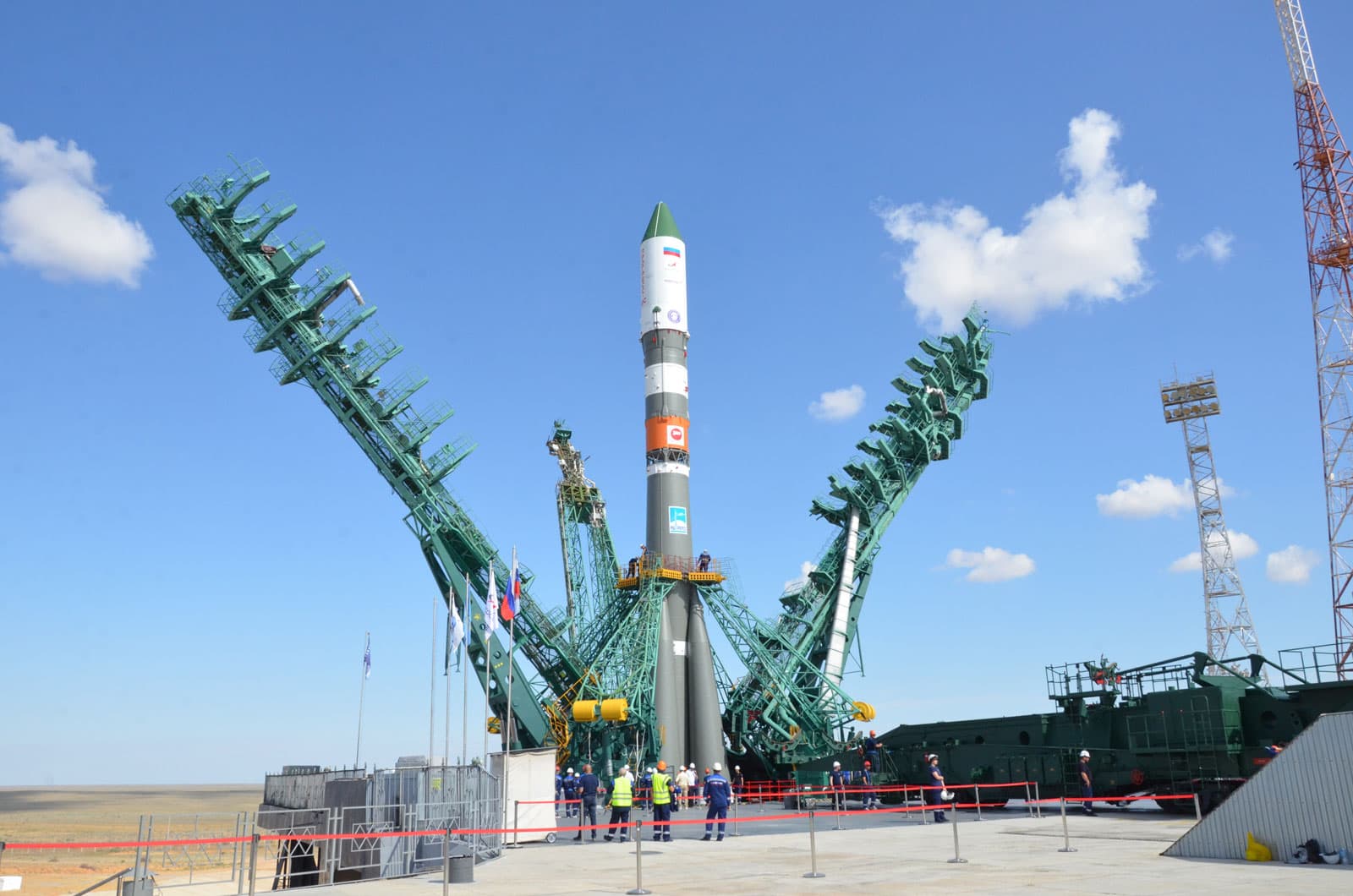
Source record
Your local time
Russian Federal Space Agency (ROSCOSMOS)
Baikonur Cosmodrome, Republic of Kazakhstan
Routine launch
Thirty-second brief
What is launching, why it matters, and what to watch.
Soyuz MS-29 sends human exploration toward Low Earth Orbit.
Soyuz MS-29 keeps ISS crew transportation running and continues the long-running Soyuz role in maintaining station access. The mission also carries NASA astronaut Anil Menon alongside Roscosmos crewmates Pyotr Dubrov and Anna Kikina, reflecting continued mixed-crew station operations.
Any Official Post-launch Mission Updates From Roscosmos Or NASA: Any Official Post-launch Mission Updates From Roscosmos Or NASA is one of the observable moments that can change how this mission should be interpreted. Crew Handover And The Roughly Eight-month ISS Stay Described In NASA Coverage: Crew Handover And The Roughly Eight-month ISS Stay Described In NASA Coverage is one of the observable moments that can change how this mission should be interpreted. Later Confirmation Of Mission Milestones Beyond Docking, Including Eventual Undocking And Landing In Kazakhstan: Recovery behavior matters for reuse economics, but landing is not the same as reflight.
Routine launch
Understand the mission behind the countdown.
The immediate objective: Roscosmos’ Soyuz 2.1a lifted off from Baikonur on 2026-07-14 at 14:47:43 UTC with Soyuz MS-29. Available source data shows a successful launch, nominal spacecraft operation, and same-day arrival at the International Space Station with docking recorded at 17:52 UTC.
The bigger story: A launch-specific customer or capability step.
What is genuinely new: Soyuz MS-29 is worth checking for the concrete mission cargo, customer, orbit, or vehicle step that differs from prior Russian Federal Space Agency (ROSCOSMOS) missions.
Why a non-expert might care: Soyuz MS-29 is relevant if the mission cargo performs the service or exploration task it was launched to attempt.
Boundaries
What success would not prove.
Launch success would not automatically prove mission cargo commissioning or final mission success.
Watch points
Moments that change the read.
Use the official watch link near the target time, and expect holds if the provider, range, or weather teams pause the count.
- Any Official Post-launch Mission Updates From Roscosmos Or NASA: Any Official Post-launch Mission Updates From Roscosmos Or NASA is one of the observable moments that can change how this mission should be interpreted.
- Crew Handover And The Roughly Eight-month ISS Stay Described In NASA Coverage: Crew Handover And The Roughly Eight-month ISS Stay Described In NASA Coverage is one of the observable moments that can change how this mission should be interpreted.
- Later Confirmation Of Mission Milestones Beyond Docking, Including Eventual Undocking And Landing In Kazakhstan: Recovery behavior matters for reuse economics, but landing is not the same as reflight.
- Whether This Flight Reinforces Soyuz 2.1a’s Steady Reliability In ISS Service: Whether This Flight Reinforces Soyuz 2.1a’s Steady Reliability In ISS Service is one of the observable moments that can change how this mission should be interpreted.
Where it fits
Past evidence, this mission, next follow-up.
This launch: Soyuz MS-29 sends human exploration toward Low Earth Orbit.
Next required milestone: spacecraft deployment, first contact, commissioning, and later mission result.
Strong evidence
Confirmed, interpreted, and still unknown.
Confirmed: Soyuz MS-29 is listed with Russian Federal Space Agency (ROSCOSMOS) as provider. Soyuz 2.1a is the listed vehicle. 31/6 is the listed launch site. Low Earth Orbit is the listed destination or orbit class.
Starman Nova interpretation: Soyuz MS-29 keeps ISS crew transportation running and continues the long-running Soyuz role in maintaining station access. The mission also carries NASA astronaut Anil Menon alongside Roscosmos crewmates Pyotr Dubrov and Anna Kikina, reflecting continued mixed-crew station operations. Soyuz MS-29 is worth checking for the concrete mission cargo, customer, orbit, or vehicle step that differs from prior Russian Federal Space Agency (ROSCOSMOS) missions.
Still unknown: Postflight findings, commissioning details, and later mission outcome still need official confirmation.
Deployment completed; operational result pending
Post-launch verdict.
Soyuz MS-29 has moved out of pre-launch watch and into outcome follow-up.
The launch layer can be separated from deployment, spacecraft health, commissioning, and mission success.
Still pending: Deployment confirmation, First contact, Commissioning, Final service or science result.
Reminder options
Track this launch
Save interest in this launch and join the briefing list for well-sourced schedule changes, webcast availability, and post-launch results.
Launch reminder
Save this specific launch so future schedule and status changes can be matched to your interest.
Recent coverage
Latest updates
Soyuz MS-29 launched successfully and reached the ISS the same day: Roscosmos’ Soyuz 2.1a lifted off from Baikonur on 2026-07-14 at 14:47:43 UTC with Soyuz MS-29. Available source data shows a successful launch, nominal spacecraft operation, and same-day arrival at the International Space Station with docking recorded at 17:52 UTC.
Soyuz MS-29 is go for a source-confirmed crew launch to the ISS: Roscosmos is targeting 2026-07-14T14:47:43Z for the Soyuz MS-29 crewed launch on a Soyuz 2.1a from Baikonur Site 31/6 to the International Space Station. Source data lists the launch as Go for Launch, with NASA coverage also published for astronaut Anil Menon’s first trip to space.
Published 2026-07-15.
Published 2026-07-14.
Next steps
Keep the roadmap in view
Get major space updates, set launch reminder interest, or keep exploring the Roadmap that turns space progress into a readable system.