
 Your Guide to Space
Vehicles
Rockets
Rocket pages focus on what each vehicle unlocks, what is proven, what remains in development, and which missions depend on it.
Compare what each vehicle is actually for: high-cadence operations, heavy-lift missions, national-security access, lunar exploration, small-payload control, or development programs trying to change reuse economics.
The important split is maturity. A vehicle that launches every week, a vehicle that has flown once, and a vehicle still in qualification can all matter, but they answer different questions for missions that depend on them.
Sources reviewed June 2026
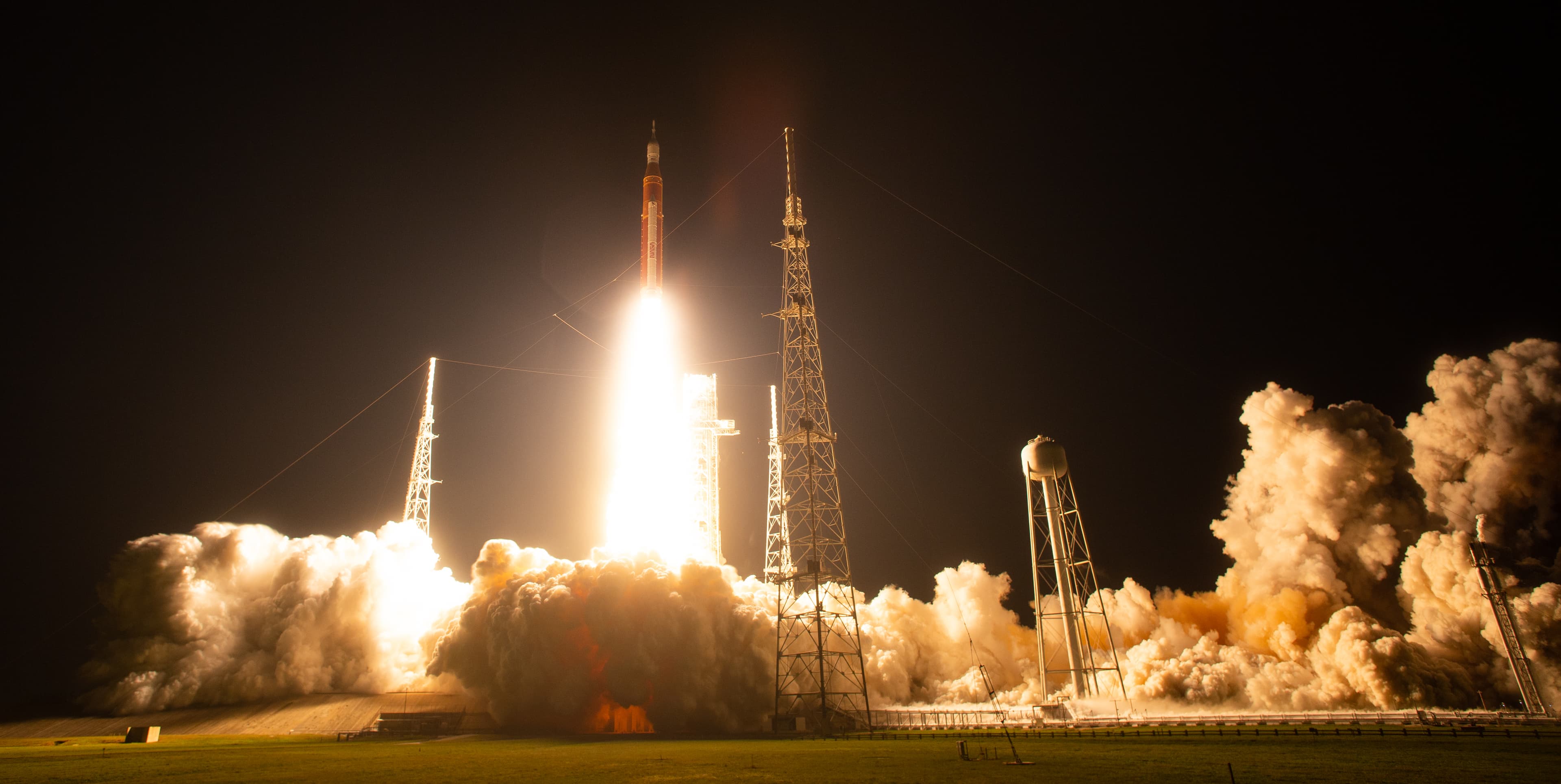
Rockets with well-sourced profile pages
Class, maturity, reuse posture, and mission dependency come before brand or renderings.
First flight, payload delivery, recovery, reflight, certification, and cadence move pages.
Comparison lenses
Compare rockets by the job each one can prove.
Rocket comparisons get noisy when every vehicle is treated as the same product. A small dedicated launcher, a lunar crew launcher, a national-security vehicle, and a full-reuse test campaign retire different risks.
These lenses keep the table grounded in evidence: what has flown, what has recovered hardware, what still needs certification, and which missions are waiting on the result.
Proven launchers set the market floor.
Falcon 9, Falcon Heavy, and Electron show what customers can already buy: payload delivery, repeat operations, mission integration, and anomaly discipline.
New systems have to prove recovery and cadence.
Starship, New Glenn, Neutron, Terran R, and Nova are easiest to read through proof gates: first flight, recovery, reflight, customer missions, and launch-site readiness.
Some rockets matter through mission assurance.
SLS, Vulcan, Ariane 6, Falcon Heavy, and New Glenn occupy high-energy, exploration, institutional, or national-security lanes where reliability and certification can outweigh simple cost-per-kilogram comparisons.
Payload class changes the question being asked.
Electron, Falcon 9, Falcon Heavy, Starship, and SLS are not points on one simple scale. Small launch buys schedule control, medium lift buys cadence, heavy lift buys high-energy margin, and super-heavy or exploration systems change mission architecture.
Compare peers before comparing ambitions.
Neutron and Terran R belong in the reusable medium-lift conversation; New Glenn and Falcon Heavy sit closer to heavy commercial and high-energy demand; Nova is best read beside other reuse experiments, not as a Falcon 9 replacement.
The real stakes are the missions waiting behind each rocket.
Artemis depends on SLS and Starship milestones, national-security access depends on Vulcan and Falcon-family certification lanes, constellations depend on cadence, and full-reuse claims depend on vehicles like Starship, New Glenn, Neutron, Terran R, and Nova clearing proof gates.
Start here
Featured Rockets
Start with the vehicles that define the current launch map: the operational benchmark, the full-reuse test campaign, heavy-lift competition, medium-lift challengers, and the Artemis crew-launch path.
Starship
Starship: Fully reusable super-heavy launch system under test for high-mass orbital transport, lunar logistics, Mars architecture, and Starlink deployment.
Open profile02New Glenn
New Glenn: Reusable heavy-lift rocket from Blue Origin built around BE-4 engines, a large fairing, and first-stage recovery.
Open profile03Falcon 9
Falcon 9: Operational partially reusable medium-lift rocket that made high-cadence commercial launch and booster landing routine.
Open profile04Neutron
Neutron: Reusable medium-lift rocket from Rocket Lab aimed at constellation deployment, national security, and commercial missions.
Open profile05Space Launch System
Space Launch System: NASA's expendable super-heavy Artemis rocket for launching Orion and crew beyond low Earth orbit.
Open profileVehicle directory
Rocket Comparison Table
Read this as a side-by-side scan, not a ranking. The table separates vehicle role from proven status so a routine Falcon 9 mission, a developmental Nova milestone, a national-security Vulcan flight, and an Artemis SLS launch are not treated as if they solve the same job.
| Rocket | Builder | Class | Reuse posture | Current status | Main use | Next milestone |
|---|---|---|---|---|---|---|
| StarshipOpen profile | SpaceX | super-heavy fully reusable launch system | designed for full booster and ship reuse; still proving repeated orbital operations | flight-test program under FAA review | Fully reusable super-heavy launch system under test for high-mass orbital transport, lunar logistics, Mars architecture, and Starlink deployment. | Watch FAA mishap-investigation closure, next-flight licensing, payload deployment, engine relight, ship reentry, booster recovery, orbital refueling, and launch-site cadence. |
| Falcon 9Open profile | SpaceX | partially reusable medium-lift rocket | operational first-stage booster reuse with expendable upper stage | high-cadence operations | Operational partially reusable medium-lift rocket that made high-cadence commercial launch and booster landing routine. | Watch booster flight counts, Starlink cadence, customer diversity, and rare anomaly handling. |
| Falcon HeavyOpen profile | SpaceX | heavy-lift Falcon-family rocket | side boosters can be recovered on some missions, while high-energy profiles can spend that margin and fly expendable | operational heavy-lift service | Heavy-lift Falcon family rocket for large payloads, high-energy missions, and missions needing more performance than Falcon 9. | Watch mission-by-mission booster recovery, direct-injection payloads, national-security and science awards, Starship customer migration, and competition from New Glenn and Vulcan. |
| New GlennOpen profile | Blue Origin | reusable heavy-lift rocket | reusable first stage designed for sea-based landing and repeated flights, with actual reflight still the proof gate | early operations and hotfire-repair watch | Reusable heavy-lift rocket from Blue Origin built around BE-4 engines, a large fairing, and first-stage recovery. | Watch recovered-booster reflight, NG-4 hotfire repairs, BE-4 performance, Amazon Leo and NSSL demand, seven-meter fairing utilization, and repeat customer missions. |
| NeutronOpen profile | Rocket Lab | reusable medium-lift rocket in development and first-flight watch | methane/oxygen reusable first stage with return-to-launch-site or downrange landing options and a captive Hungry Hippo fairing | development and first-flight watch | Reusable medium-lift rocket from Rocket Lab aimed at constellation deployment, national security, and commercial missions. | Watch Archimedes qualification, integrated stage tests, LC-3 flow, launch licensing, first flight, recovery attempt, and customer manifest evidence. |
| ElectronOpen profile | Rocket Lab | operational dedicated small-launch rocket | primarily expendable operational service with booster recovery and reuse experiments, not Falcon-style routine reuse | operational small launch | Operational small-launch rocket from Rocket Lab serving dedicated smallsat missions and reuse experiments. | Watch official launch-count updates, dedicated-launch demand, recovery experiments, Kick Stage/Photon mission services, Launch Complex 1 and 2 cadence, HASTE demand, and how Neutron changes Rocket Lab's customer mix. |
| Vulcan CentaurOpen profile | United Launch Alliance | certified expendable launch vehicle with high-energy Centaur V upper stage | not a reusable vehicle in current service; value centers on reliability, certification, domestic assured access, and Centaur performance | certified, anomaly-resolution watch | ULA's replacement for Atlas and Delta families, serving national-security, science, and commercial payloads with a Centaur upper stage. | Watch solid-rocket-booster corrective action, first post-pause national-security missions, Atlas transition, Centaur V high-energy performance, BE-4 supply, and Project Kuiper cadence. |
| Space Launch SystemOpen profile | NASA and contractors | government-owned expendable super-heavy Artemis exploration rocket | not reusable; the value case is certified crewed deep-space launch, not low-cost logistics | Artemis-proven, cadence-constrained | NASA's expendable super-heavy Artemis rocket for launching Orion and crew beyond low Earth orbit. | Watch Artemis II post-flight findings, Artemis III demonstration planning, SLS/Orion configuration decisions, Block 1B and Exploration Upper Stage posture, production flow, budget pressure, and commercial-heavy-lift alternatives. |
| Ariane 6Open profile | ESA, ArianeGroup, Arianespace, CNES, and European partners | European expendable medium-to-heavy launch vehicle | expendable system; strategic value is independent European launch access while reusable successors are still future decisions | operational, cadence still proving | Europe's expendable Ariane 5 successor, built by ArianeGroup for ESA and operated by Arianespace to restore sovereign launch access while serving institutional and commercial payloads. | Watch Ariane 62 and Ariane 64 cadence, P160C booster performance, Vinci upper-stage behavior, Amazon Leo and institutional manifest flow, pricing pressure from reusable competitors, and Europe's reusable-successor decisions. |
| Terran ROpen profile | Relativity Space | unflown reusable medium-to-heavy launch vehicle | reusable first-stage design target with downrange recovery; launch, recovery, refurbishment, and reflight proof remain ahead | unflown development; first-launch target remains schedule-risky | Relativity Space's unflown reusable medium-to-heavy launch vehicle, built after the Terran 1 pivot to compete for larger commercial and government missions. | Watch Aeon R acceptance testing, Aeon V qualification evidence, stage testing, LC-16 activation, FAA licensing, first-flight payload choice, recovery posture, and customer retention. |
| NovaOpen profile | Stoke Space | unflown fully reusable small/medium launch vehicle | 100% reusable design target, including reusable first stage, fairing, and upper stage; orbital recovery and reflight are not yet proven | unflown development; Stage 1 proto-qualification complete, upper-stage reuse still unproven | Stoke Space's unflown fully reusable launch vehicle, built around first-stage reuse, reusable fairing, and the much harder claim of upper-stage recovery. | Watch Stage 2 engine and heat-shield testing, Stage 1 integration, LC-14 operational readiness, FAA licensing, Celestis schedule posture, first orbital payload delivery, reentry, landing, refurbishment, and reflight. |
Five Ways to Evaluate a Rocket
Use these questions while reading the comparison table and the profile pages. They are the fastest way to separate a credible operational vehicle, a strategic government launcher, and an ambitious development program without reducing everything to payload mass or brand.
What job is the rocket meant to serve: dedicated small payloads, constellation deployment, heavy commercial cargo, crewed exploration, or high-energy institutional missions?
What has actually flown: payload delivery, recovery, reflight, crewed launch, certification flight, or only ground and stage testing?
Which parts are reusable, which parts are expendable, and has reuse changed cadence or cost rather than only produced a landing highlight?
Which missions depend on this vehicle staying on schedule: Artemis, Starlink, national security payloads, science probes, commercial stations, or new launch customers?
What would make the next update meaningful: first flight, clean payload deployment, recovered hardware, customer cadence, certification, or a public schedule reset?
Guides to Read Next
These explainers help translate the table into practical questions: how launches work, why recovery matters, what vehicle failures teach, and how the newest rockets compare with the proven baseline.
How Rocket Launches Work
How Rocket Launches Work: A countdown-to-orbit guide that explains weather, fueling, max Q, staging, fairings, orbit insertion, payload deployment, and scrub logic.
Reusable Rockets
Why Reusable Rockets Matter: A guide to booster reuse, ship reuse, refurbishment, launch cadence, cost evidence, and why landing is only one part of reusability.
Starship, New Glenn, Falcon, and Neutron
Starship, New Glenn, Falcon, and Neutron: A practical comparison of the rockets shaping the next launch market: what each is built for, how reusable it is, and which missions it can unlock.
Why Rockets Fail
Why Rockets Fail: A calm guide to engine failures, stage-separation issues, guidance problems, range safety, deployment anomalies, mishap investigations, and return to flight.
Next steps
Keep the roadmap in view
Get major space updates, set launch reminder interest, or keep exploring the Roadmap that turns space progress into a readable system.