
 Your Guide to Space
Guide
Do not compare rockets by size alone.
Starship, New Glenn, Falcon 9 and Falcon Heavy, and Neutron are built for different roles, maturity levels, payload classes, reuse methods, and customer paths. The useful comparison is what each vehicle has actually proven.
Compare role, maturity, cadence, reuse method, payload envelope, customer base, and dependency value before comparing headline payload numbers.
Sources reviewed June 2026

Different tools
The launch market needs several kinds of proof.
Falcon 9 is the operational cadence benchmark. Falcon Heavy extends that family into larger and higher-energy missions. Starship is the super-heavy full-reuse development bet. New Glenn is a reusable heavy-lift entrant. Neutron is Rocket Lab's attempt to scale from small launch into reusable medium lift.
The categories overlap, but they are not interchangeable. A large fairing, high-energy upper stage, high cadence, reusable first stage, full reuse, and customer certification solve different problems.
That is why vehicle diversity matters. It gives mission planners redundancy, pricing pressure, national capability, constellation options, lunar logistics paths, and station cargo possibilities.
Comparison axes
Use six questions before picking a winner.
What job is it built for?
Constellations, crew, cargo, lunar logistics, science, national security, and large station modules need different vehicle traits.
What has flown?
Flight history, customer payloads, recovery, upper-stage performance, and relaunch cadence are stronger than capability charts.
What must still work?
Recovery, refurbishment, certification, fairing volume, launch sites, production rhythm, and customer trust can all become bottlenecks.
Market evidence
A useful rocket wins missions, not arguments.
The public comparison should move from specs to manifest: which payloads fly, how often, under what recovery profile, with which customer, and with what post-flight evidence.
The comparison is a maturity spread: Falcon 9 is operational, Starship is in flight-test/development, New Glenn is early operations, and Neutron is pre-first-flight development.
Falcon 9 is the proven workhorse for Starlink, cargo, crew, and commercial launches.
Starship is designed around mass to orbit, refueling, lunar logistics, and Mars ambition.
New Glenn adds a large fairing and reusable first-stage heavy-lift competition.
Neutron targets a reusable medium-lift lane for constellations and government missions.
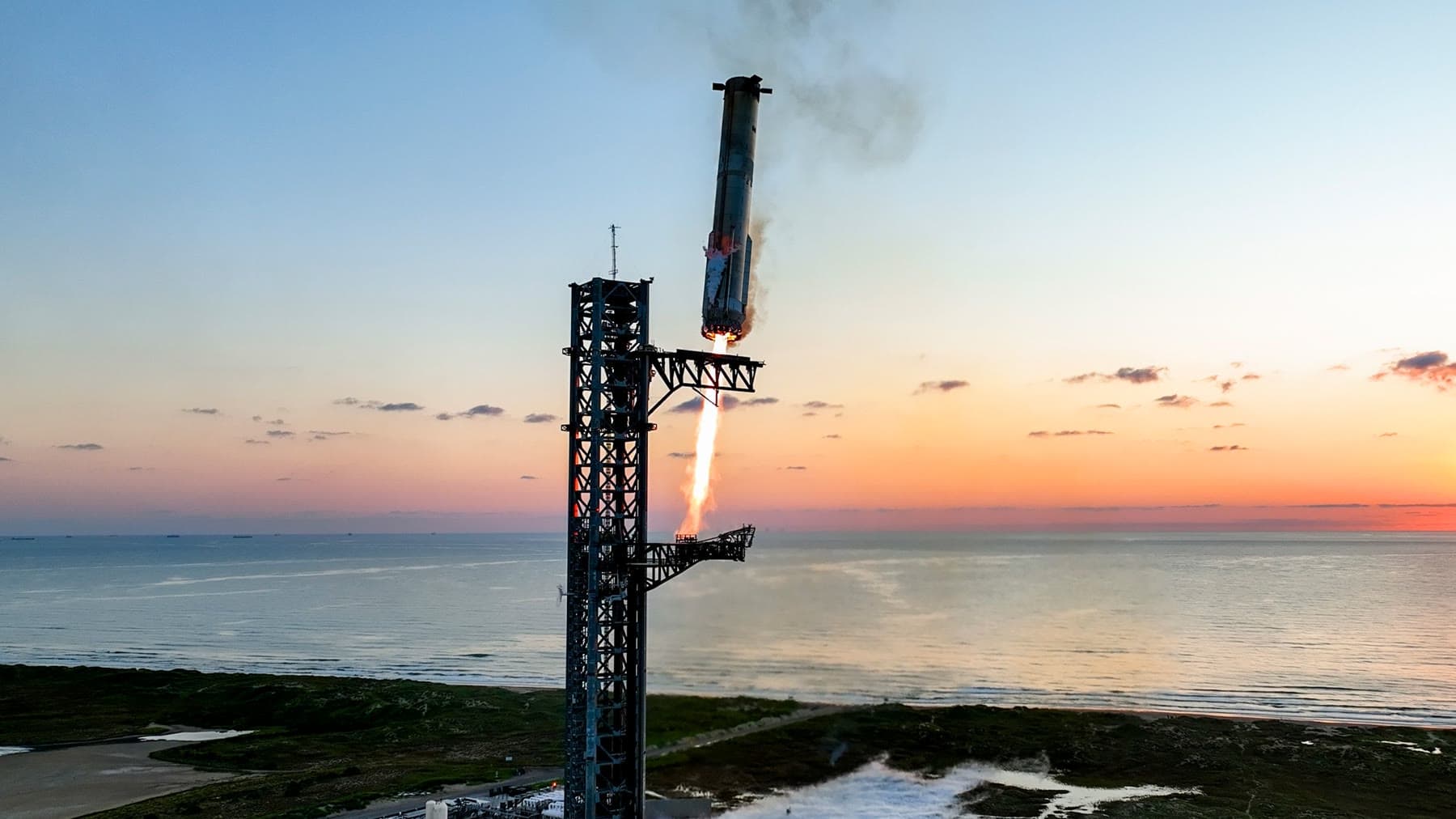
Why Starship dominates attention
Starship changes the question if full reuse works.
Starship's promise is not just more mass. It is a different assumption about how often large amounts of hardware, propellant, and cargo could move to orbit.
That promise remains tied to hard proof gates: payload deployment, ship recovery, booster and ship reflight, propellant transfer, tanker operations, and lunar-lander service.
How to follow it
Watch cadence, customers, and recovery evidence together.
The best comparison updates mention payload class, recovery plan, stage reuse, launch site, customer mission, certification status, and what the flight changed for the next vehicle in line.
Payload deployment and recovery proof
Customer mission classes
Reuse and turnaround evidence
Certification for high-value missions
How often each vehicle actually flies
Common traps
These shortcuts make the story less accurate.
Starship, New Glenn, Falcon, and Neutron headlines can make one milestone sound like a finished system. These distinctions keep the update tied to what was actually demonstrated, decided, or still missing.
Payload mass alone does not define usefulness.
Reusable architecture does not prove operational reuse.
A vehicle can be strategically important before it is routine.
Next steps
Keep the roadmap in view
Get major space updates, set launch reminder interest, or keep exploring the Roadmap that turns space progress into a readable system.