
 Your Guide to Space
Guide
Landing is the visible part. Reflight is the business case.
Reusable rockets matter when recovered hardware can be inspected, refurbished, accepted by customers, and flown again often enough to change cadence or cost. The landing shot is only the first piece of evidence.
Do not ask only whether the booster landed. Ask how long it takes to inspect, what gets replaced, who accepts reused hardware, and when the same stage flies again.
Sources reviewed June 2026
Why reuse matters
Reuse changes launch only when it becomes routine.
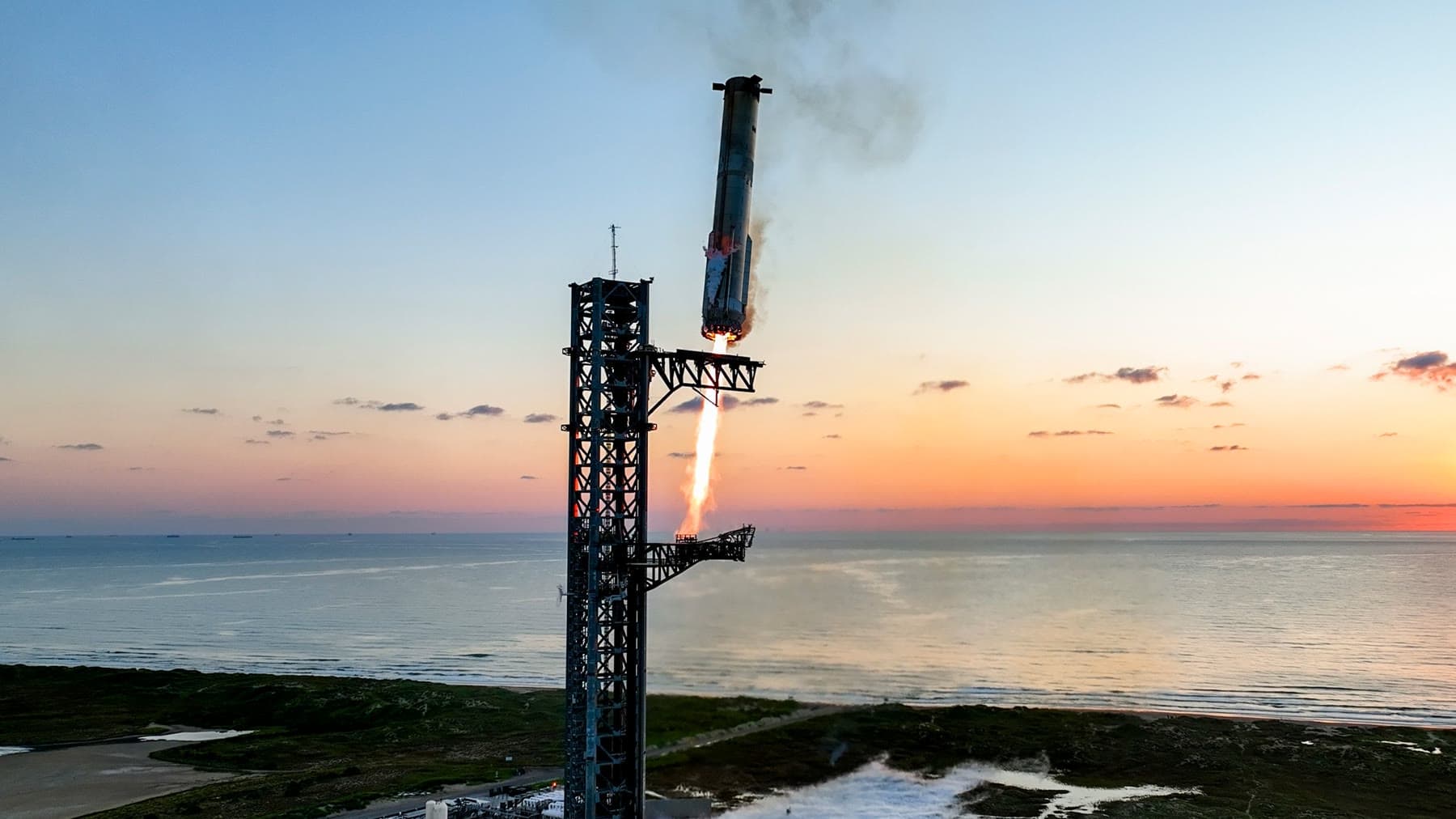
A recovered booster is impressive engineering, but it does not automatically prove cheaper or faster service. The operational prize is a vehicle that returns with enough confidence that teams can inspect it, refurbish it, and put it back on the manifest.
Falcon 9 made first-stage reuse an operating baseline. Starship, New Glenn, Neutron, Nova, and other systems are trying to extend that idea into larger payloads, different markets, or harder parts of the vehicle.
The hard distinction is partial versus full reuse. Recovering a first stage changes a lot. Recovering an upper stage or full ship at orbital energy is a different problem.
Operational reuse
Reusable launch has to clear three public tests.
Recover hardware intact
Landing or ocean recovery proves guidance, structures, thermal margins, and operations can bring hardware home.
Prepare it without drama
Inspection, refurbishment, engine checks, avionics work, and certification decide whether recovery actually saves time.
Fly it for customers
Reused hardware matters when payload owners, insurers, and mission planners trust it enough for regular service.
What counts
Cadence is the strongest public signal.
One landing can be a development milestone. Repeated reflight with measured turnaround, diverse customers, and fewer special exceptions is what turns reuse into infrastructure.
First-stage reuse is proven commercially by Falcon 9. Full-system and upper-stage reuse remain development frontiers until repeated orbital recovery and reflight are demonstrated.
Falcon 9 is the operational first-stage reuse benchmark.
Starship targets full and rapid reuse, which is a harder proof burden.
New Glenn and Neutron show reusable first stages spreading into other vehicle classes.
Nova is a smaller vehicle focused on the hard upper-stage reuse problem.

Beyond Falcon
The next question is whether reuse spreads across classes.
New Glenn and Neutron matter because they test reusable first-stage ideas outside Falcon 9's mature lane. Starship matters because it raises the proof burden to full-system reuse.
That competition is useful only if the vehicles reach missions, recovery, refurbishment, and reflight. Until then, architecture should be treated as promise, not operating fact.
How to follow it
Track the same hardware across flights.
The most useful updates name the booster or vehicle, its reflight count, turnaround interval, refurbishment notes, payload class, recovery method, and customer acceptance.
Booster turnaround time
Reflight count per vehicle
Upper-stage recovery evidence
Customer use of reused hardware
Whether new reusable vehicles reach cadence, not just first flight
Common traps
These shortcuts make the story less accurate.
Why Reusable Rockets Matter headlines can make one milestone sound like a finished system. These distinctions keep the update tied to what was actually demonstrated, decided, or still missing.
Reusable does not always mean fully reusable.
Landing once does not prove low-cost operations.
Provider cost and customer price are not the same thing.
Next steps
Keep the roadmap in view
Get major space updates, set launch reminder interest, or keep exploring the Roadmap that turns space progress into a readable system.