
 Your Guide to Space
Guide
A good launch watch starts before the stream goes live.
The best viewers know the mission purpose, launch window, official source, weather and range constraints, rocket milestones, payload success criteria, and what confirmation should look like after liftoff.
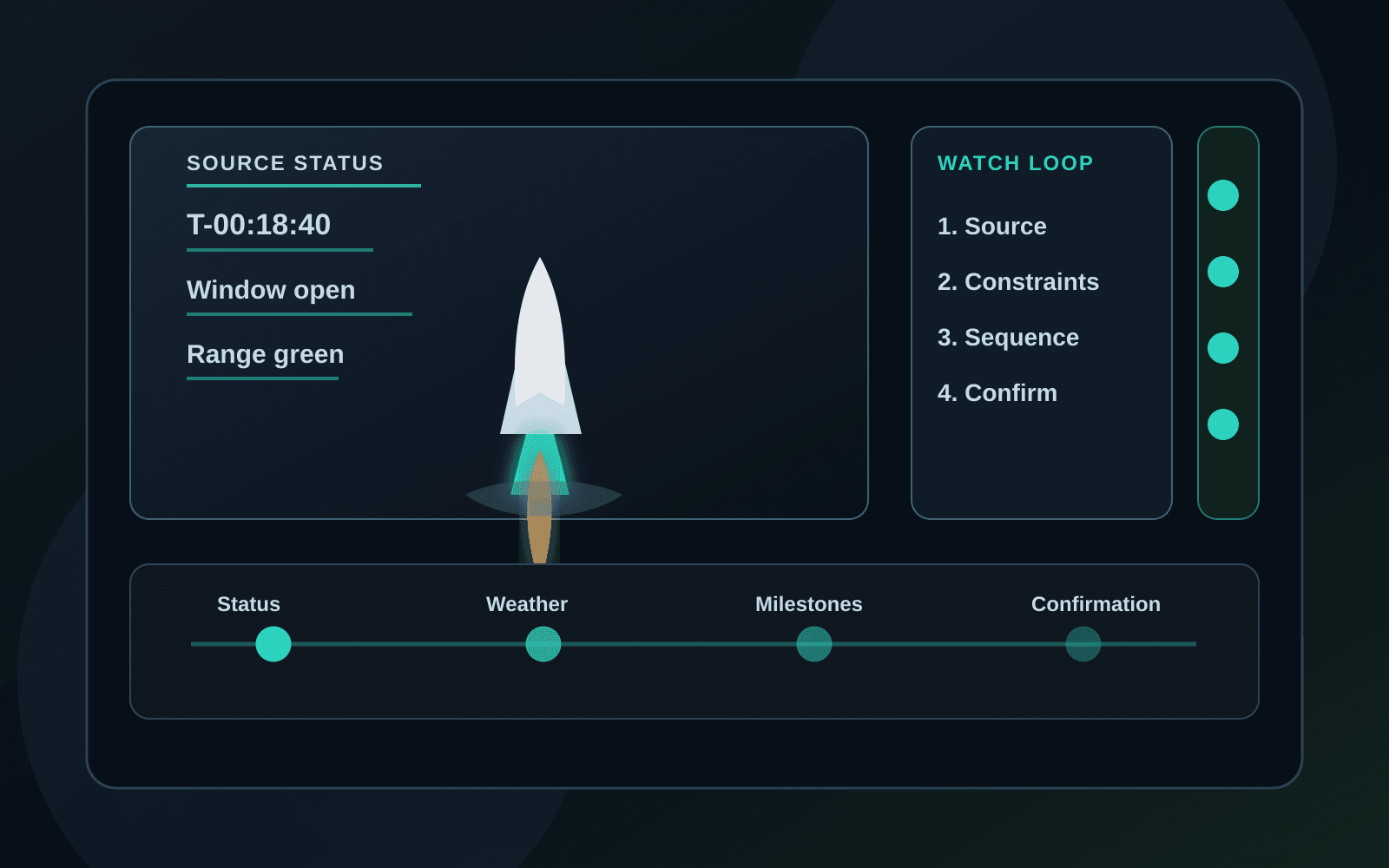
Use a simple loop: source, status, constraints, timeline, success event, post-launch confirmation.
Sources reviewed June 2026
Launch day
Know what the mission is trying to prove.
A rocket launch is easier to enjoy when you know what success means. Some missions prove a vehicle, some deploy satellites, some carry cargo or crew, and some begin a long cruise to another world.
Before liftoff, check official source status, target time, window length, weather probability, range constraints, rocket, payload, and destination. That context makes holds and scrubs less confusing.
After liftoff, follow the sequence that matters for this mission. A booster landing can be exciting while the payload still has hours of work ahead.
Launch watch loop
Use three passes through the same mission.
Before liftoff
Mission, rocket, provider, launch site, window, weather, range, payload, destination, and official source.
During ascent
Ignition, liftoff, max Q, staging, fairing separation, upper-stage burns, landing, and callouts specific to the vehicle.
After the show
Payload deployment, orbit confirmation, docking, spacecraft acquisition, mission customer update, or anomaly statement.
What counts
The most important moment may happen after the webcast peak.
A launch can look spectacular while the mission still depends on deployment, docking, upper-stage disposal, spacecraft signal acquisition, or later insertion burns.
Launch webcasts and trackers make launches easier to follow, but official streams and well-sourced schedule pages should stay the primary reference.
Official status
Start with the operator, agency, mission owner, range, or trusted launch tracker. A social clip is not a schedule source by itself.
Constraint check
Weather, range, vehicle, payload, ground systems, launch window, and backup opportunities explain many holds and scrubs before anything has gone wrong.
Mission sequence
Follow the events that matter for this rocket and payload: max Q, staging, fairing separation, upper-stage burns, landing, coast, docking, or deployment.
Confirmation
Wait for orbit insertion, payload deployment, signal acquisition, docking, recovery, or a mission-owner statement before calling the mission complete.
Spectacle and status
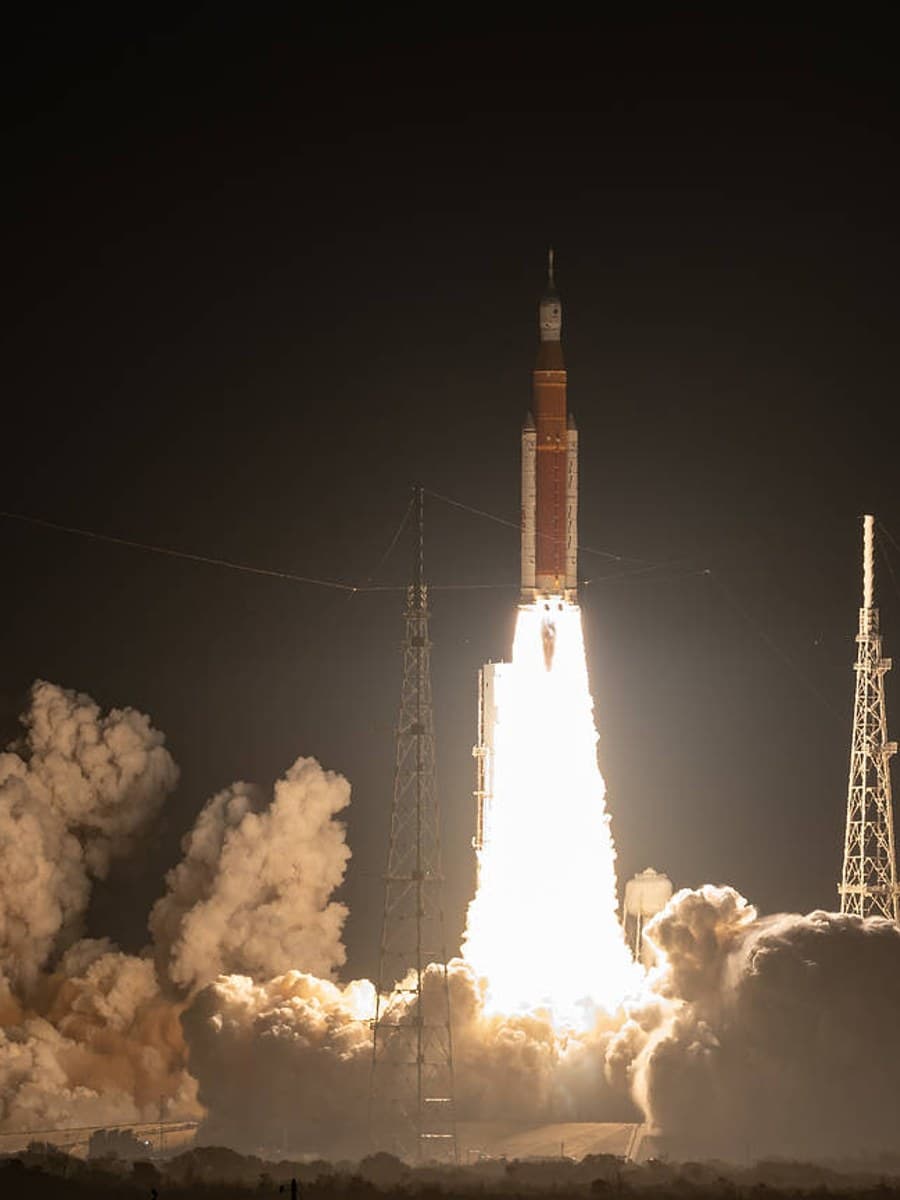
Treat the visual moment as one source, not the verdict.
Use the provider stream for visuals, a launch tracker for schedule context, the mission customer for payload status, and regulator or range sources when safety or mishap questions appear.
A clean liftoff image is still not the whole result. The mission may depend on later burns, separation events, docking, spacecraft acquisition, or a customer update after the public stream ends.
How to follow it
Build the launch into a short checklist.
Track official stream timing, window length, weather and range status, vehicle milestones, payload deployment, landing attempts, and post-launch confirmation from the mission owner.
Official webcast timing
Launch window length
Weather probability and range status
Mission-specific deployment or docking event
Post-launch confirmation
Common traps
These shortcuts make the story less accurate.
How to Watch a Rocket Launch headlines can make one milestone sound like a finished system. These distinctions keep the update tied to what was actually demonstrated, decided, or still missing.
A delayed launch is not automatically bad.
The most dramatic visual moment may not be the mission's key milestone.
Unofficial streams can be useful, but source status should come first.
Next steps
Keep the roadmap in view
Get major space updates, set launch reminder interest, or keep exploring the Roadmap that turns space progress into a readable system.