
 Your Guide to Space
Rocket profile
Terran R is Relativity's serious second act, not a flown Falcon 9 rival.
Terran R is Relativity Space's unflown reusable medium-to-heavy launch vehicle, built after the company moved past Terran 1 and aimed at larger commercial, constellation, and government missions. The right read is neither dismissal nor hype: real hardware is moving, but launch, payload delivery, recovery, refurbishment, reflight, and cadence are still ahead.
Terran R tests a hard launch-market question: can a newer company turn manufacturing ambition, one small-rocket flight lesson, and a stronger medium/heavy design into a service customers trust beside Falcon 9 and emerging reusable competitors?
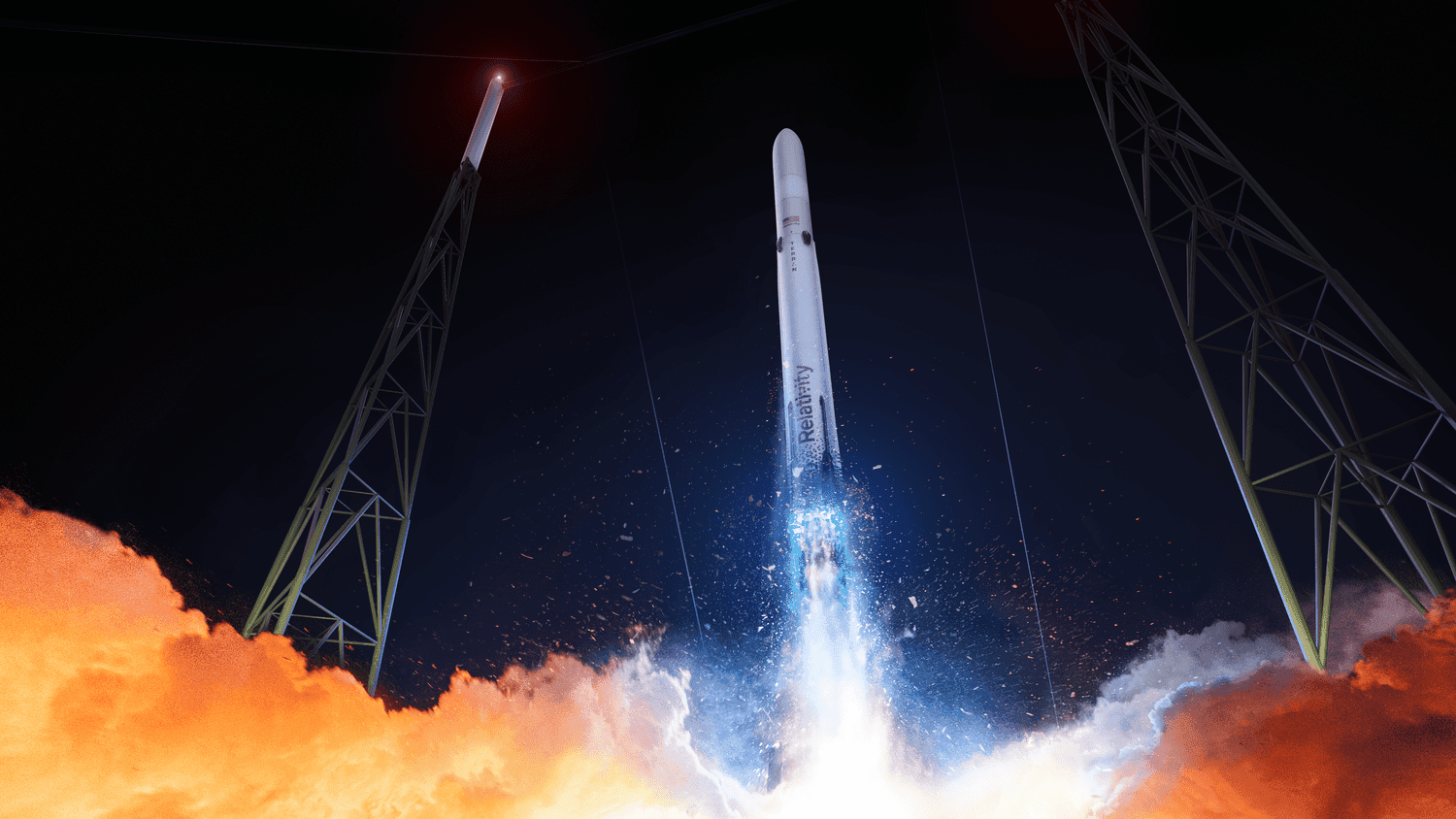
Relativity has Terran 1 flight experience, completed Terran R design milestones, and 2026 updates showing flight-part releases, stage work, Aeon engine testing, second-stage shipment, and LC-16 construction.
Terran R has not launched. The vehicle still has to clear first flight, payload delivery, booster recovery, refurbishment, reflight, customer schedule confidence, licensing, and production rhythm.
If Terran R works, it adds another reusable launch lane for large satellites and constellations. If it slips, it shows how hard it is to catch an operational benchmark after the first vehicle pivot.
What it is for
Terran R is built for the market Terran 1 could not serve.
Terran 1 made Relativity visible, but it was never the scale of vehicle most constellation operators, telecom customers, and government buyers need for routine medium/heavy launch. Terran R is the larger answer: a two-stage rocket aimed at payload classes where schedule, price, mass, fairing volume, and customer confidence matter more than novelty.
That pivot is the story worth understanding. Relativity still uses additive manufacturing where it helps, especially in propulsion and complex parts, but Terran R is not simply a bigger "3D-printed rocket." The public program now reads more like industrial launch execution: engines, tanks, avionics, friction-stir-welded aluminum, ground systems, acceptance testing, and pad activation.
The result is a serious development program with a serious proof gap. Terran R can matter before it flies because customers and competitors plan around future capacity, but it only changes the launch market once the vehicle starts turning those plans into successful missions.
Capability and architecture
The vehicle is Falcon-class ambition with startup proof gates.
Two-stage methane vehicle
Relativity describes Terran R as a two-stage reusable launch vehicle with a methane/oxygen first stage powered by 13 Aeon R engines and a vacuum-optimized upper-stage engine.
First-stage recovery target
The first-stage plan includes grid fins, landing legs, relight, thermal protection, and offshore recovery. None of that should be treated as operational reuse until recovery, refurbishment, and reflight happen in public service.
Published performance goals
Relativity's 2023 architecture update put Terran R in a meaningful medium/heavy class, with reusable LEO and GTO payload targets and a heavier expendable option. Those are published targets, not demonstrated performance.
Factory, test, and pad chain
The program links Long Beach manufacturing, NASA Stennis engine and stage testing, and Launch Complex 16 at Cape Canaveral. That industrial chain is as important as the rocket rendering.
Current status
Development is moving from factory proof toward test-site proof.
Relativity's recent official updates show a program that has moved beyond presentation decks. March and April 2026 updates described thousands of flight-part releases, first-stage and second-stage work, Aeon R engines for flight one being manufactured and shipped, Aeon R acceptance testing, and Aeon V upper-stage engine duty-cycle and endurance work.
The May 2026 update is especially useful because it moves the story downstream: the integrated second stage departed Long Beach for NASA Stennis, Aeon R acceptance testing continued, Aeon V qualification reached flight-one service-life and start milestones, and qualification-test preparations advanced for stage one.
At LC-16, the same update says the water tower reached final height and launch-table, lightning-protection, pad-support, and transporter-erector work continued. That is launch-site readiness evidence. It is not yet launch evidence.
Development history
The pivot is the point.
2023: Terran 1 pivot
Terran 1 gave Relativity a real flight attempt and data, but the company chose not to turn that smaller vehicle into its operating product.
2024-12: vehicle-level CDR
Relativity said Terran R completed vehicle-level critical design review, a design-closure milestone that matters before flight production and qualification testing.
2025-03: production milestones
The 2025 development update made the program more concrete with hardware, manufacturing, engine, and test milestones rather than only vehicle architecture.
2026-03 to 2026-05: monthly hardware updates
March, April, and May updates describe flight-part releases, stage-one and stage-two work, Aeon R acceptance, Aeon V progress, second-stage shipment, and LC-16 readiness work.
Late 2026: target, not guarantee
Relativity's first-launch language remains a target. The next history entry has to be a vehicle event: stage test, pad-ready campaign, licensing, first payload, launch, or recovery attempt.
What to watch next
Follow the gates that turn development into launch service.
Aeon R integration
The first stage needs flight engines that move from acceptance testing into thrust-structure integration and vehicle operations.
Second-stage testing
Upper-stage reliability decides whether a launch becomes useful after liftoff, so Stennis stage testing and Aeon V qualification evidence matter as much as booster progress.
Stage-one qualification
Terran R has to graduate from parts and assemblies to a vehicle that survives real load cases, structural qualification, and full-stage integration.
LC-16 and licensing
A rocket program is not close to flight until pad activation, range readiness, procedures, and public approvals converge.
First payload and recovery posture
A test mission that prioritizes orbit tells a different story from one that also attempts booster recovery.
Customer retention
A launch-service backlog matters most when it survives the uncomfortable stretch between contract announcement and flight.
Next steps
Keep the roadmap in view
Get major space updates, set launch reminder interest, or keep exploring the Roadmap that turns space progress into a readable system.