
 Your Guide to Space
Company profile
Relativity is betting the company on Terran R.
Terran 1 gave Relativity real flight lessons, then the company retired it and moved the thesis to Terran R. The question now is whether additive manufacturing and Aeon R engines can become reliable reusable launch service.
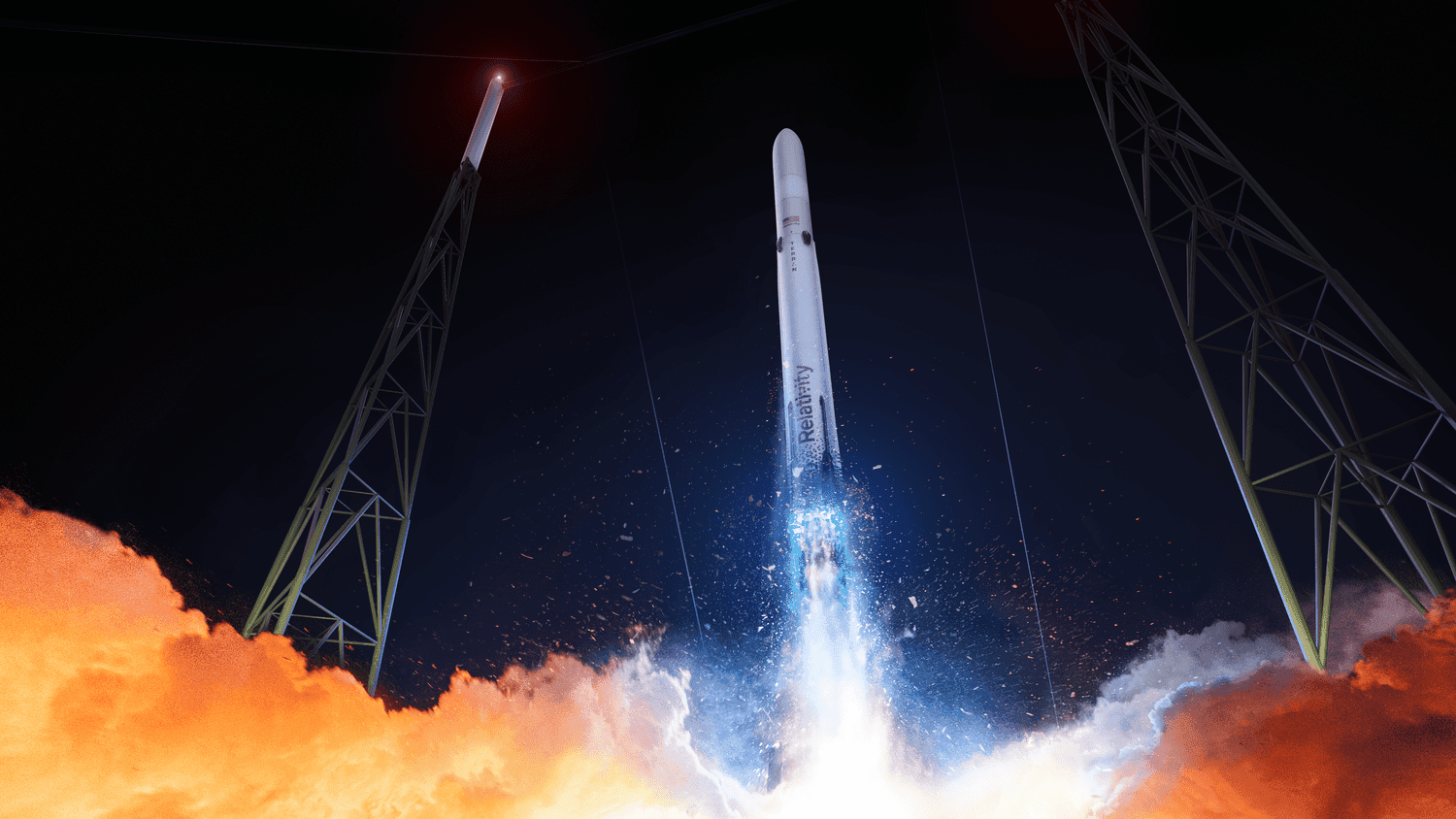
Separate lessons from service. Terran 1 proved the company could reach flight; Terran R still has to prove hardware, launch, customers, payload delivery, and eventually reuse.
Relativity reached flight with Terran 1 and gathered real vehicle data, but that vehicle was retired instead of becoming an operating service.
Aeon R, stage hardware, LC-16, licensing, first flight, payload delivery, recovery, and reflight all remain proof gates.
Relativity matters if additive manufacturing turns into a real launch advantage rather than only a distinctive factory story.
Why it matters
A pivot can be smart; it still has to fly.
Relativity matters as one of the clearest examples of a startup changing strategy after real flight evidence. Terran 1 proved pieces of the 3D-printing story and reached max-q, then the company retired it after one flight and moved its entire thesis to Terran R.
That pivot is what makes the profile useful: Relativity is not an operating launch provider yet. It is a test of whether manufacturing, engine development, and a reusable design can converge into a real alternative in a crowded market. The distinction that matters is between lessons and service — Terran 1 supplied lessons; Terran R still has to supply flights.
Active programs
Terran R carries the vehicle, factory, engine, and market story.
Terran R is the key vehicle — Relativity's shift from a small experimental rocket to reusable medium-to-heavy launch. Aeon R engines are the propulsion proof lane, and Long Beach manufacturing is where the 3D-printing thesis has to pay off in speed, cost, or iteration.
LC-16 and launch-site readiness are the operations lane, and customer agreements are the market lane — real only if customers stay committed through development.
Current status
Development milestones are useful; launches decide the status.
Terran R is the company-making program, and it is developmental. Relativity describes a reusable architecture, Aeon R engine work, and customer agreements, but there is no operational launch record yet.
Customer deals like the Intelsat agreement are seriousness signals, not proof of service — they show demand if the rocket arrives. The additive-manufacturing strategy only matters if it becomes a real operating advantage in vehicle cadence, not just positioning.
Watch points
The milestones that would move Terran R beyond renderings.
Watch Aeon R tests and stage hardware for evidence the vehicle is becoming physical. Watch LC-16, range, and licensing, because launch readiness is more than factory progress.
Watch customer commitments survive schedule changes into real manifest slots, and watch the first flight and — separately — reuse, which is where the full strategic claim ultimately rests.
How it got here
Terran 1 flew once, reached max-q, and was retired as Relativity shifted fully to Terran R.
Terran R is the company's main reusable launch bet and remains unflown.
Relativity has announced customer agreements and development milestones, but those are not operational launch proof.
Additive manufacturing remains part of the story only if it improves operations, cost, cadence, or vehicle iteration.
Next steps
Keep the roadmap in view
Get major space updates, set launch reminder interest, or keep exploring the Roadmap that turns space progress into a readable system.