
 Your Guide to Space
Rocket profile
Vulcan is the conservative rocket that still matters.
Vulcan Centaur is United Launch Alliance's Atlas and Delta successor: an expendable, BE-4-powered launch vehicle built for national-security payloads, civil science, commercial missions, high-energy orbits, and customers who prioritize mission assurance over launch spectacle.
Reuse is not the only way a rocket can matter. Vulcan's job is assured access: certified domestic launch, high-energy upper stage work, protected payload processes, and enough reliability that national-security customers trust it with high-consequence missions.
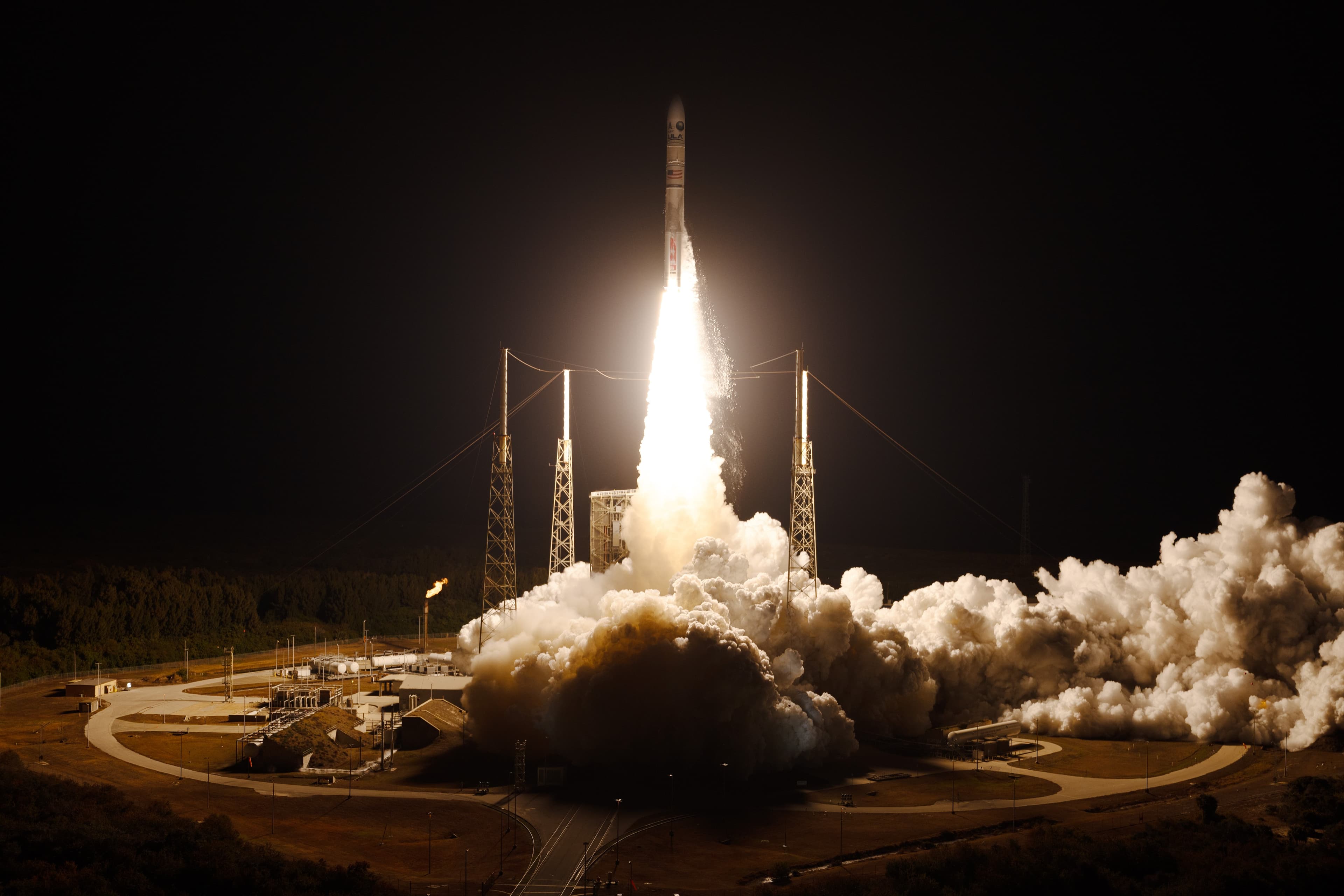
ULA says Vulcan cleared National Security Space Launch certification after its certification flights, and USSF-87 showed the vehicle in the role it was built to serve.
Certification does not equal routine cadence. Reported solid-booster issues after certification make corrective action and return-to-NSSL rhythm the public watch item.
The U.S. launch system is healthier when critical national-security, science, and commercial payloads have more than one trusted path to orbit.
What it is for
Vulcan is a mission-assurance vehicle first.
Vulcan is easy to underrate in a launch market fascinated by landings. It is not trying to be Falcon 9, Starship, New Glenn, or Neutron. It is ULA's one-family replacement for Atlas V and Delta IV, built around certified launch processes, domestic supply chains, high-energy delivery, and the kind of conservative mission planning government customers often require.
That does not make it a legacy footnote. National-security payloads, weather satellites, civil science missions, and commercial customers with difficult orbit needs can care more about mission assurance and upper-stage performance than about the lowest headline cost per kilogram.
Vulcan is not the reuse story. It is the redundancy, certification, and precision-delivery story.
Capability and architecture
The upper stage is the part to notice.
Two Blue Origin BE-4 methane engines power the first stage, linking Vulcan's reliability story to the same engine ecosystem that also matters for New Glenn.
Optional GEM 63XL solid rocket boosters let ULA scale Vulcan for different payload masses and orbital-energy demands.
Centaur V, with RL10 upper-stage engines, is the high-energy differentiator. For direct injection and complex orbits, the upper stage can matter as much as the booster.
Vulcan is expendable in current service. Historical SMART reuse concepts are not the public proof story; certification and delivery are.
Current status
Certified, flying, and still earning operating rhythm.
Vulcan's first flight sent Astrobotic's Peregrine lander toward the Moon in January 2024; the rocket side of that mission succeeded even though Peregrine later failed. A second certification flight then supported ULA's path to National Security Space Launch certification.
ULA's March 2025 certification announcement makes Vulcan an accepted national-security launch vehicle. USSF-87 then put that role on display with a direct-to-GEO defense mission.
The caveat is cadence confidence. ULA and secondary reporting describe solid-booster anomaly work after certification-era flights, and Space Force pause reporting makes corrective action the public watch point before treating Vulcan as routine.
Flight history
The transition story is bigger than one liftoff.
Vulcan development grew from a strategic need: retire Atlas and Delta heritage while removing reliance on the Russian-built RD-180 engine that powered Atlas V.
The Peregrine flight proved the new vehicle could perform a real lunar-transfer mission, even though the customer spacecraft did not complete its own objective.
Certification flights and the March 2025 NSSL decision moved Vulcan from new rocket into national-security launch provider status.
USSF-87 showed the mission lane, while the reported booster issue after flight shows why anomaly response is part of the product for high-value launches.
What to watch next
Watch whether certification becomes rhythm.
Solid-booster corrective action and Space Force confidence after reported pause coverage, because national-security payloads require evidence, not optimism.
The first clean sequence of post-certification NSSL missions. A certified rocket becomes a trusted workhorse through repeat delivery.
Atlas V retirement and manifest transfer. Vulcan has to absorb heritage demand without turning ULA's backlog into a bottleneck.
Project Kuiper and BE-4 supply. Commercial constellation demand and engine production can stress the same system that national security relies on.
Next steps
Keep the roadmap in view
Get major space updates, set launch reminder interest, or keep exploring the Roadmap that turns space progress into a readable system.