
 Your Guide to Space
Rocket profile
Falcon Heavy is the bridge rocket for high-energy missions.
Falcon Heavy is SpaceX's operational heavy-lift rocket: three Falcon-derived first-stage cores, 27 Merlin engines at liftoff, and enough performance for missions that need more mass or energy than Falcon 9 can comfortably provide.
Do not judge it by launch count alone. Falcon Heavy flies less often because its job is narrower: large spacecraft, national-security payloads, and high-energy trajectories where performance and mission assurance matter more than weekly cadence.
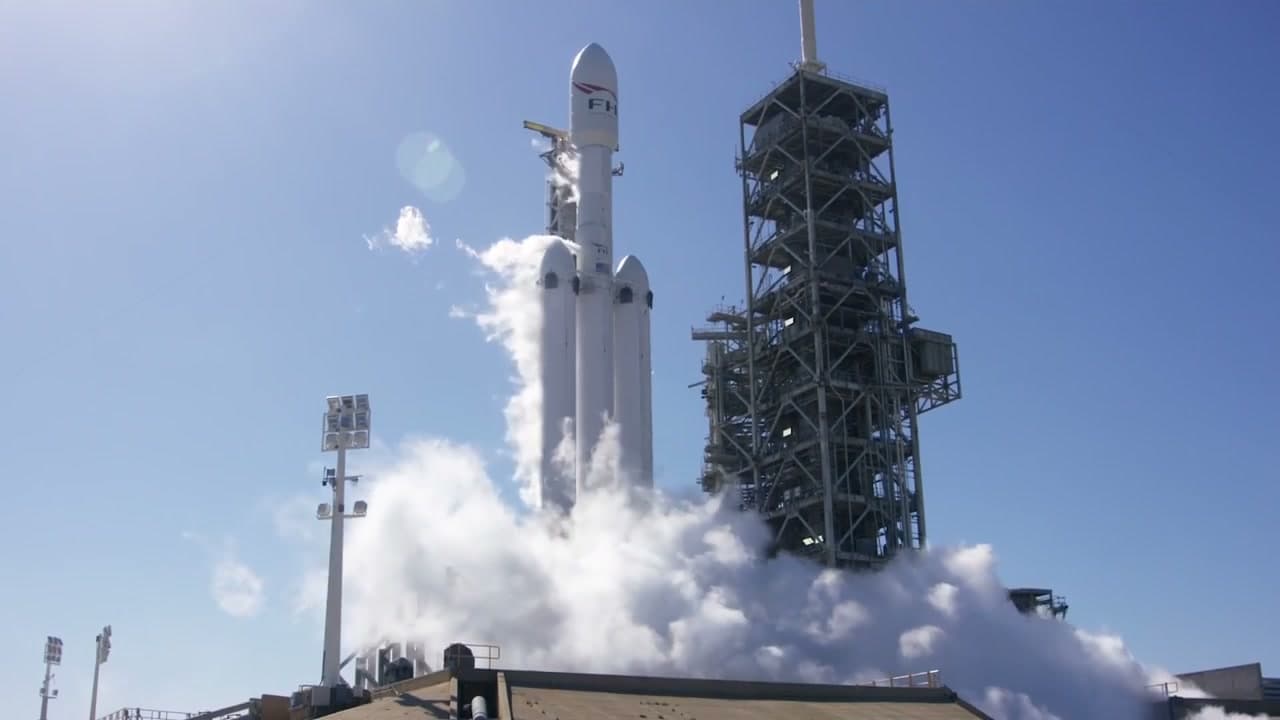
Falcon Heavy has moved beyond demonstration into a real service lane for high-value commercial, civil, national-security, and science payloads.
Side boosters can return on some missions, but demanding trajectories can spend recovery margin to buy more payload energy.
Starship and New Glenn may change the market, but Falcon Heavy is the well-sourced heavy-lift option customers can already select.
What it is for
Heavy lift is not one market.
Falcon Heavy exists for missions that need more than Falcon 9's usual lane: large satellites, direct-injection profiles, deep-space science, high-energy national-security payloads, and spacecraft that benefit from extra margin.
The three-core design is easy to summarize and hard to execute. SpaceX can reuse Falcon-family hardware and operations, but a heavy vehicle still has to manage structure, aerodynamics, 27-engine control, side-booster separation, center-core loads, and a mission plan that may prioritize energy over recovery.
That makes Falcon Heavy a useful bridge. It does not replace Falcon 9, and it does not make Starship unnecessary. It fills the gap for customers who need high-energy performance before a newer super-heavy system has the same mission-assurance record.
Capability and reuse
The mission decides how reusable the rocket can be.
Three Falcon-derived first-stage cores give Falcon Heavy its lift, but the center core faces the hardest return environment because it stages faster and farther downrange.
Side-booster landings are the visible reuse win when performance margins allow, especially on missions that do not need every bit of available energy.
The upper stage is expendable, and demanding trajectories can require an expendable booster profile. The payload destination can matter more than recovering hardware.
Lower cadence is part of the product shape. Heavy-lift payloads are less common, more bespoke, and often more sensitive to mission assurance than routine constellation launches.
Current status
Operational, selective, and still strategically useful.
Falcon Heavy is active heavy-lift service, not a concept vehicle. SpaceX's vehicle page and launch index, the Falcon user's guide, and NASA launch-service material make the durable public posture clear: Falcon Heavy is a proven option when a mission needs more performance than Falcon 9.
The caveat is specificity. Exact manifests, booster recovery plans, payload mass, insertion targets, and customer selection can change mission by mission. Treat those as current-status details to refresh near publication rather than evergreen facts.
Falcon Heavy remains relevant because space customers do not only buy raw lift. They buy proven integration, schedule confidence, energy to destination, and a rocket family with an operating record.
Flight history
From spectacle to high-value service.
The 2018 demonstration flight made Falcon Heavy public and memorable, but the more important lesson was that a three-core Falcon-family rocket could reach orbit and recover side boosters.
Commercial and U.S. government missions after the demo moved the vehicle from one-time spectacle into a mission-assurance lane.
Science and high-energy payloads, including Europa Clipper-class missions, show why customers sometimes need performance that sits above Falcon 9.
Its long-term role will be decided by customer comfort with Starship, New Glenn, Vulcan, and the continuing need for proven high-energy launch.
What to watch next
The proof is in the mission profile.
For each Falcon Heavy launch, check whether the side boosters, center core, or all cores are planned for recovery or expendable use.
Watch NASA, national-security, and high-energy commercial awards. Customer selection is the best evidence of mission-assurance confidence.
Track how Starship maturity changes demand. Falcon Heavy's niche shrinks only when customers trust a newer vehicle for comparable missions.
Compare New Glenn and Vulcan cadence against Falcon Heavy's selective manifest, especially for missions where direct insertion and schedule certainty matter.
Next steps
Keep the roadmap in view
Get major space updates, set launch reminder interest, or keep exploring the Roadmap that turns space progress into a readable system.