
 Your Guide to Space
Company profile
SpaceX made launch cadence the new scoreboard.
Falcon 9 and Dragon are already part of the spaceflight operating system. Starship is the much harder bet: a test campaign that could change how much mass humanity can move to orbit, the Moon, and eventually Mars.
Separate the proven machine from the unfinished leap. Falcon cadence is today's evidence; Starship reuse, refueling, and lunar operations are the proof gates that decide how far the roadmap can stretch.
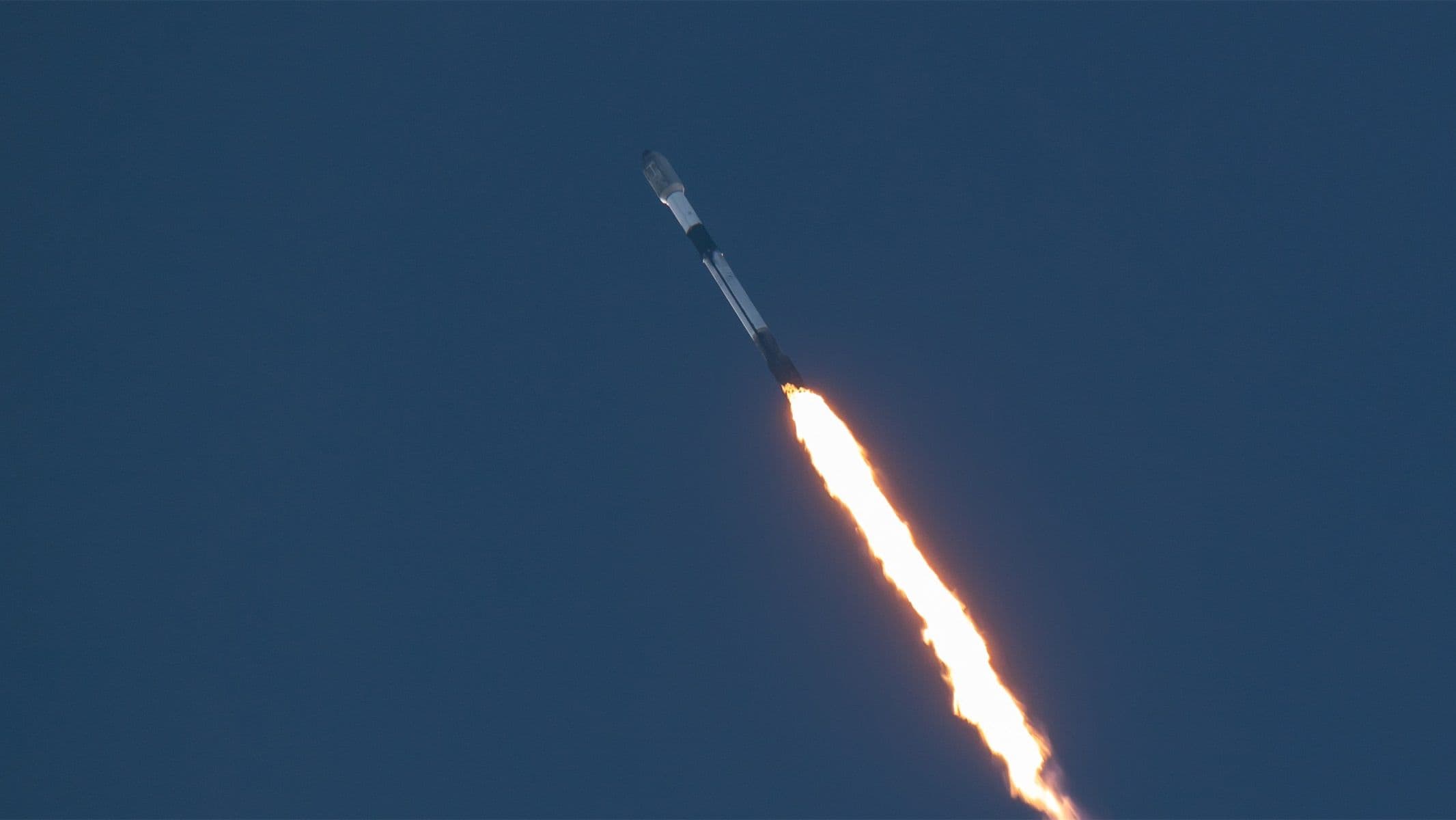
Operational cadence, booster reuse, NASA crew and cargo service, Starlink deployment, and commercial missions make SpaceX the launch baseline today.
Full reuse, ship recovery, payload deployment, engine relight, propellant transfer, and lunar-lander operations remain the hard gates.
SpaceX matters when frequent launch and larger vehicles make the Moon, Mars, stations, and constellations less constrained by mass.
The quick read
SpaceX: the quick read.
A few fast facts to get oriented before the deeper story on what it builds, what still has to work, and where it is headed.
Reusable launch, crew and cargo spacecraft, Starlink, lunar logistics, and deep-space vehicle development.
Where the work happens
Watch Starship tests, Falcon reuse cadence, Starlink direct-to-device, Dragon missions, and NASA HLS milestones.
Recent developments
Latest on SpaceX
NASA Selects Starlink for Artemis III Mission
NASA has awarded SpaceX a contract to deliver laser communications capabilities for its Artemis III mission using Starlink. The post NASA Selects Starlink for Artemis III Mission.
Starship hardware is progressing; flight status is still the real gate
Recent coverage centered on SpaceX’s 33-engine Super Heavy static fire and earlier Ship engine tests ahead of Flight 13, but no official launch date has followed.
Falcon 9 flew Starlink 10-50 this morning, with an unusual manufacturing payload hitching a ride on the booster
Spaceflight Now reports Falcon 9 launched Starlink 10-50 from Cape Canaveral at 10:50 UTC on July 5, and SpaceX later confirmed deployment of the Starlink satellites. The same report says two semiconductor manufacturing test beds rode a brief suborbital profile on the first stage.
Why it matters
What happens when launch becomes a service?
SpaceX turned launch from an occasional national event into something closer to a service you can schedule. Falcon 9's cadence carries Starlink, NASA crew and cargo, commercial satellites, and national-security missions — so much of it that everyone else is measured against SpaceX by default.
It is also the sharpest split between proven and unproven anywhere in space. Falcon 9 and Dragon are mature and dependable today; Starship is a far bigger swing that could rewrite lunar logistics, Mars planning, and the cost of reaching orbit — if it becomes reusable in practice.
Active programs
Four lanes carry most of the SpaceX story.
Falcon 9 and Falcon Heavy are the reliable, reusable base — the boosters that come home and fly again. Dragon is the human-spaceflight bridge to the ISS. Starlink is both a communications business and the reason Falcon flies so often.
Starship and its lunar-lander variant are the long-range bets, riding on reentry survival, rapid reuse, and the still-unproven trick of transferring propellant between vehicles in orbit.
Current status
Operational workhorse, experimental giant.
One SpaceX is an operational workhorse: Falcon 9 and Dragon fly constantly and profitably, with Starlink as a bottomless in-house customer. The other SpaceX is a flight-test program, where Starship and its Super Heavy booster are still learning to fly.
The live question is whether Starship can cross from dramatic test flights into dependable service — delivering payloads, surviving reentry, refueling in orbit, and eventually landing crew on the Moon.
Watch points
Look for milestones that turn spectacle into service.
Watch Starship turn test objectives into repeatable milestones — a clean reentry, a booster caught, a payload deployed, hardware that flies again. The single most important signal is any real orbital refueling test, the thing that turns Starship from a giant rocket into a Moon-and-Mars machine.
Meanwhile, watch Falcon 9's cadence and how gracefully SpaceX handles the occasional anomaly, because the proven business carries everything while Starship grows up.
On the launch calendar
| Mission | Status | Why it matters |
|---|---|---|
| Falcon 9 Starlink Group 17-43 | go for launch | A routine Starlink launch still matters because Falcon 9 cadence is the clearest operating baseline for reusable launch economics. |
| Starship next integrated flight | test campaign | Starship tests change the ceiling for mass to orbit, lunar logistics, Mars planning, and reusable launch economics. |
How it got here
Falcon 9 established routine orbital-class booster reuse as the current market baseline.
Dragon returned U.S. crew transport to the ISS and remains key to commercial human spaceflight.
Starship testing is now one of the highest-consequence development campaigns for lunar logistics, Mars planning, and mass to orbit.