
 Your Guide to Space
Roadmap methodology
How this Roadmap stays honest
The purpose is not to predict dates. It is to show what evidence exists, what is being built, what remains unsolved, and where imagination begins.
Purpose of the Roadmap
The Roadmap helps visitors see space progress as a network of capabilities rather than a calendar of promises.
What the maturity statuses mean
Status labels separate historical proof, operational systems, funded construction, demonstrations, active development, plausible frontiers, and imagination boundaries.
How dates are labeled
Future dates are labeled as contractual milestones, official government targets, company targets, external forecasts, or no credible date.
How evidence is evaluated
Primary agency and company sources are preferred. Independent reporting and expert analysis can support context, but a claim advances only when evidence clears a capability gate.
Proof, scale, demonstration, operation, and aspiration
A test proves a piece. Scale proves it can matter. Operation proves it can be used. Aspiration explains intent, not current capability.
How company claims are handled
Company targets are labeled as company targets and do not become operational facts until independent public evidence supports the status.
How concept art is labeled
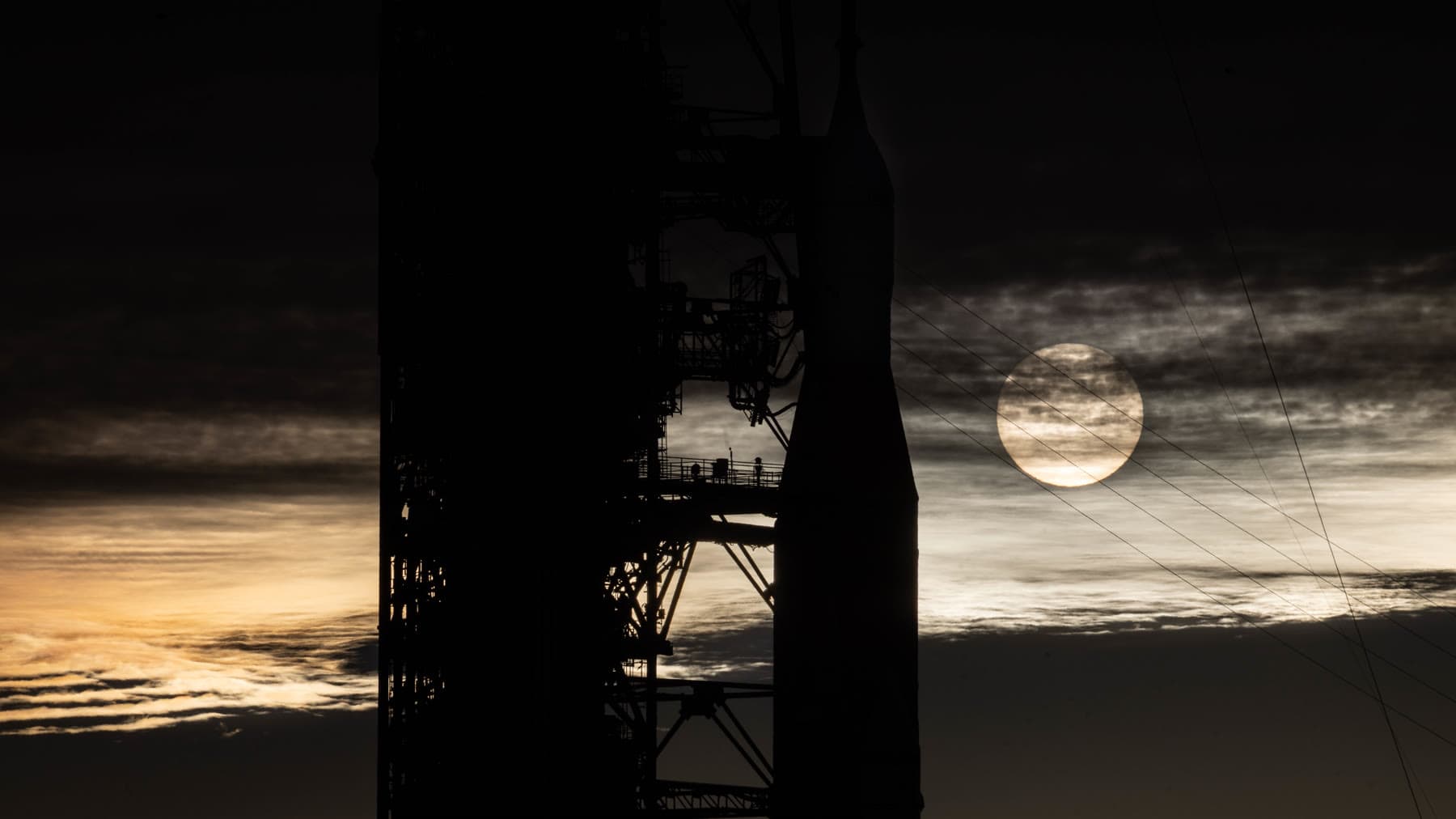
Actual photographs, engineering renderings, artist concepts, notional futures, and AI-generated illustrations are labeled visibly.
How updates change capability status
Updates matter when they change hardware state, mission evidence, funding, schedule confidence, failure understanding, or a dependency relationship.
Why percentage-complete scores are not used
A fake precision score would hide the real story. A single missing dependency can block an otherwise impressive future.
How speculative ideas are separated
Plausible frontier and imagination boundary items are designed to inspire without borrowing credibility from operational systems.
Editorial review and correction process
Each record carries a review date. Corrections should cite the claim, source, and evidence needed to change the status.
Sources and contact
Source links are shown on capability, pathway, and update surfaces. Use the corrections page when a status, source, or image label should change.
Status definitions
Reality ladder
The ladder exists so a small demo does not look like industrial capability and a concept does not look like a funded plan.
Humanity has done it, but the capability may not be operating today or available at useful cadence.
An established system can perform the capability today with real users, payloads, or missions.
Funded hardware, contracts, or flight systems are in execution, but the full capability is not operational.
A prototype, ground test, or flight test is underway; success still has to become repeatable service.
Serious funded work exists, but a complete deployable system is not yet being built or demonstrated.
The idea is consistent with known physics and serious work touches the ingredients, but no committed deployment path exists.
A useful endpoint for thinking, deliberately separated from funded or operational work.
Date labels
Future dates are never unlabeled.
The label tells the visitor whether a date is completed, contractual, official, company-stated, forecasted, or not credible enough to show.
Completed date
The event already happened.
Contractual milestone
A contract, procurement, or funded agreement names this milestone.
Official government target
An agency or government program has published the target.
Company target
A company has stated the target; it is not treated as proof that the capability exists.
External forecast
A third-party forecast or analysis, labeled separately from official plans.
No credible date
No public schedule is strong enough to display as a date.
Source library
Representative sources used by this section.
These sources anchor status, imagery, capability explanations, and update decisions. Date-sensitive facts should be rechecked when official pages change.
Artemis campaign overview
NASA is pursuing a Moon-to-Mars campaign with Orion, SLS, Gateway, commercial landers, surface systems, and international partners.
Open sourceCommercial Crew Program
NASA purchases crew transportation services to low Earth orbit from commercially developed systems.
Open sourceCommercial Low Earth Orbit Program Office
NASA is facilitating commercially owned and operated low Earth orbit destinations from which NASA and other customers can purchase services.
Open sourceCommercial Low Earth Orbit Destination Contract
NASA's commercial LEO destination procurement remains an active, evolving source of program evidence.
Open sourceLunaNet interoperability specification
LunaNet defines interoperable communications, networking, position, navigation, timing, and information services for lunar missions.
Open sourceLunar Communications Relay and Navigation Systems
NASA is pursuing more flexible lunar communications and navigation relay infrastructure for Artemis, robotic missions, and Moon-to-Mars exploration.
Open sourceFission Surface Power
NASA and DOE are working with industry on a 40-kilowatt class fission system for the Moon first, then Mars.
Open sourceHuman Landing System
Commercial Human Landing System work is a required Artemis dependency for carrying astronauts from lunar orbit to the surface.
Open sourceGateway
Gateway is part of NASA's planned lunar-orbit infrastructure for Artemis staging, science, and logistics.
Open sourceNASA confirms DART changed asteroid motion
DART intentionally altered Dimorphos' orbit around Didymos, proving kinetic-impact deflection on a small asteroid system.
Open sourceNEO Surveyor
NASA is developing a space-based infrared survey mission to improve discovery of near-Earth objects.
Open sourceOn-orbit servicing, assembly, and manufacturing
On-orbit servicing, assembly, and manufacturing have been serious NASA technology-development areas even where individual projects change.
Open sourceMOXIE oxygen production on Mars
MOXIE demonstrated small-scale oxygen production from the Martian atmosphere on Mars.
Open sourceLaser Communications Relay Demonstration
NASA has demonstrated optical communications technologies that can increase space-data throughput.
Open sourceInternational Space Station
The ISS is the strongest operating proof of sustained human activity in low Earth orbit.
Open sourceSpace-Based Solar Power
Space-based solar power remains a studied possibility with unresolved launch, assembly, transmission, thermal, safety, and economic questions.
Open sourceDeep Space Network
Deep-space communications infrastructure is essential for robotic exploration beyond Earth orbit.
Open source