
 Your Guide to Space
Routine
Chang'e 7
Chang'e 7 sends planetary science toward Lunar Orbit.
Chang'e 7 is a routine because of its mission cargo, customer, vehicle, or destination context.
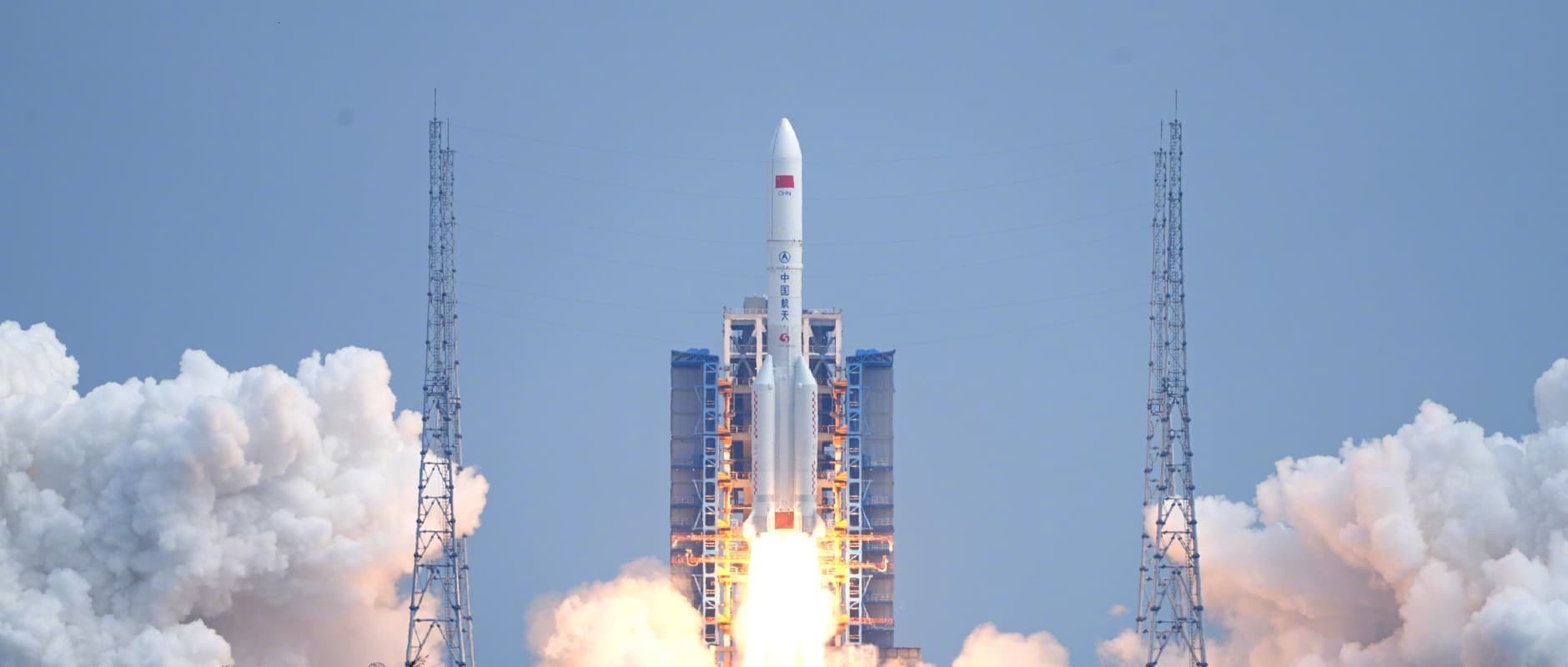
Source record
Your local time
China Aerospace Science and Technology Corporation
Wenchang Space Launch Site, People's Republic of China
Science mission
Thirty-second brief
What is launching, why it matters, and what to watch.
Chang'e 7 sends planetary science toward Lunar Orbit.
Chang'e 7 matters if the spacecraft reaches the environment where its instruments can begin producing science; launch success is only the first gate.
Weather And Range Status: Range and weather status can turn an apparently firm target into a hold or scrub. Target Time Changes: Target Time Changes is one of the observable moments that can change how this mission should be interpreted. Webcast Availability: The official stream is the safest way to follow well-sourced status changes.
Science mission
Understand the mission behind the countdown.
The immediate objective: Chang'e 7 is a planetary science using Long March 5 from China Aerospace Science and Technology Corporation.
The bigger story: Robotic exploration.
What is genuinely new: Chang'e 7 is worth checking for the concrete mission cargo, customer, orbit, or vehicle step that differs from prior China Aerospace Science and Technology Corporation missions.
Why a non-expert might care: Chang'e 7 is relevant if the mission cargo performs the service or exploration task it was launched to attempt.
Boundaries
What success would not prove.
Launch success would not automatically prove mission cargo commissioning or final mission success.
Watch points
Moments that change the read.
No official webcast link is confirmed in the current launch record. The page should say that plainly instead of inventing a viewing path.
- Weather And Range Status: Range and weather status can turn an apparently firm target into a hold or scrub.
- Target Time Changes: Target Time Changes is one of the observable moments that can change how this mission should be interpreted.
- Webcast Availability: The official stream is the safest way to follow well-sourced status changes.
- Post-launch Result: Post-launch Result is one of the observable moments that can change how this mission should be interpreted.
Where it fits
Past evidence, this mission, next follow-up.
This launch: Chang'e 7 sends planetary science toward Lunar Orbit.
Next required milestone: spacecraft deployment, first contact, commissioning, and later mission result.
Robotic exploration
Robotic Exploration: A guide to probes, landers, rovers, sample return, outer-planet missions, and why robots often go first.
How to watch a rocket launch
How to Watch a Rocket Launch: A viewer guide for livestreams, countdown clocks, holds, weather rules, booster landings, mission audio, and reliable sources.
Moderate evidence
Confirmed, interpreted, and still unknown.
Confirmed: Chang'e 7 is listed with China Aerospace Science and Technology Corporation as provider. Long March 5 is the listed vehicle. 101 is the listed launch site. Lunar Orbit is the listed destination or orbit class.
Starman Nova interpretation: Chang'e 7 matters if the spacecraft reaches the environment where its instruments can begin producing science; launch success is only the first gate. Chang'e 7 is worth checking for the concrete mission cargo, customer, orbit, or vehicle step that differs from prior China Aerospace Science and Technology Corporation missions.
Still unknown: Official watch link is not confirmed yet. Deployment, first contact, commissioning, and final mission outcome require later confirmation.
Reminder options
Track this launch
Save interest in this launch and join the briefing list for well-sourced schedule changes, webcast availability, and post-launch results.
Launch reminder
Save this specific launch so future schedule and status changes can be matched to your interest.
Next steps
Keep the roadmap in view
Get major space updates, set launch reminder interest, or keep exploring the Roadmap that turns space progress into a readable system.