
 Your Guide to Space
Guide
Robots turn unknown worlds into places humans can understand.
Orbiters, landers, rovers, probes, sample-return missions, and telescopes scout destinations, answer science questions, test technologies, and absorb risk before humans can work there.
Robotic exploration is not a consolation prize. It is how distant worlds become mapped, measured, and operationally real.
Sources reviewed June 2026
Pathfinders
Robots go first because ignorance is expensive.
Humans cannot responsibly work on a world we have not mapped, sampled, photographed, measured, and stress-tested with machines. Robots reveal terrain, radiation, weather, chemistry, gravity, dust, communication limits, and science value.
They also last longer than a crewed sortie can. A rover, orbiter, or telescope can keep returning data for years, sometimes decades, reshaping mission plans long after launch day.
That is why robotic missions belong on a site about expansion beyond Earth. They do not distract from human exploration; they define what human exploration must solve.
Robot jobs
Robotic exploration does three kinds of work.
Scout
Orbiters and flybys map terrain, hazards, weather, gravity, radiation, and possible landing or science targets.
Touch
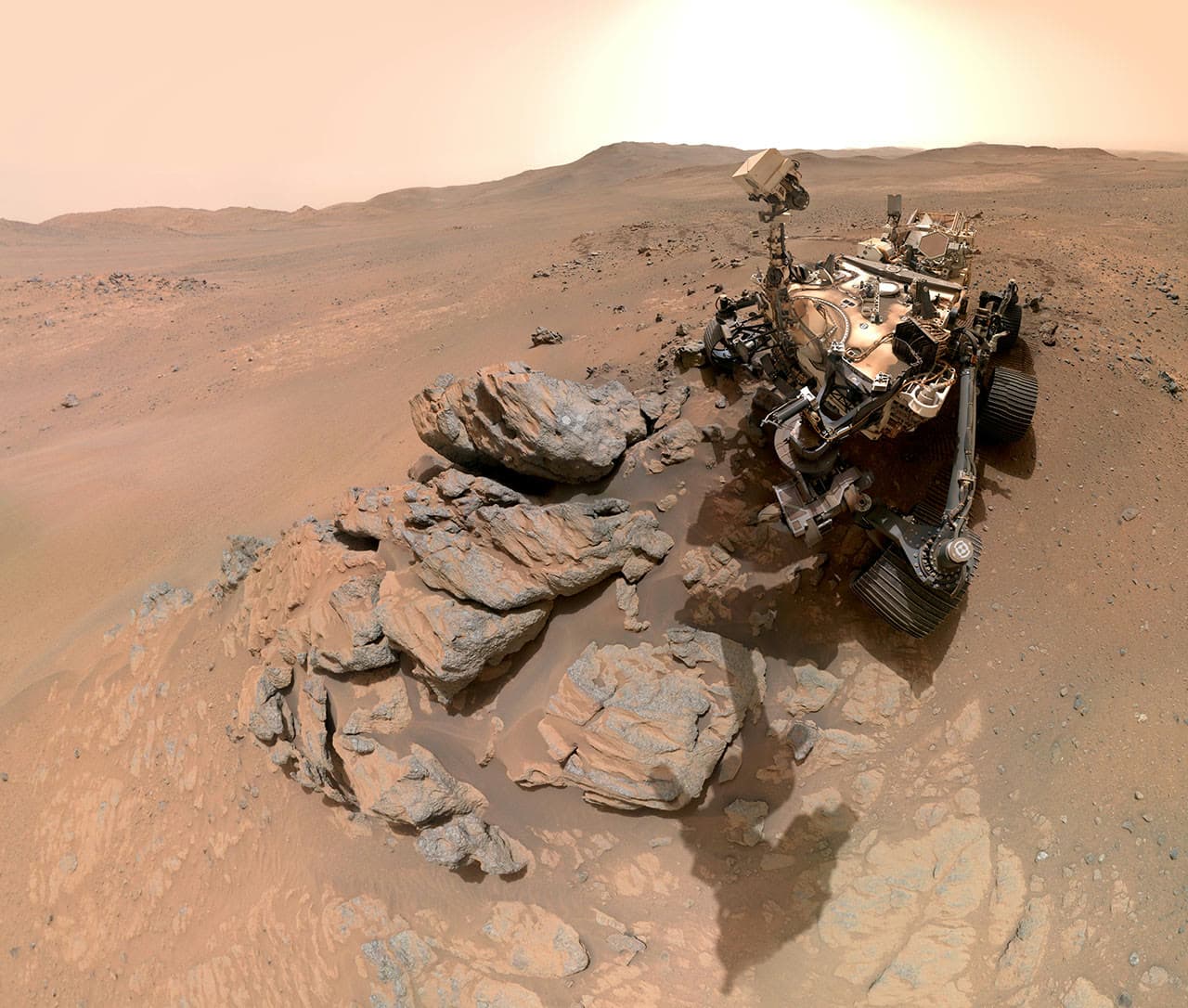
Landers and rovers test surface operations, materials, mobility, instruments, communications, and endurance.
Return knowledge
Samples, long-duration data, and telescope observations let scientists ask sharper questions than a single mission could answer.
What counts
A mission matters when its data changes the map.
The public value is not only arrival. It is the instrument checkout, science release, traverse, flyby data, sample plan, or hazard map that changes what the next mission can do.
Robotic missions remain the strongest source of deep-space knowledge, even on a site focused on human expansion.
Instrument checkout
Arrival is only the first headline. A mission becomes useful when its cameras, spectrometers, drills, antennas, power system, and software start returning trustworthy data.
Map or measurement
Orbiters, flybys, and telescopes matter when they improve terrain maps, gravity models, atmosphere records, radiation estimates, or target lists for later missions.
Surface operation
Landers and rovers prove what it takes to survive real dust, temperature, terrain, communications delay, power limits, and instrument work on another world.
Returned knowledge
Samples, long-duration datasets, and peer-reviewed releases turn one mission into a shared foundation for science, engineering, and future destination choices.

Beyond the surface
Robotic exploration includes observatories too.
Space telescopes and planetary probes extend exploration beyond places humans can reach soon. They reveal planets, moons, atmospheres, asteroids, and distant systems that shape the bigger question of where humanity fits.
A human-focused roadmap that ignores science missions would miss much of the evidence that makes exploration worth doing.
How to follow it
Watch arrivals, checkouts, and science releases.
The updates that matter most say what the mission learned or proved: a safe landing, a healthy instrument, a new traverse target, a sample-return decision, a flyby dataset, or a discovery that changes where future missions should go.
Mission arrivals and flybys
Lander outcomes
Instrument checkouts
Sample-return architecture changes
Science releases that shift public understanding
Common traps
These shortcuts make the story less accurate.
Robotic Exploration headlines can make one milestone sound like a finished system. These distinctions keep the update tied to what was actually demonstrated, decided, or still missing.
Robotic exploration is not separate from human exploration.
A failed lander can still teach engineering lessons.
Science missions matter even when they do not lead directly to settlement.
Next steps
Keep the roadmap in view
Get major space updates, set launch reminder interest, or keep exploring the Roadmap that turns space progress into a readable system.