
 Your Guide to Space
Mission
Space Telescopes & Observatories
Space observatories are the mission family that explains why space progress is bigger than transportation.
Roman's 2026 launch posture, Webb science releases, Euclid data, Hubble and Chandra health, exoplanet claims, and future observatory decisions
Why it matters
Observatories turn space access into discovery.
Space observatories are missions because launch is only the start. The real product is calibrated data: surveys, spectra, images, catalogs, follow-up targets, and measurements that other scientists can test for years.
Roman is the near-term clock because NASA now lists an August 30, 2026 launch target. Webb is the current infrared flagship, Hubble remains the public benchmark for long-lived orbital science, and Euclid is turning dark-energy and dark-matter questions into a survey program.
The public challenge is interpretation. A telescope can reveal an exoplanet atmosphere, a galaxy population, or a dark-energy measurement without proving the most dramatic version of the headline. The page keeps discovery tied to what was actually observed.
The pieces in play
Each telescope answers a different science question.
Observatories are missions, not background instruments. Roman, Webb, Hubble, Euclid, TESS, Chandra, and future concepts each trade field of view, wavelength, location, lifetime, and survey strategy for a different kind of science return.
The focus here is mission status rather than telescope physics alone: launch preparation, commissioning, health, data releases, budget posture, and whether claims about exoplanets or the early universe are strong enough to explain with confidence.
Roman's wide-field infrared surveys should complement Webb's targeted deep views. Hubble and Chandra show why old observatories can still matter, while future concepts expose what questions current hardware cannot answer.
Nancy Grace Roman Space Telescope
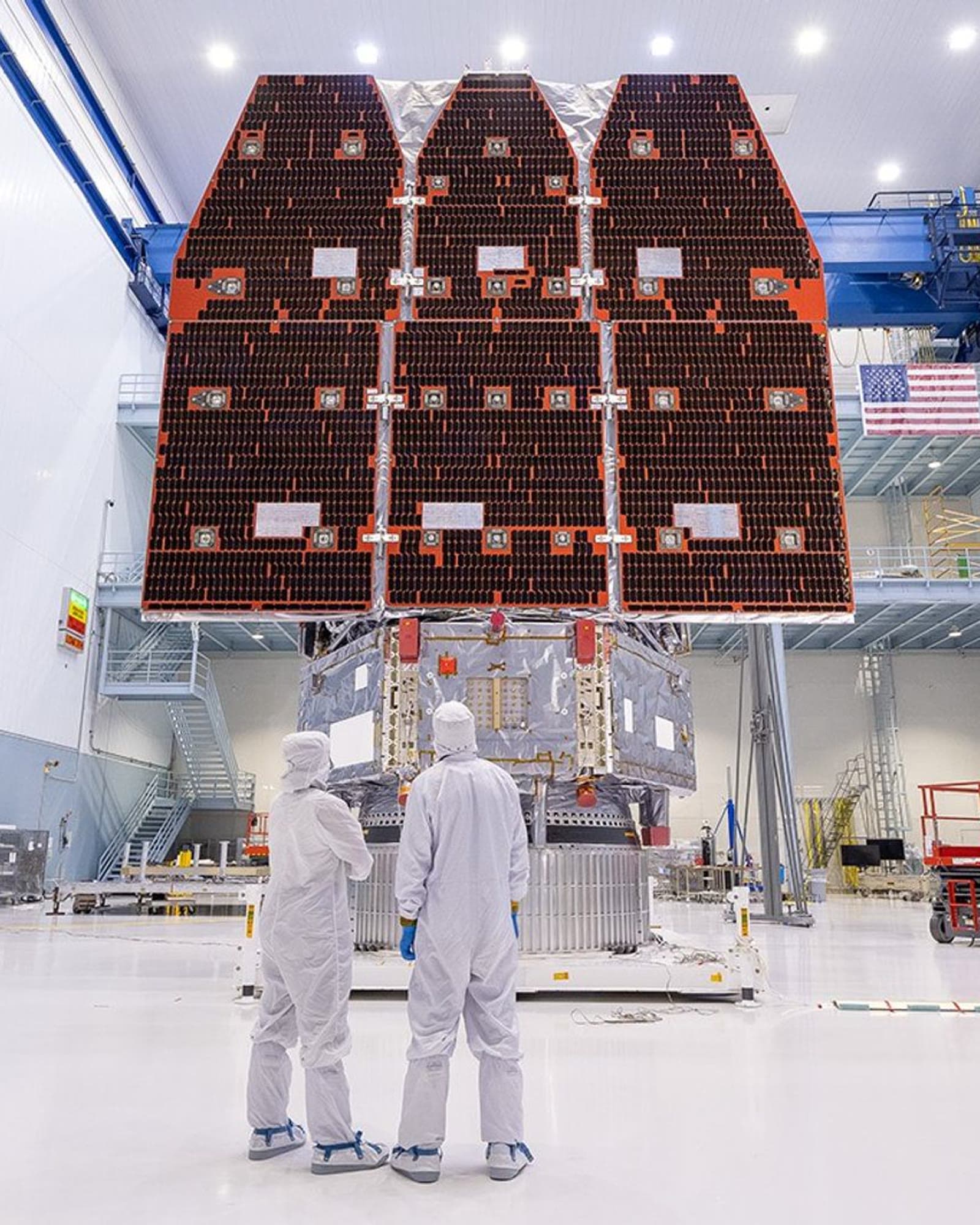
Roman is NASA's near-term observatory launch story, with an official August 30, 2026 launch target.
Roman is the near-term launch story, moving a wide-field infrared survey telescope toward an August 30, 2026 Falcon Heavy launch and L2 operations.
James Webb Space Telescope
Webb is operational and still producing infrared science that needs careful claim language.
Webb anchors current infrared discovery while keeping exoplanet-atmosphere claims disciplined.
Hubble Space Telescope
Hubble remains a public-science benchmark even as age and servicing history matter.
Hubble remains the long-running benchmark for visible and ultraviolet public science.
ESA Euclid
Euclid is turning cosmology into a large survey-data story about galaxy shapes, distances, dark energy, and dark matter.
Euclid makes dark-energy and dark-matter questions measurable through repeated survey releases rather than one dramatic image.
TESS, Chandra, XMM-Newton, and future observatory concepts
TESS, Chandra, XMM-Newton, and future concepts keep the observatory category broader than one flagship.
TESS and exoplanet archives keep planet-discovery context alive between flagship telescope headlines.
What the image shows
Observatories become real when hardware becomes data.
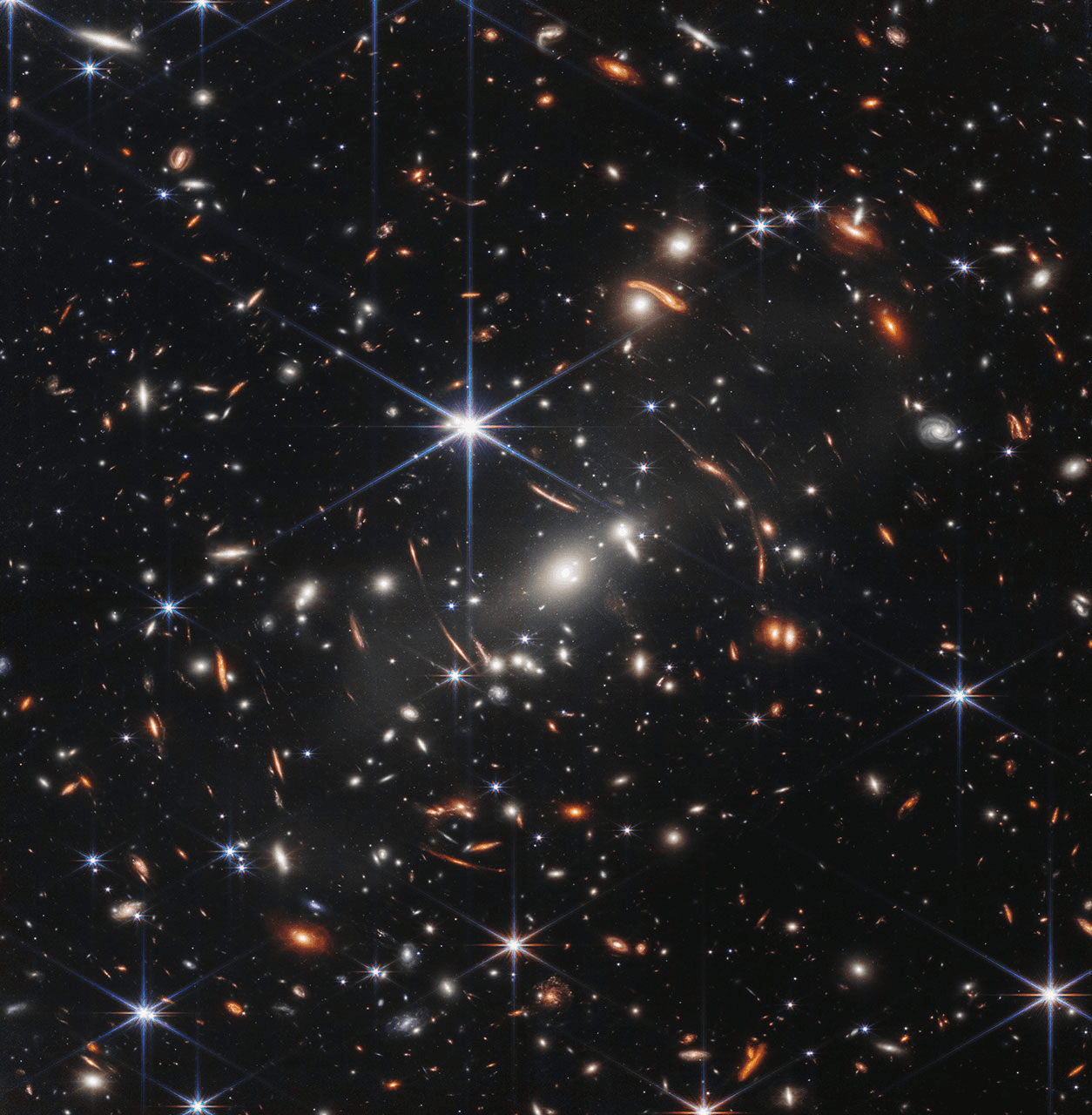
The deep-field image is the payoff side of the observatory story: after launch, deployment, calibration, and operations, a telescope earns its public value by producing data other scientists can use.
Already real
Space telescopes can become multi-decade infrastructure.
Hubble and Webb show why observatories can outlive their launch headlines. Their value is a public data pipeline that keeps producing discoveries, calibrations, follow-up targets, and better questions for the next observatory.
The strongest observatory story is not a single image. It is repeated public science: stable operations, useful archives, cross-observatory follow-up, clear calibration, and source language that distinguishes measurement from inference.
Long-lived data
Hubble and Webb show why observatories become infrastructure when archives, calibrations, and follow-up observations keep producing science after launch.
Near-term capability
Roman's value is not only a launch date; it is the wide-field survey engine it could add for dark energy, exoplanets, and infrared sky mapping.
Complementary instruments
Euclid, TESS, Chandra, XMM-Newton, and other observatories prove that no single wavelength, orbit, or survey strategy answers every astronomy question.
Still to prove
Science claims still need careful interpretation.
A telescope result can be exciting without proving the most dramatic version of a story. Exoplanet atmospheres, dark-energy measurements, and early-universe images all need careful language about what was observed and what remains inferred.
Roman also has ordinary mission risk ahead: launch, deployment, commissioning, survey cadence, data releases, and whether the observatory performs well enough to become the wide-field engine NASA expects.
- 01Roman readiness
Does Roman launch and commission cleanly enough to add a wide-field infrared survey engine?
- 02Claim strength
Which exoplanet atmosphere and early-universe claims are strong enough to explain without overselling what was observed?
- 03Legacy observatories
How do long-running observatories remain funded, healthy, and useful as new missions arrive?
Worth watching
Watch Roman, Webb, Euclid, Hubble, and future architectures.
Meaningful updates include Roman launch and commissioning, Webb and Euclid data releases, Hubble and Chandra health decisions, and architecture choices for future observatories.
A useful observatory update should say what changed in capability: a launch date, first light, data release, instrument health decision, archival result, or future mission architecture.