
 Your Guide to Space
Guide
Exoplanet headlines need careful wonder.
Space telescopes help reveal planets around other stars, early galaxies, atmospheres, disks, and cosmic history. The exciting part is real, but most exoplanet claims are inferred through careful methods and uncertainty.
Discovery, confirmation, radius or mass estimate, atmospheric detection, habitability interpretation, and life claim are separate steps. Do not collapse them.
Sources reviewed June 2026
Careful discovery
Most planets are known by effects, not portraits.
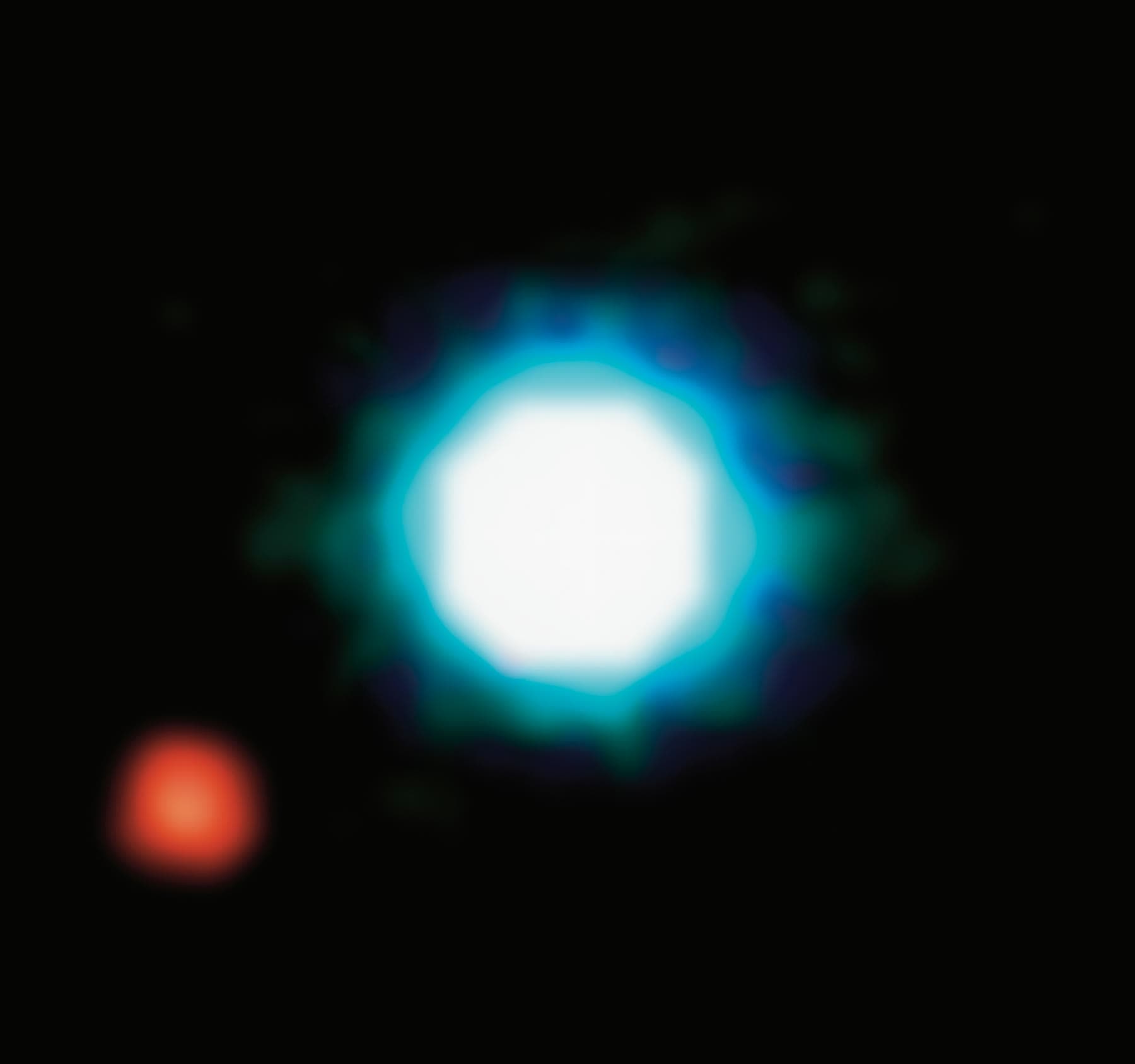
Telescopes often detect exoplanets through tiny dips in starlight, stellar motion, microlensing, or difficult direct imaging. The methods are powerful, but they do not all prove the same thing.
Space observatories matter because they avoid much of Earth's atmosphere and can observe wavelengths, stability, and precision that are hard from the ground. They turn engineering decisions into decades of science.
The public challenge is language. A planet in the habitable zone is not an inhabited planet. A possible atmospheric signal is not proof of life. Follow-up observations and peer review matter.
How we know
Exoplanet evidence comes through several windows.
Transits
A planet crossing its star can reveal size and orbital period through a tiny dimming pattern.
Spectra
Light split by wavelength can suggest atmospheric chemistry, temperature, motion, or composition when the signal is strong enough.
Direct imaging
Seeing a planet itself is powerful but difficult, usually limited to special cases and requiring careful separation from starlight.
What counts
The strongest claims say what method supports them.
Good public copy should name detection method, instrument, uncertainty, follow-up status, and what the observation does not prove yet.
Exoplanet science is advancing quickly, but life-detection headlines often outrun the evidence.
Detection method
Transit, radial velocity, microlensing, spectroscopy, and direct imaging answer different questions. A strong claim names the method instead of treating every detection like a photograph.
Confirmed parameters
Size, mass, orbit, star type, temperature estimate, and atmosphere hints are separate pieces of evidence. Missing one can change the interpretation.
Follow-up status
The most reliable stories explain what another telescope, later observation, archive release, or peer-reviewed paper still needs to confirm.
Claim boundary
Habitable-zone, Earth-size, possible molecule, and biosignature are not the same claim. The public copy should make the uncertainty visible.
Why it matters here
Other worlds make Earth look like evidence, not a default.
Exoplanet science changes the long story of colonizing space because it asks whether Earth is common, rare, fragile, or one example in a broad planetary catalog.
That perspective matters even when no human mission is near. It makes exploration less provincial and helps future telescopes ask sharper questions.
How to follow it
Watch peer-reviewed uncertainty language.
The useful updates separate discovery from interpretation: confirmed planet catalogs, TESS follow-up, Webb spectra, Roman readiness, direct-imaging technology, and cautious language around habitability or biosignatures.
Peer-reviewed telescope releases
Follow-up observations
Instrument limits and uncertainty ranges
Future observatory selections
Claims about habitability or biosignatures
Common traps
These shortcuts make the story less accurate.
Telescopes and Exoplanets headlines can make one milestone sound like a finished system. These distinctions keep the update tied to what was actually demonstrated, decided, or still missing.
Habitable zone does not mean inhabited.
A spectrum does not automatically prove life.
Most exoplanets are inferred indirectly.
Next steps
Keep the roadmap in view
Get major space updates, set launch reminder interest, or keep exploring the Roadmap that turns space progress into a readable system.