
 Your Guide to Space
Agency profile
NASA turns space goals into funded roadmaps.
The agency is not just a mission logo. NASA writes requirements, buys services, certifies partners, integrates hard systems, and publishes the evidence that tells the rest of the space ecosystem what is real.
Read NASA through four roles: mission owner, standards-setter, anchor customer, and integrator. Its choices decide which private systems become part of the public roadmap.
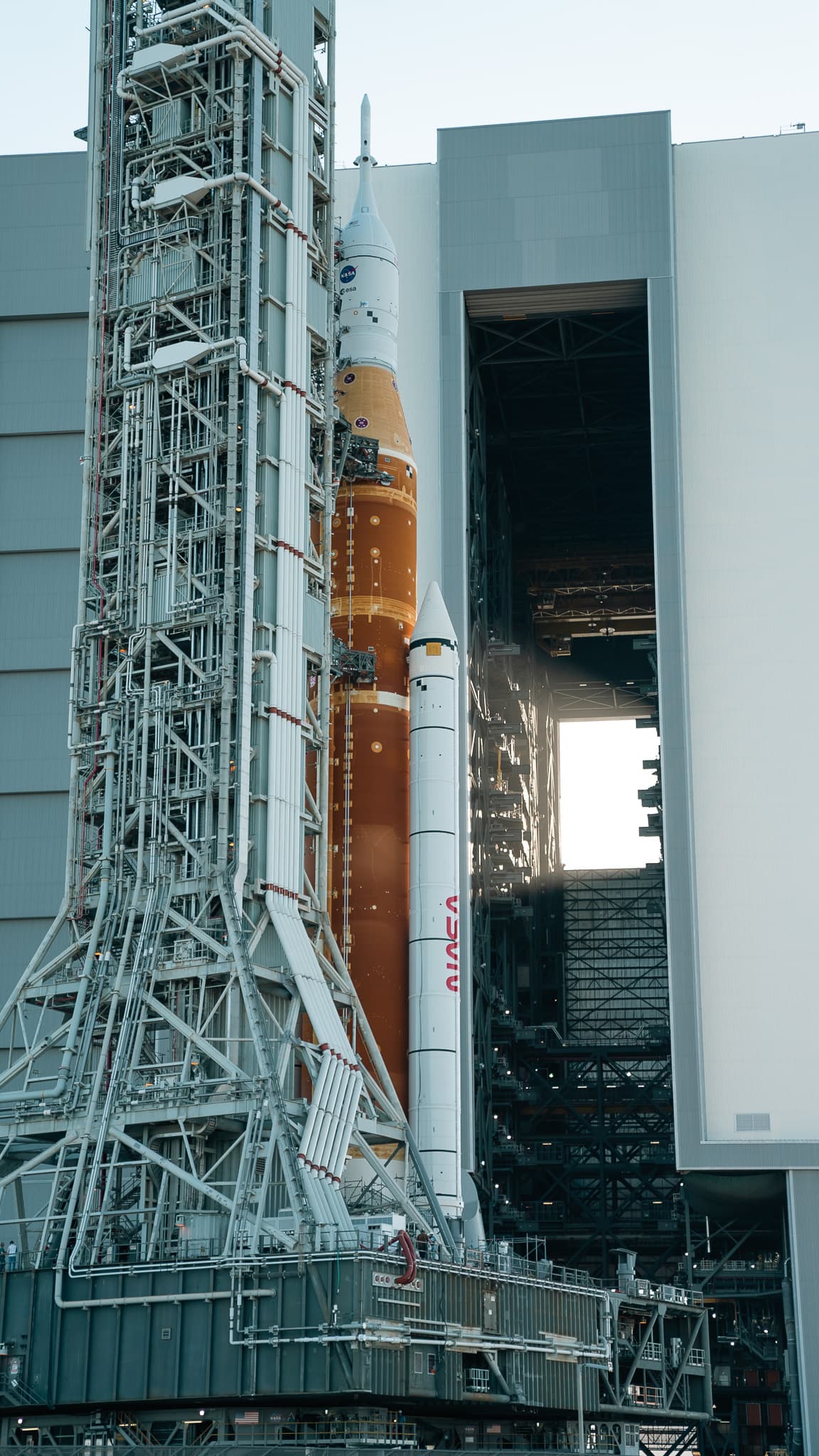
NASA has operating evidence in station logistics, commercial crew and cargo, robotic science, Artemis I, and the 2026 Artemis II crewed lunar flyby.
The next hard proof is integrating commercial landers, Gateway, suits, rovers, CLPS lessons, and commercial stations into dependable service.
NASA matters because its requirements and purchases turn private systems into shared infrastructure, not just company milestones.
The quick read
NASA: the quick read.
A few fast facts to get oriented before the deeper story on what it builds, what still has to work, and where it is headed.
Civil space exploration, science, aeronautics, technology development, commercial partnerships, and human spaceflight.
Where the work happens
Watch Artemis post-flight analysis, Artemis III/IV architecture, CLPS deliveries, Gateway, commercial stations, and major science mission updates.
Recent developments
Latest on NASA
NASA Selects Starlink for Artemis III Mission
NASA has awarded SpaceX a contract to deliver laser communications capabilities for its Artemis III mission using Starlink. The post NASA Selects Starlink for Artemis III Mission.
Artemis attention has moved from audience size to hardware progress and partner follow-through
New Artemis coverage is less about NASA’s big Artemis II viewership claim and more about the next steps: Space.com points to Artemis III stacking work, while ESA highlighted an Artemis II crew visit tied to Orion’s European service module.
Artemis lander plans drew fresh scrutiny as former NASA leadership publicly questioned the program’s approach
A fresh Space.com report led with criticism from a former NASA chief who questioned Artemis moon lander plans, reviving debate around how NASA is structuring lunar landing elements for the.
Why it matters
What changes when NASA chooses a path?
NASA matters because it turns space ambition into funded requirements, technical standards, and public evidence. When it chooses a lander, a station partner, or a science mission, companies reorganize around that demand.
It no longer proves progress by building everything itself. It still owns deep-space integration — Artemis, SLS, Orion, Gateway, the big science missions — but it buys crew transport, cargo, and lunar delivery from commercial partners, which makes it the clearest anchor for where the whole roadmap is heading.
Active programs
NASA is the connective tissue across many space markets.
Artemis is the headline: SLS, Orion, Kennedy ground systems, Gateway, human landing systems, suits, rovers, and international partners folded into one campaign. Commercial crew and cargo are the market-making layer, and CLPS is the experiment of buying commercial lunar deliveries.
Science keeps NASA from being only a Moon agency — telescopes, Mars work, Earth observation, and planetary missions give the public a reason to care even when human-flight schedules slip.
Current status
Fresh flight evidence, unfinished integration.
The proof is real: Artemis II launched on April 1, 2026 and splashed down on April 10 after carrying a crew around the Moon, giving SLS, Orion, and mission operations new flight evidence.
The next steps are more tangled than a straight march to a landing. NASA's current plan treats Artemis III as a 2027 rendezvous-and-docking demonstration in Earth orbit before crews risk the lunar surface, while low Earth orbit itself is mid-transition from the ISS to commercial stations.
Watch points
Look for decisions that move private plans into public systems.
Watch what NASA learns from Artemis II's heat-shield and life-support data, and how Artemis III planning firms up. Watch the commercial-lander milestones — especially any Starship orbital-refueling test — because the lunar cadence depends on them.
Watch the commercial-station procurement, which decides whether private destinations arrive before the ISS retires, and watch CLPS landings, where NASA is deliberately learning fast from both successes and failures.
How it got here
NASA began operations in 1958 and remains the anchor agency for U.S. civil spaceflight.
ISS operations created the operating base for commercial crew, cargo, and research partnerships.
Artemis II completed a crewed lunar flyby in April 2026, giving SLS, Orion, ground systems, and mission operations new flight evidence.
Artemis is now a multi-mission sequence that has to connect lander demonstrations, Gateway, suits, rovers, CLPS lessons, and later surface missions.
Keep exploring
Why the Moon Matters
Why the Moon Matters: A guide to why lunar missions matter for technology, science, geopolitics, operations, resources, and Mars preparation.
Artemis Explained
Artemis Explained: A guide to SLS, Orion, Gateway, Human Landing System, spacesuits, surface logistics, and how the Artemis missions build on each other.
Robotic Exploration
Robotic Exploration: A guide to probes, landers, rovers, sample return, outer-planet missions, and why robots often go first.
Next steps
Keep the roadmap in view
Get major space updates, set launch reminder interest, or keep exploring the Roadmap that turns space progress into a readable system.