
 Your Guide to Space
Mission
Artemis Missions
NASA's Moon campaign is now a sequence of crewed flight evidence, Earth-orbit lander tests, Gateway and surface-system work, and a later lunar-surface return target.
Artemis III crewed Earth-orbit testing, Artemis IV surface-return readiness, HLS pathfinders, Gateway HALO/PPE, suits, rovers, and post-Artemis II findings
Why it matters
Artemis is a Moon campaign built across many missions.
Artemis matters because it is NASA's attempt to turn a return to the Moon into a repeatable system. The rocket and Orion spacecraft have flown around the Moon, but the landing campaign also depends on suits, landers, Gateway, rovers, surface power, cargo, communications, and mission timing.
That makes an Artemis headline easier to understand when you ask what part of the chain it changes. A rocket test, suit milestone, lander review, Gateway module, or rover decision can matter even if no astronaut is launching that week.
The public promise is simple: learn how to operate on the Moon in a way that teaches future deep-space missions. The hard part is making all the pieces arrive, dock, land, support a crew, and come home safely.
The pieces in play
Each Artemis piece has to make the landing campaign more real.
Artemis II and Orion test whether NASA can carry crew safely around the Moon and return them. Artemis III adds the harder landing question: can Orion, the lander, suits, surface systems, mission control, and recovery operations work as one mission?
Gateway, Starship HLS, lunar terrain vehicles, surface suits, cargo landers, and south-pole planning are not side stories. They are the infrastructure that decides whether Artemis becomes more than a single flag-and-footprints moment.
Artemis II postflight evidence
Artemis II launched April 1, 2026 and splashed down April 10, 2026.
Artemis II gives the campaign crewed lunar-distance experience, but it does not settle the landing challenge.
Artemis III Earth-orbit demonstration
NASA named the Artemis III test-flight crew in June 2026 for a 2027 Earth-orbit integration mission.
Artemis III is now the integration rehearsal for Orion, lander rendezvous, docking, suits, and life-support operations.
Artemis IV planned lunar surface return
Artemis IV is NASA's current planned lunar south-pole surface-return target.
Artemis IV is the current surface-return target that has to turn the landing stack into a credible crewed mission.
Gateway HALO/PPE
Gateway HALO/PPE remains the cislunar infrastructure step for later Artemis operations.
Gateway is the cislunar infrastructure bet that later landings need if lunar operations become repeatable.
SpaceX and Blue Origin Human Landing Systems
SpaceX and Blue Origin are the active human-landing-system providers, but an integrated crewed lunar landing is still ahead.
Commercial surface systems show how much Artemis depends on private landers maturing into safe crew hardware.
Axiom xEVA suits and Lunar Terrain Vehicle services
Axiom xEVA and Lunar Terrain Vehicle services are visible surface-system work, not yet lunar operations.
Suits, rovers, and surface logistics decide whether a landing becomes useful work instead of a short visit.
What the image shows
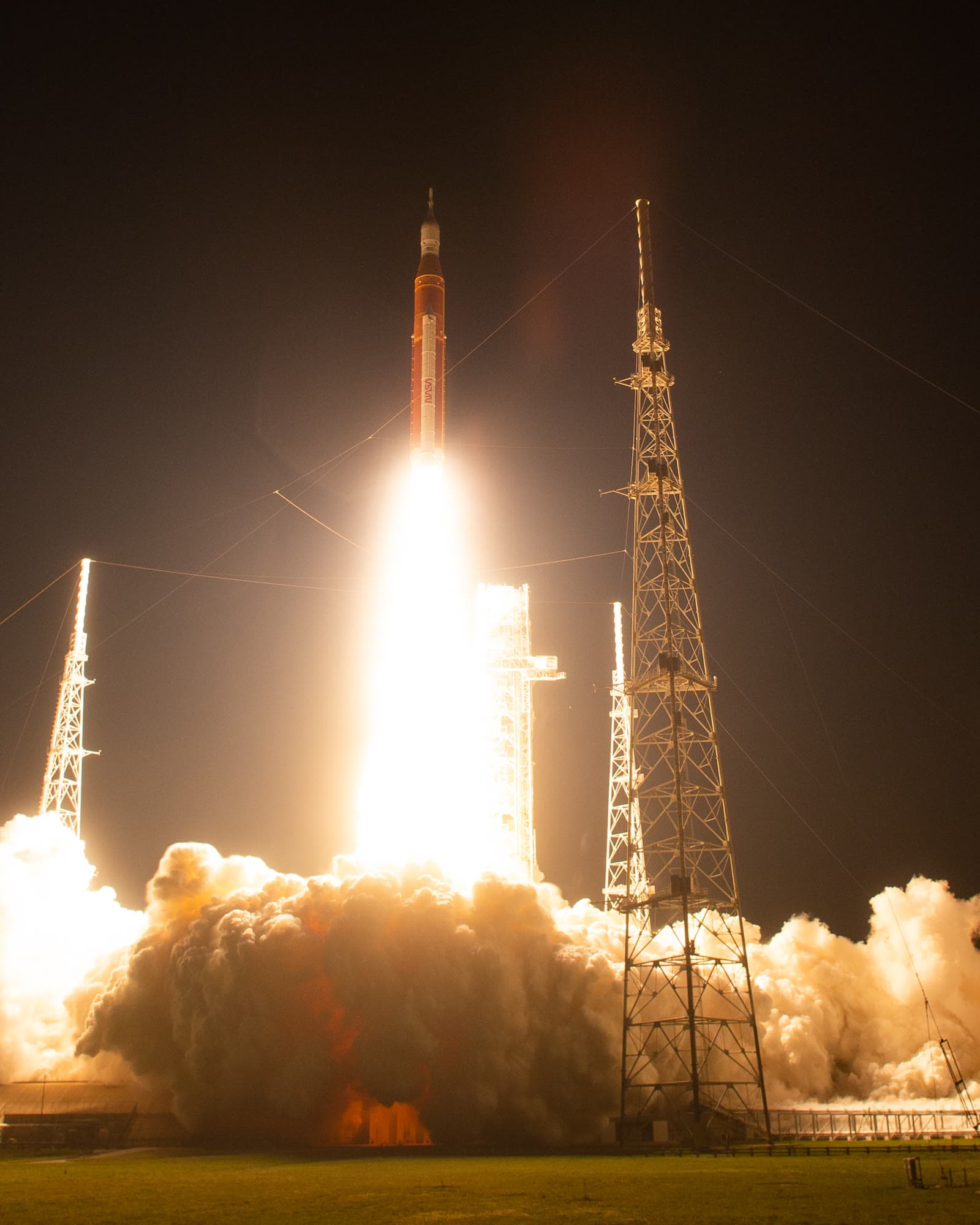
The launch is only the start of the Moon system.
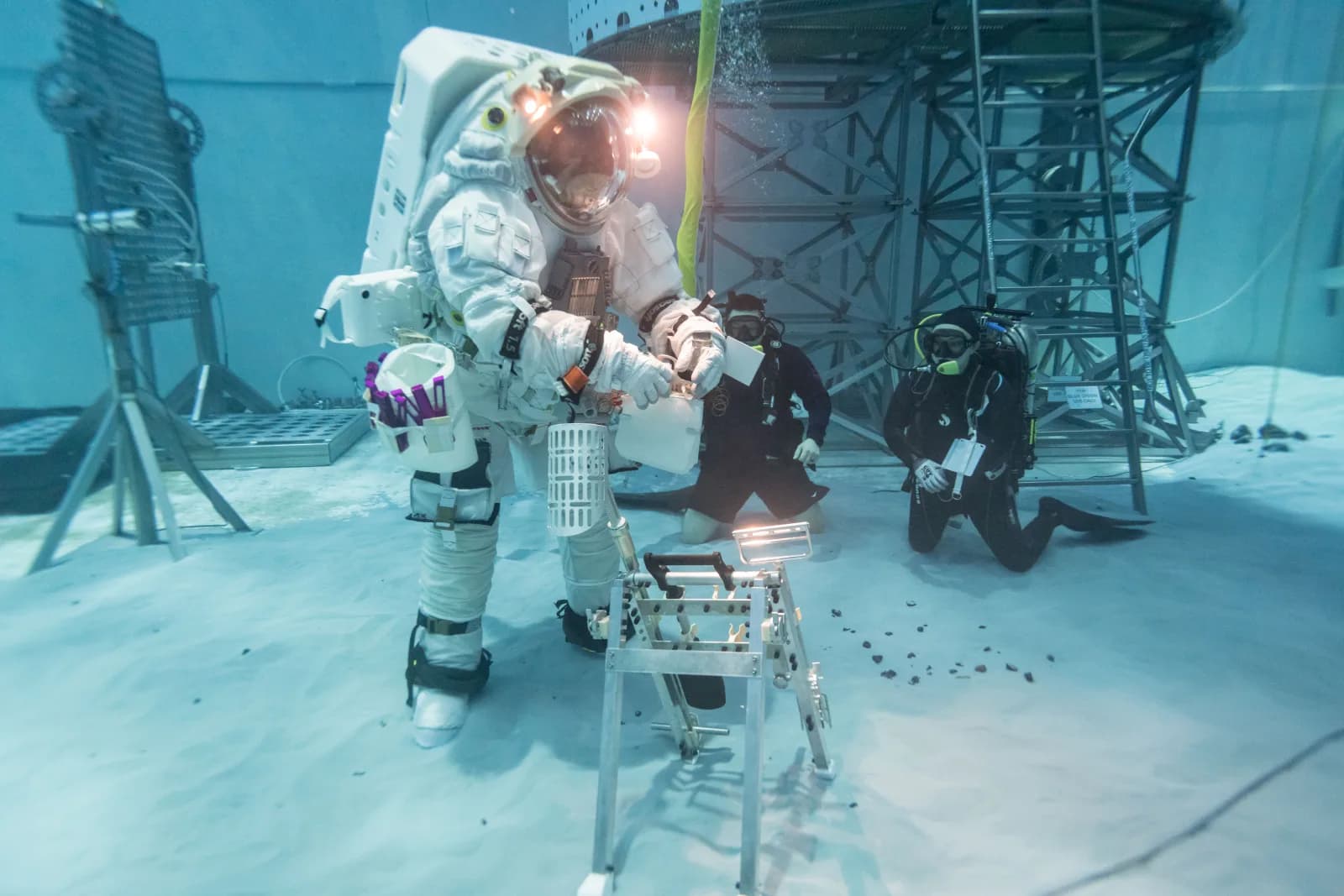
An Artemis launch image shows the part everyone recognizes, but the campaign depends on many less visible pieces after liftoff: crew training, Orion systems, lunar landing hardware, suits, surface mobility, communications, and recovery.
Already real
Artemis has flight experience, but not a crewed landing.
Artemis I proved that SLS and Orion could fly an uncrewed lunar mission and return Orion to Earth. That is important, but it is not the same as proving crew operations, lunar landing, surface work, or repeatable mission cadence.
The useful progress is visible in pieces: Orion processing, crew training, ground systems, spacesuit work, lander reviews, Gateway hardware, and surface mobility planning. Each piece reduces a different kind of risk.
Crewed lunar-distance flight
SLS and Orion have flown beyond low Earth orbit, and Artemis II added crewed lunar-distance experience.
Artemis III rebaseline
NASA has shifted Artemis III into a nearer Earth-orbit integration test rather than pretending the first surface return is still the next simple step.
Architecture breadth
Commercial landers, suits, rovers, Gateway, and CLPS are all visible parts of the architecture, not side stories.
Still to prove
The landing still depends on several hard handoffs.
The biggest uncertainty is integration. A crewed landing requires launch timing, Orion performance, lander readiness, docking and transfer, suits, surface operations, communications, ascent, rendezvous, return, and recovery to line up in one mission.
Schedule pressure matters because one late system can reshape the whole campaign. For readers, the most important question is whether a milestone makes the landing architecture simpler, more tested, or more credible.
- 01Orion/SLS postflight changes
Do Artemis II findings change Orion/SLS processing or mission rules?
- 02Commercial lander integration
Can pathfinders safely demonstrate rendezvous, docking, and integrated operations?
- 03Surface-system sequencing
Will suits, Gateway, surface mobility, and surface logistics mature in the order later landings need?
Worth watching
Watch the handoffs that make a landing possible.
Meaningful Artemis updates should move a real system closer to flight: Orion crew readiness, SLS hardware flow, Starship HLS testing, suit qualification, Gateway module progress, lunar rover decisions, or surface logistics.
The best updates do more than name a date. They show whether separate teams and vehicles are becoming one mission that astronauts can safely fly.