
 Your Guide to Space
Roadmap pathway
The Moon
Can the Moon evolve from a destination visited briefly into a place where humans remain, build infrastructure, and eventually travel for reasons beyond government exploration?
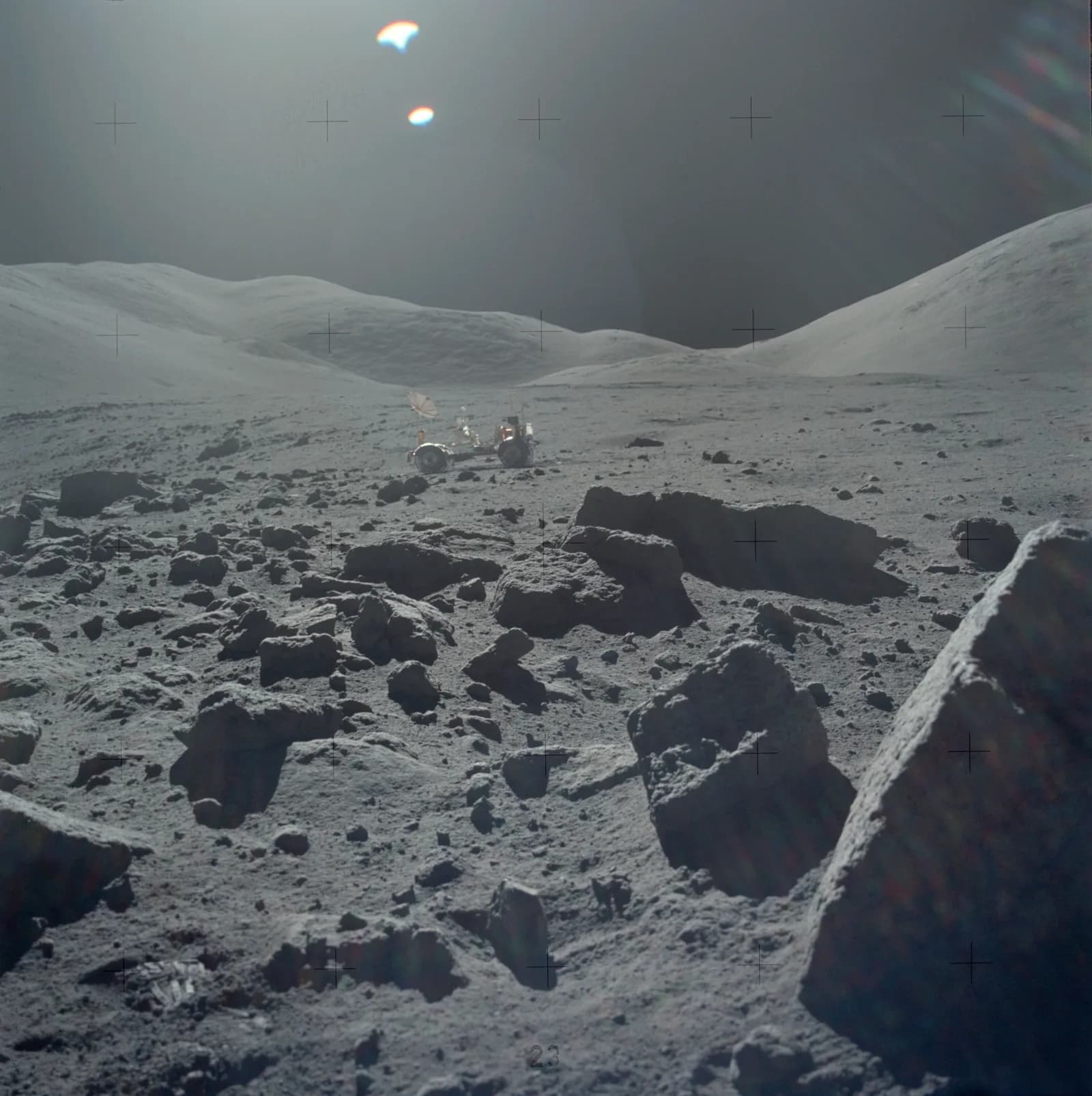
Human question
Can the Moon evolve from a destination visited briefly into a place where humans remain, build infrastructure, and eventually travel for reasons beyond government exploration?
A ladder from historical landings to repeat visits, an outpost, local resources, and eventual civilian access.
Plain-language answer
Human lunar landing has historical proof; the modern surface-return and infrastructure stack is still under construction.
What counts as success
- crewed return
- recurring visits
- permanently staffed outpost
- civilian visit
- local fuel and logistics network
Current state
Where the moon stands right now.
The strongest evidence to date, what's actively in progress, the next meaningful test, and the biggest thing still in the way.
Then to horizon
From what we've proven to where this is heading.
The pathway moves from demonstrated history through what's operating today and what's actively under construction, out toward the frontier outcomes that still require major breakthroughs.
- robotic landings
- Apollo human landings
- sample return and surface mobility
- robotic orbiters and landers
- commercial lunar delivery
- resource mapping
- lander, suit, rover, and relay development
- crew return stack
- surface cargo cadence
- communications and navigation
- long-duration power and habitation
- permanently staffed outpost
- local fuel economy
- civilian visit
- scientific and industrial settlement
Capabilities
What the moon actually depends on.
Each card names the system, how mature it is today, and the specific milestone that would genuinely change the outlook.
Reliable robotic lunar cargo landing
Reliable robotic lunar cargo landing means uncrewed landers can deliver useful cargo to the Moon, touch down safely, and leave payloads ready for surface work.
- Next evidence
- More cadence, lower cost, or broader user access.
Human lunar landing system
Human lunar landing system carries astronauts from lunar orbit to the surface and back, with ascent, descent, docking, abort, and crew-safety systems working together.
- Next evidence
- A public demonstration that performs the capability in its intended environment.
High-cadence lunar cargo delivery
High-cadence lunar cargo delivery turns occasional lunar deliveries into a repeatable logistics flow with enough frequency to support crews, repairs, and growth.
- Next evidence
- A public demonstration that performs the capability in its intended environment.
Lunar relay communications
A GPS-like lunar communications and navigation layer is being developed so missions do not depend only on direct line-of-sight to Earth.
- Outcomes unlocked
- A permanently staffed lunar outpost, A civilian visit to the Moon
- Next evidence
- A public demonstration that performs the capability in its intended environment.
Lunar positioning, navigation, and timing
Lunar positioning and timing would make landing, surface travel, and autonomous operations more like a networked environment.
- Dependencies
- Lunar relay communications
- Outcomes unlocked
- A lunar fuel and logistics network, A permanently staffed lunar outpost
- Next evidence
- A public demonstration that performs the capability in its intended environment.
Lunar fission surface power
A compact lunar reactor would change the two-week-night problem, but it is still a development program, not a deployed utility.
- Outcomes unlocked
- A permanently staffed lunar outpost, Lunar resource extraction
- Next evidence
- A public demonstration that performs the capability in its intended environment.
Lunar surface habitat
Lunar surface habitat is the protected living and working volume that lets crews stay on the Moon longer than a brief sortie.
- Next evidence
- A public demonstration that performs the capability in its intended environment.
Lunar oxygen extraction
Oxygen from regolith is a serious research lane; the gap is useful scale, reliability, power, and integration with storage and transport.
- Outcomes unlocked
- Lunar resource extraction, A lunar fuel and logistics network
- Next evidence
- A public demonstration that performs the capability in its intended environment.
Lunar regolith construction
Lunar regolith construction uses Moon soil as construction material for pads, shielding, berms, or simple structures instead of importing every kilogram.
- Next evidence
- A public demonstration that performs the capability in its intended environment.
Surface landing pads and dust mitigation
Surface landing pads and dust mitigation means prepared landing zones and dust-control practices so repeated arrivals do not damage nearby hardware or blind operations.
- Next evidence
- A public demonstration that performs the capability in its intended environment.
Dependency map
Prerequisites for the moon outcomes.
Each outcome shows what already exists, what is being built, and the weakest missing link.
A crewed return to the Moon
Human lunar landing has historical proof, but a modern return depends on a new integrated Artemis stack.
- Weakest link
- integrating lander, suits, Orion, SLS, operations, and contingency plans
- Closest equivalent today
- Apollo historical proof and Artemis flight-test work
A permanently staffed lunar outpost
A permanent outpost needs repeated cargo, power through the night, habitats, communications, mobility, maintenance, and rescue posture.
- Weakest link
- reliable logistics, power, maintenance, and survival through lunar environmental extremes
- Closest equivalent today
- short Apollo stays, robotic landers, ISS operations, and Artemis/CLPS development
A civilian visit to the Moon
A civilian lunar visit sits beyond professional crew return because it adds price, risk tolerance, training, rescue, and destination requirements.
- Weakest link
- safe, affordable transport and a destination suitable for non-specialists
- Closest equivalent today
- private orbital missions and historical government lunar landings
A lunar fuel and logistics network
This future depends on local resources, depots, landing pads, navigation, transport, and enough demand to justify the network.
- Weakest link
- resource extraction and useful-scale processing
- Closest equivalent today
- resource mapping, laboratory work, and early lunar delivery programs
Lunar resource extraction
Resource extraction becomes meaningful only when mapping, access, processing, power, storage, and use happen together.
- Weakest link
- useful-scale extraction and processing in harsh surface conditions
- Closest equivalent today
- samples, maps, lab work, and small demonstrations
Who is working on it
The organizations actually moving the moon forward.
Agencies, commercial teams, researchers, and operators all contribute differently — and they're not all at the same stage.
NASA
Connected to the moon through capability evidence, technology work, operations, or program demand.
Planned work
Active programs with real hardware behind them.
Near-term work is shown with its target type, current hardware state, and the sources that back it up.
Artemis surface systems
Artemis is the central public lunar infrastructure campaign, but its meaning depends on repeatable surface operations.
- Target label
- Official government target: crew and surface infrastructure through the Artemis campaign
- Hardware state
- SLS/Orion flight evidence exists; surface landers, suits, cargo, power, and operations remain dependency gates.
Fission Surface Power
Continuous surface power could change the lunar night problem and later Mars base design.
- Target label
- Official government target: early 2030s lunar-class system goal
- Hardware state
- Design, fabrication, and test work is underway; no lunar reactor has been deployed.
LunaNet and LCRNS
The Moon needs communication and navigation infrastructure before many vehicles and crews can operate like a network.
- Target label
- Official government target: service layer for Artemis and robotic lunar activity
- Hardware state
- Specifications and service architecture exist; continuous lunar coverage is not yet an everyday utility.
What the teams are trying to prove
The specific tests and demonstrations that could change the moon.
Each one is concrete because it clears a real dependency — it's not a milestone for its own sake.
Human Landing System development
CLPS lander results
lunar communications and navigation services
surface power and resource-utilization tests
What remains unsolved
The hard problems still standing in the moon's way.
These are the unsolved questions that will ultimately determine whether this pathway gets to routine — not whether it gets to demonstration.
Reliable off-world power
The Moon has long nights, Mars has dust and distance from the Sun, and nuclear systems add safety and deployment challenges.
A surface system runs through difficult environmental cycles while supporting real mission loads.
Local resource extraction at useful scale
Extraction needs power, machinery, excavation, processing, storage, maintenance, and a use case nearby.
A surface demonstration produces and uses a meaningful quantity of material in an actual mission loop.
Deep-space radiation protection
Radiation risk changes with solar activity, mission duration, shielding mass, storm shelters, and individual health.
Mission architectures demonstrate practical storm shelters, exposure monitoring, shielding, and medical response for deep-space crews.
Rescue and medical autonomy
Distance and launch windows can make rescue slow or impossible, so prevention and autonomy matter.
A destination demonstrates realistic abort, evacuation, medical, and contingency paths.
Governance and liability
Infrastructure needs standards and authority before routine operations become safe and insurable.
Clear interoperable rules support rescue, docking, traffic coordination, resource use, and accountability.
A day in this future
What the moon would actually look like.
A concrete scenario paired with today's reality — so the future stays vivid without losing its honesty.
Scenario
A visit to a lunar outpost would require affordable human transport, orbital staging, lunar transit, safe landing, a surface habitat, reliable power, communications, mobility, return transport, and a rescue plan. Each layer has a different maturity level.
Reality check
The Moon is no longer only a historical destination, but a permanent foothold remains unsolved until logistics, power, surface systems, and rescue become repeatable.
- Already exists
- robotic lunar cargo landing
- Weakest link
- reliable landing, cargo cadence, long-duration power, dust, radiation, life support, and rescue
- Classification
- Historical Proof / Under Construction / Active Development / Plausible Frontier
Latest movement
What's changed on this path recently.
These updates are here because they shift the proof, the schedule, the risk profile, or what this pathway depends on next.
Lunar communications and navigation promoted as a named dependency
Future visitors need more than rockets. They need a Moon that can communicate, navigate, and coordinate traffic.
Current signals
The live sources that could change how the moon reads.
Not every headline earns a place here. These are the surfaces — Space Now, Launch Intelligence, Nations — where a new result or capability shift can genuinely update this pathway's picture.
Read the current briefing
Start with the live editorial view when you want to know which current developments are strong enough to touch the Roadmap.
Current updateArtemis III crew context
The crew story is useful when it sharpens the whole landing stack: Orion, SLS, lander, suits, Gateway, and surface operations.
NationsCompare national capability
The Nations map shows which space programs can launch, crew, explore, build infrastructure, or contribute to the same capability stack.
Related content
Go deeper on the systems this depends on.
Related missions, companies, rockets, and guides put each dependency in sharper context.
Sources and review
Sources behind this pathway.
Last editorial review: 2026-06-18. If something looks wrong, send the claim, the source, and a stronger reference.
Artemis campaign overview
NASA is pursuing a Moon-to-Mars campaign with Orion, SLS, Gateway, commercial landers, surface systems, and international partners.
Open sourceGateway
Gateway is part of NASA's planned lunar-orbit infrastructure for Artemis staging, science, and logistics.
Open sourceLunaNet interoperability specification
LunaNet defines interoperable communications, networking, position, navigation, timing, and information services for lunar missions.
Open sourceLunar Communications Relay and Navigation Systems
NASA is pursuing more flexible lunar communications and navigation relay infrastructure for Artemis, robotic missions, and Moon-to-Mars exploration.
Open sourceFission Surface Power
NASA and DOE are working with industry on a 40-kilowatt class fission system for the Moon first, then Mars.
Open sourceOn-orbit servicing, assembly, and manufacturing
On-orbit servicing, assembly, and manufacturing have been serious NASA technology-development areas even where individual projects change.
Open sourceStay with this pathway
Save your interest in the moonand we'll surface relevant updates as the story develops.