
 Your Guide to Space
Guide
The Moon is close enough to try, and hard enough to teach.
Going back to the Moon is not nostalgia and it is not a shortcut to Mars. It is the nearest place where humanity can practice the systems that turn spaceflight from rare expeditions into durable infrastructure.
The Moon gives humanity a nearby place to learn how to operate away from Earth: landing precisely, keeping machines alive, moving across hostile terrain, sharing limited resources, and building systems that can be used more than once.
The bigger picture
What changes if the Moon becomes a place we can work?
A one-time landing is inspiring, but it does not prove much about a future space economy. The meaningful question is whether each lunar mission leaves behind experience, infrastructure, or standards that make the next mission less fragile.
That is why Moon headlines are worth reading through an infrastructure lens. A rover contract bundles the vehicle with range, rescue, field science, and maintenance. A communications relay expands a landing site from Earth-visible windows into a wider operating zone.
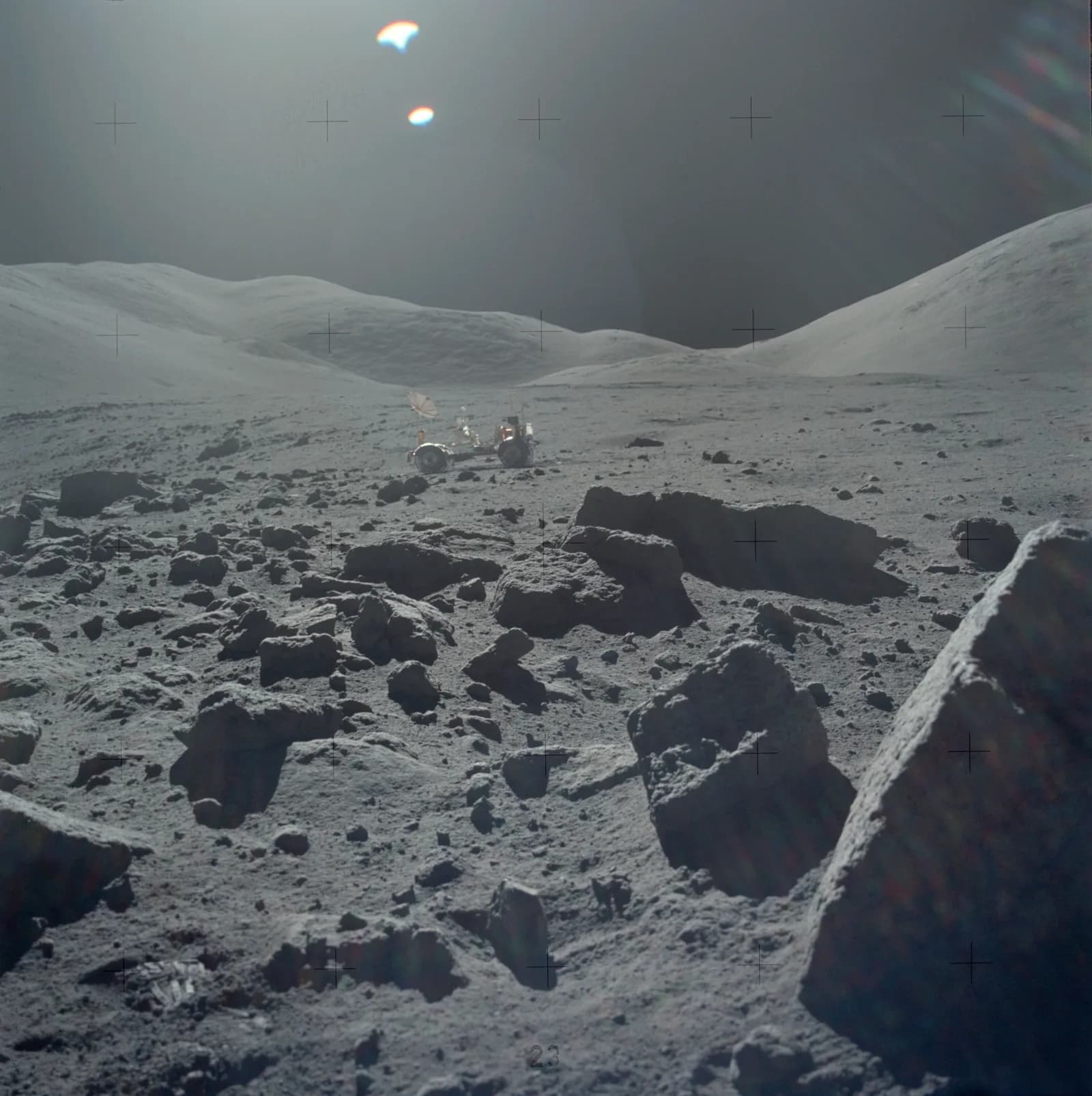
The Moon also keeps the story honest. It is close by space standards, but it is still a hostile world with abrasive regolith, severe temperature swings, radiation, no air, no GPS, no grid, and no repair shop. If a system cannot survive there repeatedly, it is not ready to be called permanent space infrastructure.
Why it matters
The case for the Moon has three parts.
Science
The Moon preserves a record of early solar-system history, impact events, volcanic activity, polar volatiles, and the Earth-Moon system. It is not just a practice field for Mars.
Operations
Lunar missions test the less glamorous but decisive infrastructure: landing zones, power, thermal control, dust mitigation, cargo, field work, communications, and rescue planning.
Rules and markets
The first durable lunar systems will shape norms for resources, safety zones, commercial delivery, international cooperation, and how public agencies buy services beyond Earth orbit.
From landing to infrastructure
A serious lunar program is a sequence of hard-won abilities.
Each step is useful on its own, but the real prize is the chain: landing, surviving, moving, staying connected, resupplying, and doing it again with fewer surprises.
Land
Set cargo or crew down near useful terrain with enough precision that mission planners can choose sites for science and infrastructure, not just safety.
Endure
Keep hardware working through dust, radiation, severe temperature swings, and the long lunar night.
Range
Give robots and astronauts enough reach to study more than a landing zone and return with useful field knowledge.
Link
Build communications, navigation, and relay services so missions can work beyond direct Earth view.
Supply
Deliver cargo often enough that missions can depend on tools, spares, instruments, and future surface systems arriving on schedule.
Make it routine
Turn isolated landings into an operating pattern where lessons carry forward and the next mission starts with more confidence.
The Mars question
The Moon is a proving ground, not a copy of Mars.
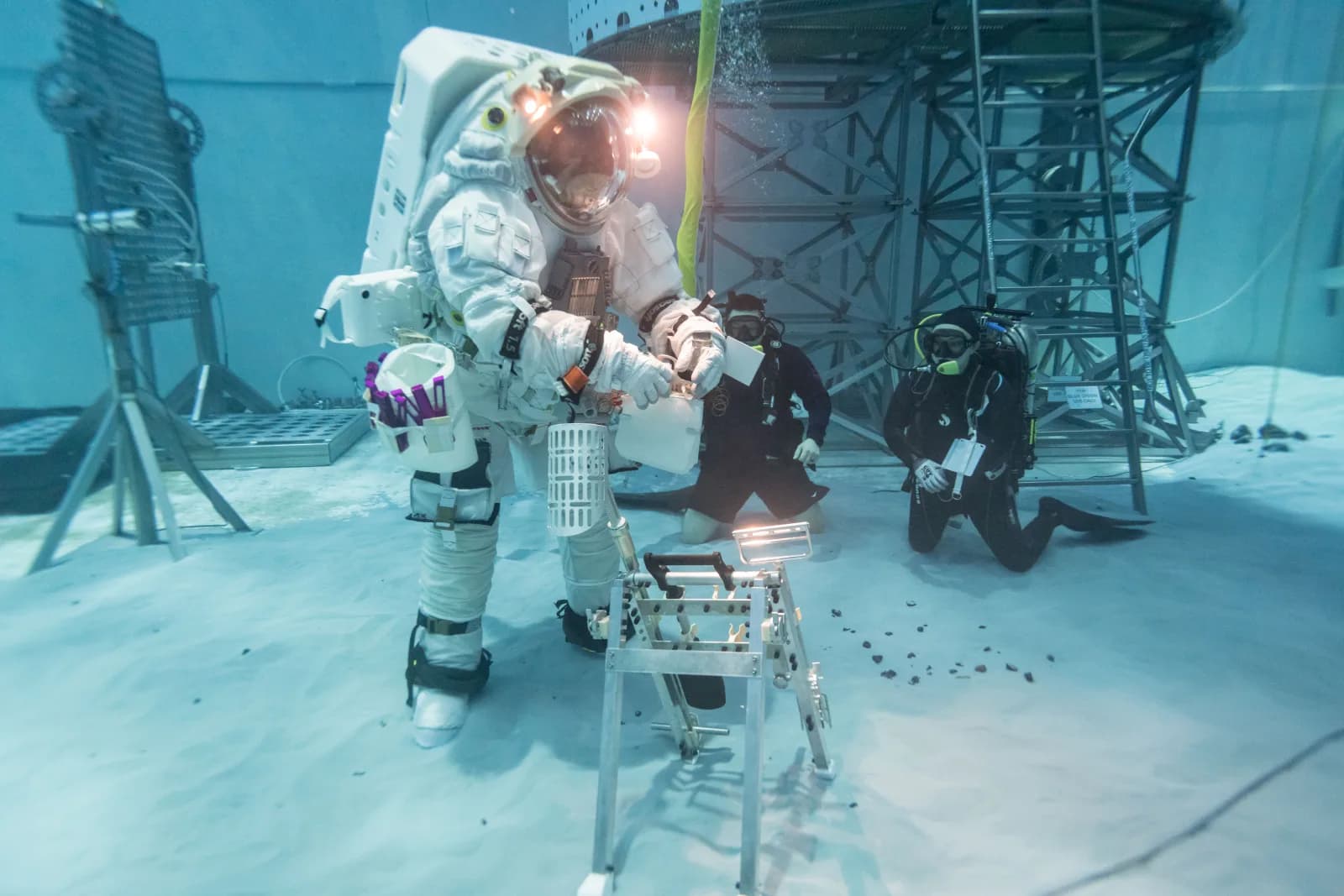
The Moon helps with deep-space operations because it is near enough for repeated attempts and fast lessons. Mission teams can test surface power, crew procedures, cargo handling, autonomy, dust control, and emergency planning without committing to a seven-month transit first.
But it does not make Mars easy. Mars has atmosphere, weather, communications delay, entry and landing challenges, and a different gravity and resource environment. Lunar success should raise confidence in operations, not be mistaken for a solved Mars settlement plan.
How progress becomes visible
Real progress will look practical before it looks dramatic.
The strongest signs will be ordinary systems working again and again: landers that survive, cargo that arrives, rovers that travel farther, relays that keep crews connected, and resource experiments that move from detection toward use.
CLPS landers
Commercial lunar deliveries start to matter when they survive landing, return data, and make the next delivery easier to plan.
Gateway and HLS
The lunar-orbit station and human landing systems need to mature together, including docking, crew transfer, rescue plans, and operations between vehicles.
Surface systems
Suits, rovers, power, communications, navigation, tools, and maintenance become meaningful when they work as one field system.
Water evidence
The water story becomes stronger when prospecting moves beyond detection toward access, extraction, storage, and mission use.
Shared rules
As more countries and companies arrive, transparent norms for resources, safety zones, interference, and shared access become part of the infrastructure story.
Common misunderstanding
Water ice is promising. It is not yet a fuel economy.
Lunar water matters because it could support science, life support, radiation shielding concepts, and eventually propellant production. The word “could” is doing important work. Detecting water, reaching it, extracting it, processing it, storing it, and using it inside a mission architecture are separate milestones.
That distinction keeps the story exciting without turning every south-pole mission into a mining breakthrough. The right question is whether missions are moving from evidence to engineering.
Next steps
Keep the roadmap in view
Get major space updates, set launch reminder interest, or keep exploring the Roadmap that turns space progress into a readable system.