
 Your Guide to Space
Company profile
Northrop builds the parts behind the headline.
Northrop Grumman is not usually the public face of a mission, but its cargo spacecraft, solid rocket boosters, Gateway hardware, and defense-space systems can decide whether larger plans keep moving.
Judge the company by dependencies: Cygnus cargo service, SLS booster flow, HALO integration, Antares 330 readiness, and whether post-ISS stations create another logistics market.
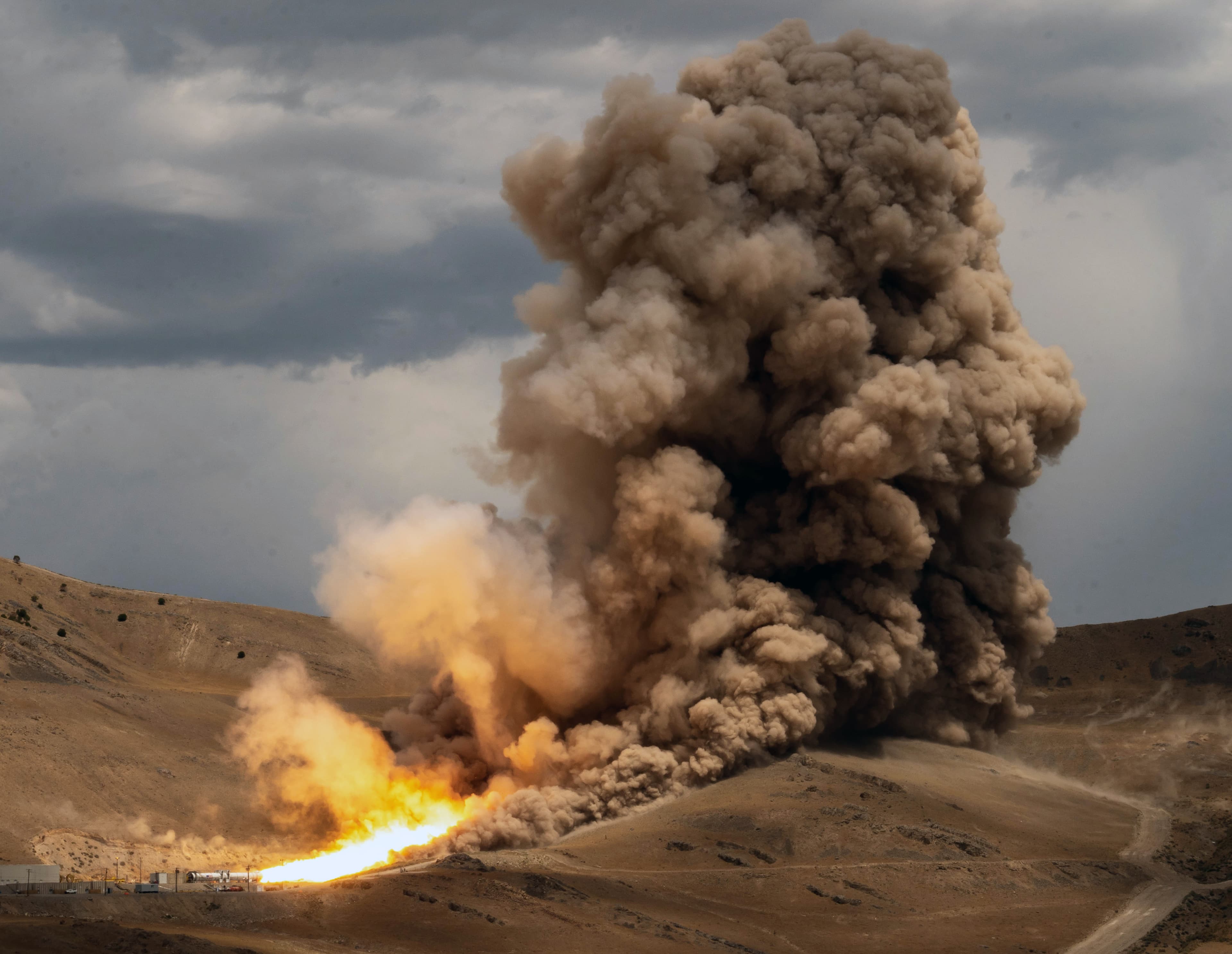
Cygnus has recurring commercial resupply heritage, and Northrop remains embedded in SLS through five-segment solid rocket boosters.
Gateway HALO still has to clear outfitting, integration, testing, launch, and mission service, while Antares 330 must prove a new domestic launch path.
Northrop matters when the roadmap needs cargo, boosters, station hardware, sensors, and reliability culture more than another public vehicle brand.
Recent developments
Latest on Northrop Grumman
Pegasus XL successfully launched the Swift Boost Mission
Launch Library lists Pegasus XL’s Swift Boost Mission as a successful launch on 2026-07-03, and a NASA-linked update says it launched and reached orbit. The mission carries Katalyst Space’s LINK spacecraft, which is intended to rendezvous with and re-boost NASA’s Neil Gehrels Swift Observatory in low Earth orbit.
Why it matters
The quiet supplier can still be the bottleneck.
Northrop Grumman matters because many space milestones ride on hardware that is not the headline vehicle. A launch broadcast focuses on the astronauts and the rocket, but the mission can still hinge on cargo logistics, solid boosters, habitation structures, and docking.
That makes it a different kind of profile — less a single branded rocket than a test of whether critical subsystems keep working across NASA exploration, ISS cargo, Gateway, and national-security spacecraft. Its importance shows up in the programs that would stall if Northrop hardware missed a milestone.
Active programs
Northrop sits inside cargo, Artemis, Gateway, and defense space.
Cygnus and the larger Cygnus XL are the logistics lane, keeping orbital platforms supplied. The SLS solid rocket boosters are the Artemis launch lane. Gateway's HALO module is the lunar-station lane — the pressurized volume, docking, and command capability the station needs to be useful.
Antares 330 is the launch-transition lane, and Northrop's national-security and civil spacecraft work is the quieter durability lane underneath it all.
Current status
Operating heritage, active integration, unresolved launch transition.
Northrop is proven in ISS cargo and solid propulsion: the Cygnus freighter is a recurring NASA resupply workhorse, and its five-segment boosters remain a key Artemis launch dependency.
The Gateway layer is developmental but concrete — the HALO habitation module is in final outfitting and testing in Arizona. The unsettled part is launch transition: the new Antares 330 still has to prove a domestic launch path for Cygnus, and commercial stations have to create demand beyond the ISS.
Watch points
Quiet infrastructure is becoming shared mission hardware.
Watch Cygnus XL missions for the operating proof — launch, capture, cargo transfer, and whether NASA keeps buying the service. Watch Antares 330 for a domestic launch path with its own cadence.
Watch HALO's outfitting, integration, and environmental testing in Arizona, and watch SLS booster flow support a repeatable Artemis schedule. If commercial stations need cargo and habitation, Northrop's quiet role could become more visible.
How it got here
Cygnus made Northrop a recurring ISS cargo-logistics actor under NASA's commercial resupply model.
Northrop-built SLS booster segments continue moving through the Artemis integration chain.
HALO delivery to Northrop's Gilbert facility moved Gateway's first habitation element into final outfitting and testing.
Antares 330 remains the main watch item for restoring a Northrop-controlled domestic Cygnus launch path.
The company remains relevant to exploration through systems that are often less visible than launch providers but harder to replace once a mission depends on them.
Keep exploring
How Rocket Launches Work
How Rocket Launches Work: A countdown-to-orbit guide that explains weather, fueling, max Q, staging, fairings, orbit insertion, payload deployment, and scrub logic.
Reusable Rockets
Why Reusable Rockets Matter: A guide to booster reuse, ship reuse, refurbishment, launch cadence, cost evidence, and why landing is only one part of reusability.
Why the Moon Matters
Why the Moon Matters: A guide to why lunar missions matter for technology, science, geopolitics, operations, resources, and Mars preparation.
Artemis Explained
Artemis Explained: A guide to SLS, Orion, Gateway, Human Landing System, spacesuits, surface logistics, and how the Artemis missions build on each other.
Commercial Space Stations
Commercial Space Stations: A guide to why post-ISS stations are being built, who is building them, who might pay, and what has to work before they become real infrastructure.
Next steps
Keep the roadmap in view
Get major space updates, set launch reminder interest, or keep exploring the Roadmap that turns space progress into a readable system.