
 Your Guide to Space
Guide
The space economy is already here. It is just more practical than the hype.
The real space economy is built from satellites, ground equipment, data, connectivity, launch, manufacturing, defense, research, weather, navigation, and government demand. Lunar mining, space factories, and settlement markets are still early evidence problems.
Separate working markets from hoped-for markets. Revenue, repeat customers, operations, contracts, and delivered missions matter more than futuristic category names.
Sources reviewed June 2026
Where value sits
Most space money still points back to Earth.
Space as an industry is not one market. It includes spacecraft and rocket manufacturing, launch services, satellite operations, ground networks, terminals, data products, connectivity, weather, navigation, defense, research, and applications that customers use without thinking about orbit.
That is why the near-term economy is heavily Earth-facing. Communications, navigation, remote sensing, national-security demand, launch, ground systems, and equipment have clearer customers than lunar resources or settlement markets.
Market-size reports can be useful, but they are not interchangeable. Space Foundation, SIA, agencies, and companies can group activity differently, so the scope of the number matters as much as the number itself.
Market map
The useful split is upstream, downstream, and early off-Earth demand.
A space business can sell hardware, transportation, operations, data, connectivity, public missions, or future in-space services. Mixing those categories makes the economy sound simpler than it is.
Build and launch the system
Rockets, satellites, spacecraft buses, stations, terminals, ground networks, insurance, software, and mission operations.
Sell the enabled service
Broadband, navigation, weather, Earth data, timing, defense services, agriculture, logistics, finance, and disaster monitoring.
Prove off-Earth markets
Stations, lunar cargo, servicing, refueling, manufacturing, and resource claims still need repeat customers and operating evidence.
Market layers
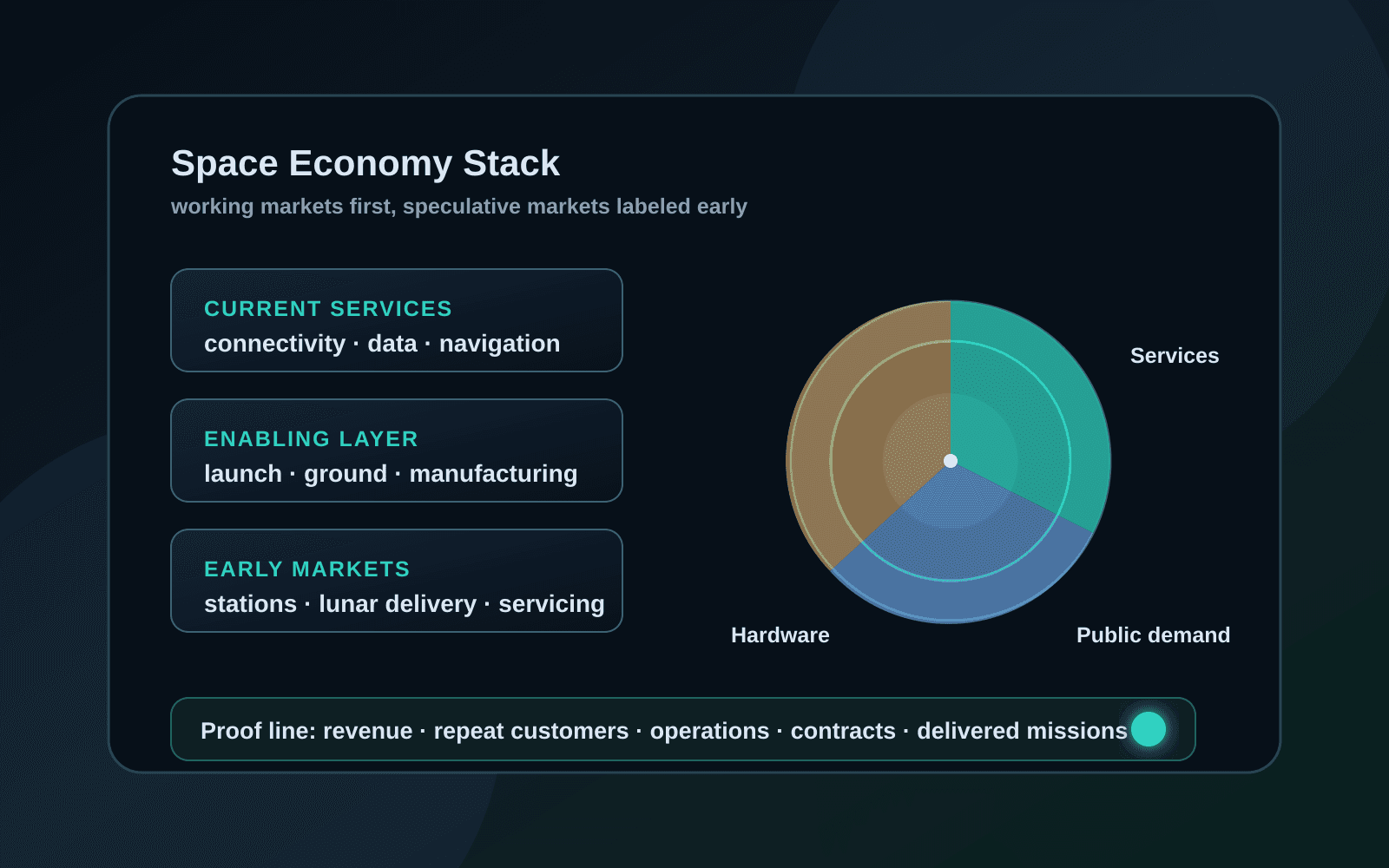
Read space business in three layers.
Current services
Connectivity, Earth observation, navigation, weather, defense, and data products are working examples because customers already pay for outcomes.
Enabling infrastructure
Launch, manufacturing, ground networks, terminals, software, insurance, regulation, and operations are the layer that lets those services keep running.
Emerging markets
Commercial stations, lunar deliveries, servicing, refueling, and manufacturing tests are promising only when they move from awards and demos into repeat demand.
What counts
A space market is strongest when customers return.
Contracts, subscriber growth, data purchases, renewal demand, production cadence, and repeat missions are stronger than total-addressable-market rhetoric.
The space economy is already large on Earth-facing services, but market reports use different scopes. Off-Earth markets remain watch areas until they show repeat customers and operations.
Defined scope
Does the source count satellites, ground equipment, launch, services, defense, downstream applications, or all of them together?
Named customer
A real market has a buyer: subscribers, agencies, defense customers, station users, payload owners, data buyers, or repeat launch customers.
Repeat operation
One demonstration matters less than cadence, renewals, reflight, replenishment, station utilization, payload delivery, or recurring data demand.
Risk label
Early station, lunar, servicing, manufacturing, and resource claims should be labeled by evidence stage: award, demo, flight result, or recurring service.
Consumer visibility
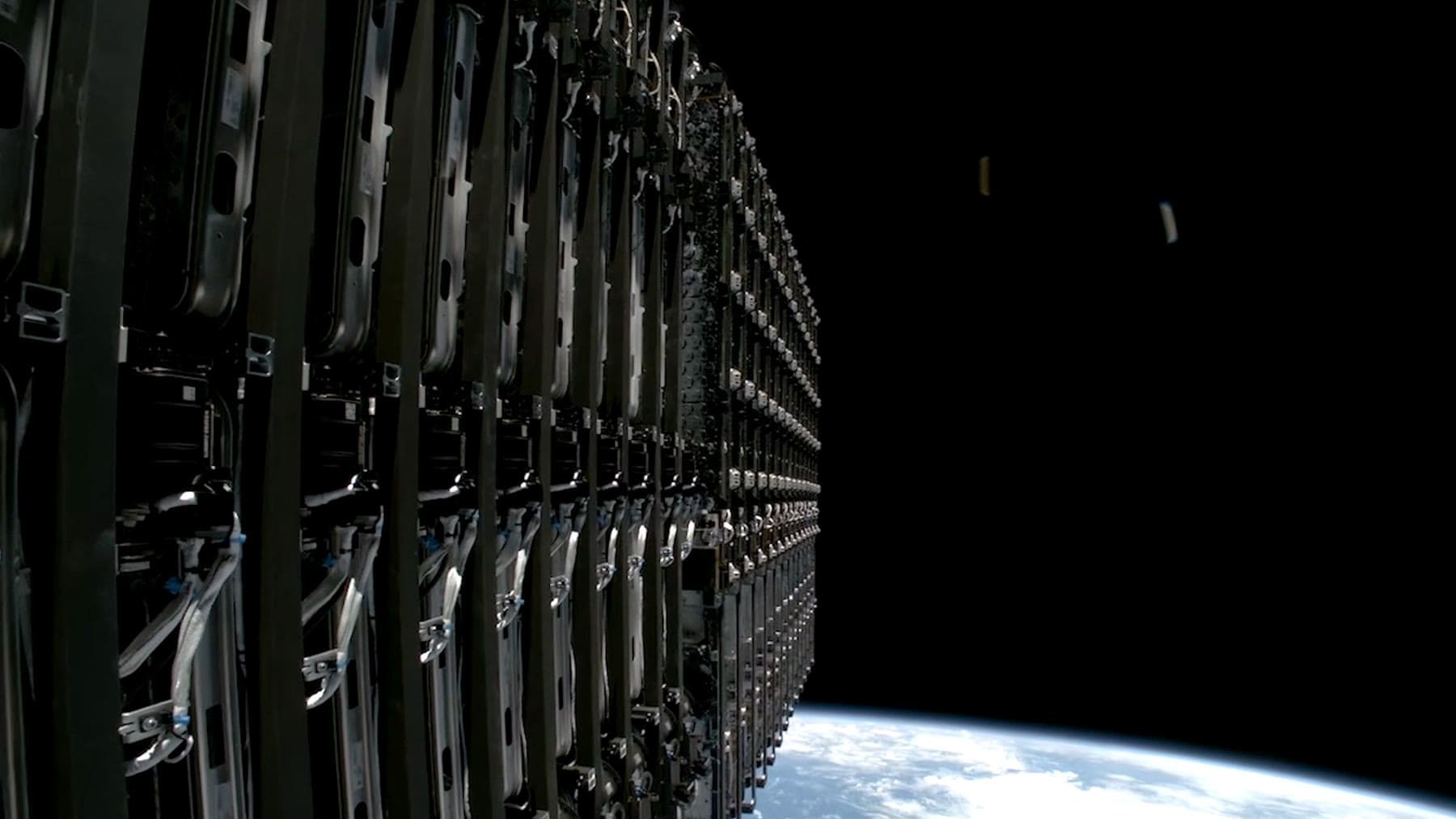
Satellites are the clearest public business case.
Broadband, direct-to-device communications, Earth data, navigation, and weather services make space visible to ordinary users without requiring them to care about orbital mechanics.
Launch is crucial, but it is usually an enabler. The durable business question is what the payload does, who pays for it, and whether the customer comes back.
That practical value is why space as an industry should be explained without turning every future category into investment hype.
How to follow it
Watch contracts, cadence, and customers.
The strongest updates name who is paying, what was delivered, whether the service repeats, and which constraint changed: contract, launch backlog, constellation revenue, station customer, sensing demand, regulator decision, replenishment cadence, or lunar payload result.
Repeat commercial station customers and signed utilization
Constellation revenue, subscriber quality, and replacement cadence
Government anchor contracts that become recurring service demand
Launch price, cadence, backlog, and payload diversity
Lunar service awards, delivered payloads, and post-landing data return
Remote-sensing demand tied to actual customer decisions
Common traps
These shortcuts make the story less accurate.
Space as an Industry headlines can make one milestone sound like a finished system. These distinctions keep the update tied to what was actually demonstrated, decided, or still missing.
Space economy does not mean everything is about mining asteroids or settling Mars.
A big total market number can hide very different business models and source definitions.
Government demand is not separate from the commercial market; it often anchors it.
Cheaper launch does not automatically create profitable payload demand.
Next steps
Keep the roadmap in view
Get major space updates, set launch reminder interest, or keep exploring the Roadmap that turns space progress into a readable system.