
 Your Guide to Space
Routine
Starlink Group 10-50
A Falcon 9 mission carrying Starlink satellites for SpaceX's orbital internet network.
The supplied launch data marks this mission as high importance, and it is notable as another successful Falcon 9 Starlink flight paired with a 13th successful recovery of booster B1090.
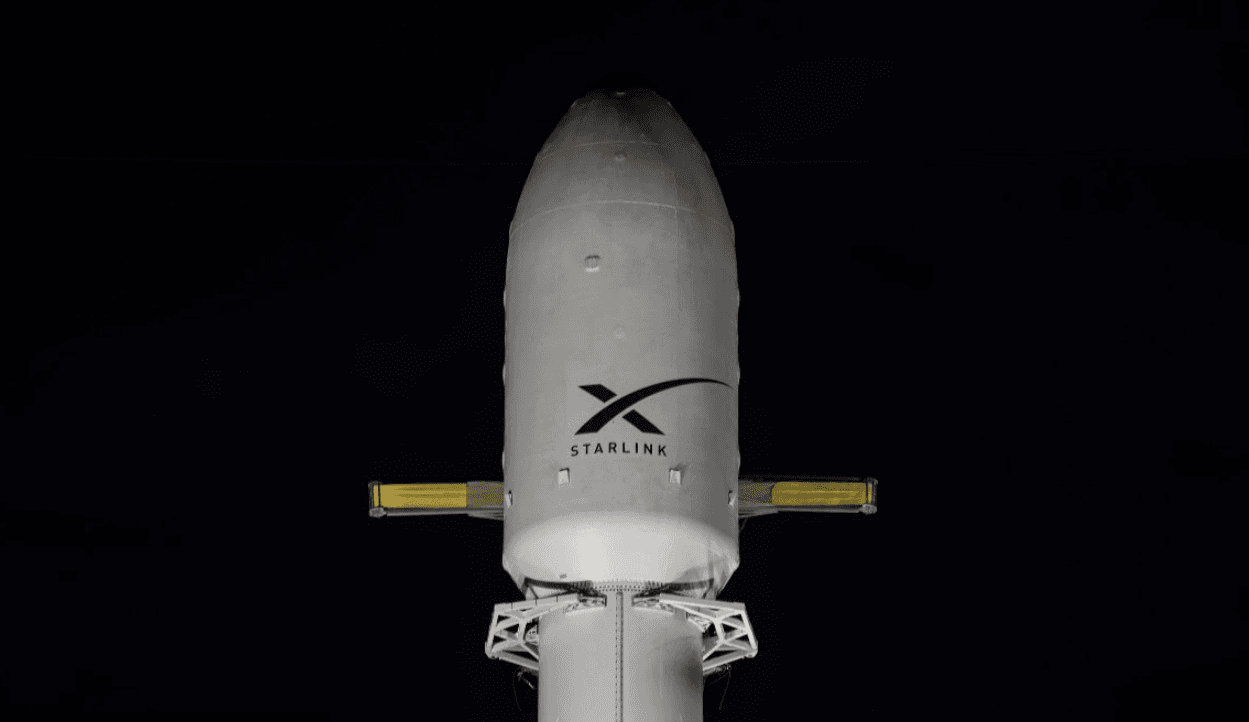
Source record
Your local time
SpaceX
Cape Canaveral SFS, FL, USA
Operational cadence
Thirty-second brief
What is launching, why it matters, and what to watch.
A Falcon 9 mission carrying Starlink satellites for SpaceX's orbital internet network.
This mission adds to SpaceX’s repeatable launch cadence and reuse story: the supplied data shows booster B1090 flew and landed successfully for a 13th time, supporting the idea that Falcon 9 reusability is sustaining frequent orbital service.
Operator Confirmation Of Satellite Deployment And Early On-orbit Health: mission cargo separation is the first sign that the spacecraft part of the mission can begin. Any Follow-up Details On The Two Besxar Test mission cargo Mentioned In The Supplied Mission Description: Any Follow-up Details On The Two Besxar Test mission cargo Mentioned In The Supplied Mission Description is one of the observable moments that can change how this mission should be interpreted. Whether SpaceX Highlights The 13-flight Milestone For Booster B1090: Whether SpaceX Highlights The 13-flight Milestone For Booster B1090 is one of the observable moments that can change how this mission should be interpreted.
Operational cadence
Understand the mission behind the countdown.
The immediate objective: SpaceX’s Falcon 9 Block 5 launched the Starlink Group 10-50 mission from Space Launch Complex 40 on 2026-07-05 at 10:50 UTC, and the launch is listed as successful in the supplied launch record. The same record also says first-stage booster B1090 completed a successful droneship landing on A Shortfall of Gravitas after its 13th flight. The mission description in the supplied data says the mission cargo included 29 Starlink satellites and two Besxar test mission cargo, though post-launch deployment details beyond the successful mission status should still be checked against follow-up operator updates.
The bigger story: Satellite internet.
What is genuinely new: Nothing about Falcon 9 is fundamentally new here; the useful delta is another deployment cycle for a live broadband constellation.
Why a non-expert might care: Indirect but practical: broadband coverage, emergency connectivity, and rural access depend on network capacity and ground service, not launch alone.
Boundaries
What success would not prove.
It would not prove a new launch capability; Falcon 9 and Starlink are already operational.
It would not by itself prove improved service quality for users on the ground.
Watch points
Moments that change the read.
Use the official watch link near the target time, and expect holds if the provider, range, or weather teams pause the count.
- Operator Confirmation Of Satellite Deployment And Early On-orbit Health: mission cargo separation is the first sign that the spacecraft part of the mission can begin.
- Any Follow-up Details On The Two Besxar Test mission cargo Mentioned In The Supplied Mission Description: Any Follow-up Details On The Two Besxar Test mission cargo Mentioned In The Supplied Mission Description is one of the observable moments that can change how this mission should be interpreted.
- Whether SpaceX Highlights The 13-flight Milestone For Booster B1090: Whether SpaceX Highlights The 13-flight Milestone For Booster B1090 is one of the observable moments that can change how this mission should be interpreted.
- How Quickly SLC-40 And This Booster Are Turned Around For Future Missions: How Quickly SLC-40 And This Booster Are Turned Around For Future Missions is one of the observable moments that can change how this mission should be interpreted.
Where it fits
Past evidence, this mission, next follow-up.
Previous relevant milestone: Previous Starlink deployment and Falcon 9 booster reuse cycles.
This launch: A Falcon 9 mission carrying Starlink satellites for SpaceX's orbital internet network.
Next required milestone: Deployment, checkout, and later network capacity or service updates.
Useful comparison: Compare it with other routine Falcon 9 network deployments, not with first flights or science missions.
About SpaceX
SpaceX: Launch operator and spacecraft builder driving Falcon cadence, Starship development, Starlink deployment, Dragon missions, and lunar lander work.
About Falcon 9 Block 5
Falcon 9: Operational partially reusable medium-lift rocket that made high-cadence commercial launch and booster landing routine.
Satellite internet
Satellite internet is where space infrastructure has already become a mass-market service, but it also forces hard questions about orbital traffic, spectrum, astronomy, and replacement cadence.
SpaceX
SpaceX: Launch operator and spacecraft builder driving Falcon cadence, Starship development, Starlink deployment, Dragon missions, and lunar lander work.
Falcon 9
Falcon 9: Operational partially reusable medium-lift rocket that made high-cadence commercial launch and booster landing routine.
How to watch a rocket launch
How to Watch a Rocket Launch: A viewer guide for livestreams, countdown clocks, holds, weather rules, booster landings, mission audio, and reliable sources.
Confirmed
Confirmed, interpreted, and still unknown.
Confirmed: Starlink Group 10-50 is listed with SpaceX as provider. Falcon 9 Block 5 is the listed vehicle. Space Launch Complex 40 is the listed launch site. Low Earth Orbit is the listed destination or orbit class.
Starman Nova interpretation: This mission adds to SpaceX’s repeatable launch cadence and reuse story: the supplied data shows booster B1090 flew and landed successfully for a 13th time, supporting the idea that Falcon 9 reusability is sustaining frequent orbital service. Nothing about Falcon 9 is fundamentally new here; the useful delta is another deployment cycle for a live broadband constellation.
Still unknown: Postflight findings, commissioning details, and later mission outcome still need official confirmation.
Routine operation completed; network result pending
Post-launch verdict.
Starlink Group 10-50 has moved out of pre-launch watch and into outcome follow-up.
The launch layer can be separated from deployment, spacecraft health, commissioning, and mission success.
Still pending: Deployment confirmation, First contact, Commissioning, Final service or science result.
Reminder options
Track this launch
Save interest in this launch and join the briefing list for well-sourced schedule changes, webcast availability, and post-launch results.
Launch reminder
Save this specific launch so future schedule and status changes can be matched to your interest.
Recent coverage
Latest updates
Falcon 9 launched Starlink Group 10-50 successfully, with booster B1090 landing again: SpaceX’s Falcon 9 Block 5 launched the Starlink Group 10-50 mission from Space Launch Complex 40 on 2026-07-05 at 10:50 UTC, and the launch is listed as successful in the supplied launch record. The same record also says first-stage booster B1090 completed a successful droneship landing on A Shortfall of Gravitas after its 13th flight. The mission description in the supplied data says the mission cargo included 29 Starlink satellites and two Besxar test mission cargo, though post-launch deployment details beyond the successful mission status should still be checked against follow-up operator updates.
Falcon 9 set for a source-confirmed Starlink launch from SLC-40: SpaceX is targeting 2026-07-05T10:46:32Z for Falcon 9 Block 5 to launch Starlink Group 10-50 from Space Launch Complex 40 at Cape Canaveral Space Force Station. The launch is listed as Go for Launch, with an official webcast reference and an 85% GO weather update in the supplied launch record.
Published 2026-07-06.
Published 2026-07-05.
Next steps
Keep the roadmap in view
Get major space updates, set launch reminder interest, or keep exploring the Roadmap that turns space progress into a readable system.