
 Your Guide to Space
Mission
Mars Missions
Mars missions matter because they turn settlement talk into hard evidence about samples, landing systems, robotic endurance, and international competition.
NASA's Mars Sample Return reset, JAXA MMX FY2026 launch flow, Perseverance sample-cache health, ESCAPADE Mars science, and any architecture that can reduce cost without erasing science value
Why it matters
Mars progress is a sample-and-systems story.
Mars is where exploration slogans become concrete questions: can robots collect the right material, preserve it, and eventually return it to Earth without letting cost and complexity overwhelm the science?
Returned samples matter because Earth laboratories can study minerals, chemistry, textures, ages, and possible habitability clues far beyond what a rover can carry. The hard part is the chain: cache selection, sample retrieval, a Mars ascent vehicle, orbital rendezvous, Earth return, containment, and budget discipline.
The pieces in play
The current Mars story revolves around sample return.
Mars Sample Return is the central tension: Perseverance has already made a scientifically valuable cache, but NASA still has to land a return architecture inside a credible budget and schedule.
MMX gives the Mars system a second sample-return clock through Phobos, while Perseverance, orbiters, and newer Mars science missions keep producing real measurements even when human-settlement language runs ahead of hardware.
NASA Mars Sample Return
NASA is reassessing Mars Sample Return around lower-cost architecture options.
Mars Sample Return is the architecture and budget test around one of planetary science's highest-value prizes.
JAXA Martian Moons eXploration
JAXA lists MMX as a fiscal-year 2026 Phobos sample-return launch target.
MMX gives the Mars system a separate Phobos sample-return path on Japan's fiscal-year 2026 launch clock.
Perseverance sample cache
Perseverance has already cached scientifically selected samples on Mars.
Perseverance's cache is already on Mars, which is why returning the samples remains scientifically valuable.
ESCAPADE Mars science
ESCAPADE is a twin-spacecraft Mars plasma and atmosphere mission tied to New Glenn's early manifest.
ESCAPADE studies how Mars loses atmosphere to space, adding orbital context while sample-return plans mature.
What the image shows
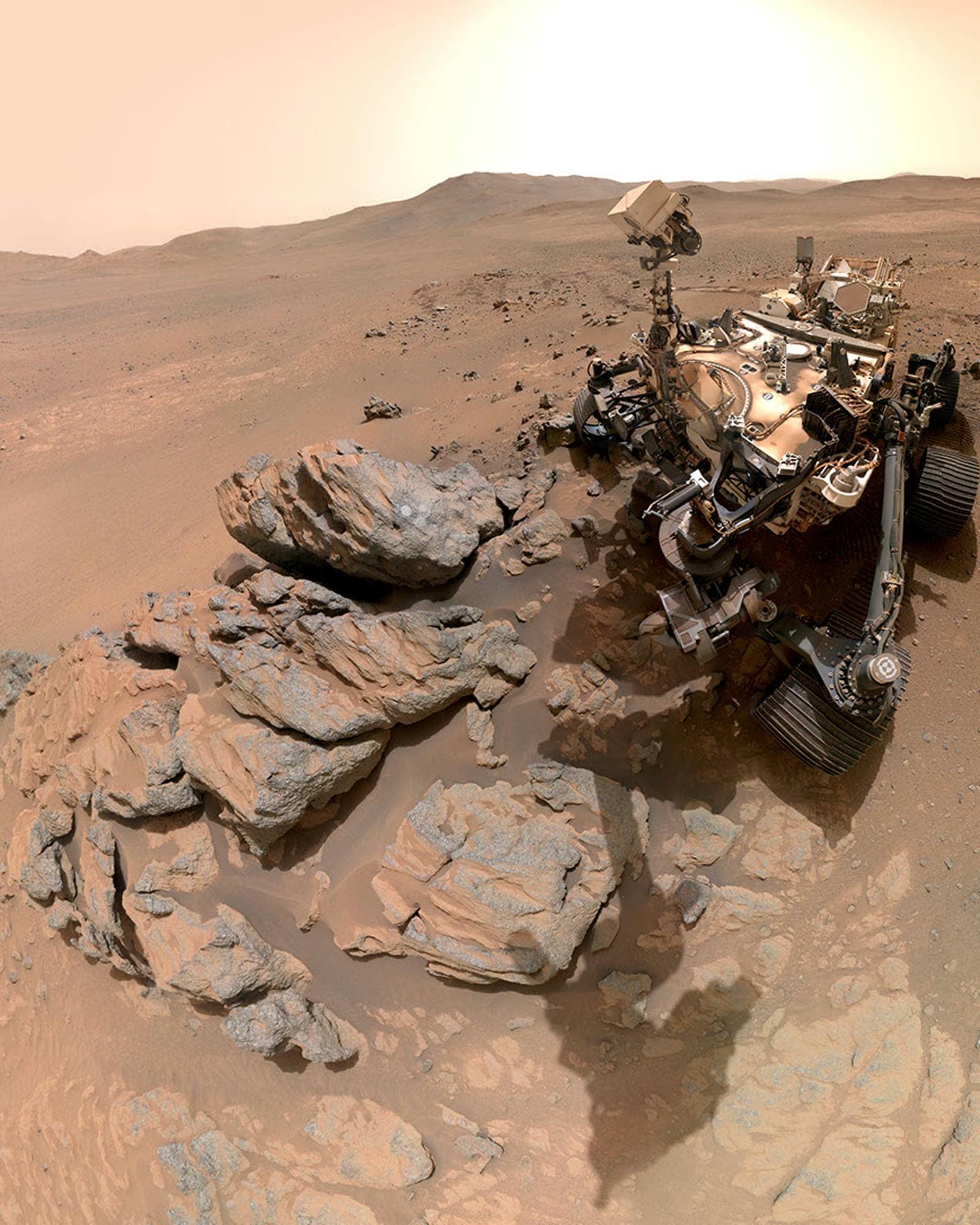
A rover photo shows Mars becoming a workplace.
Perseverance imagery matters because it shows Mars as a place where machines can drive, drill, select samples, and build a record for scientists on Earth. The next challenge is bringing some of that material home.
Already real
Mars robots have already turned the planet into a workplace.
The strongest sign of progress is operational endurance. Rovers have driven, drilled, cached samples, observed weather and geology, and turned Mars from a destination into a place where spacecraft can work for years.
Mars rovers can operate for years, cache samples, and turn the surface into a long-duration science workplace.
Perseverance has already created the sample cache that makes Mars Sample Return scientifically valuable.
JAXA's MMX gives Mars-region sample return a parallel path through Phobos, not the Martian surface.
Still to prove
The sample-return architecture is still the hard question.
The unresolved story is not whether Mars samples are valuable; it is whether the return chain can become affordable, technically coherent, and protected from redesigns that dilute the science reason for flying.
- 01Can MSR become affordable enough to fly without losing the science reason it exists?
- 02Will MMX launch on schedule and return Phobos material before Mars surface samples arrive?
- 03Which Mars plans are hardware-backed missions and which are still architecture studies?
Worth watching
Watch whether Mars plans become affordable flight systems.
A meaningful Mars update should clarify architecture, preserve sample science, protect the cached material, or move a mission from planning language into hardware and launch flow.