
 Your Guide to Space
Roadmap pathway
Mars
What stands between today's robotic Mars exploration and a recurring human presence?
Human question
What stands between today's robotic Mars exploration and a recurring human presence?
A sober pathway from robotic proof to the first human landing, repeated missions, and the distant idea of settlement.
Plain-language answer
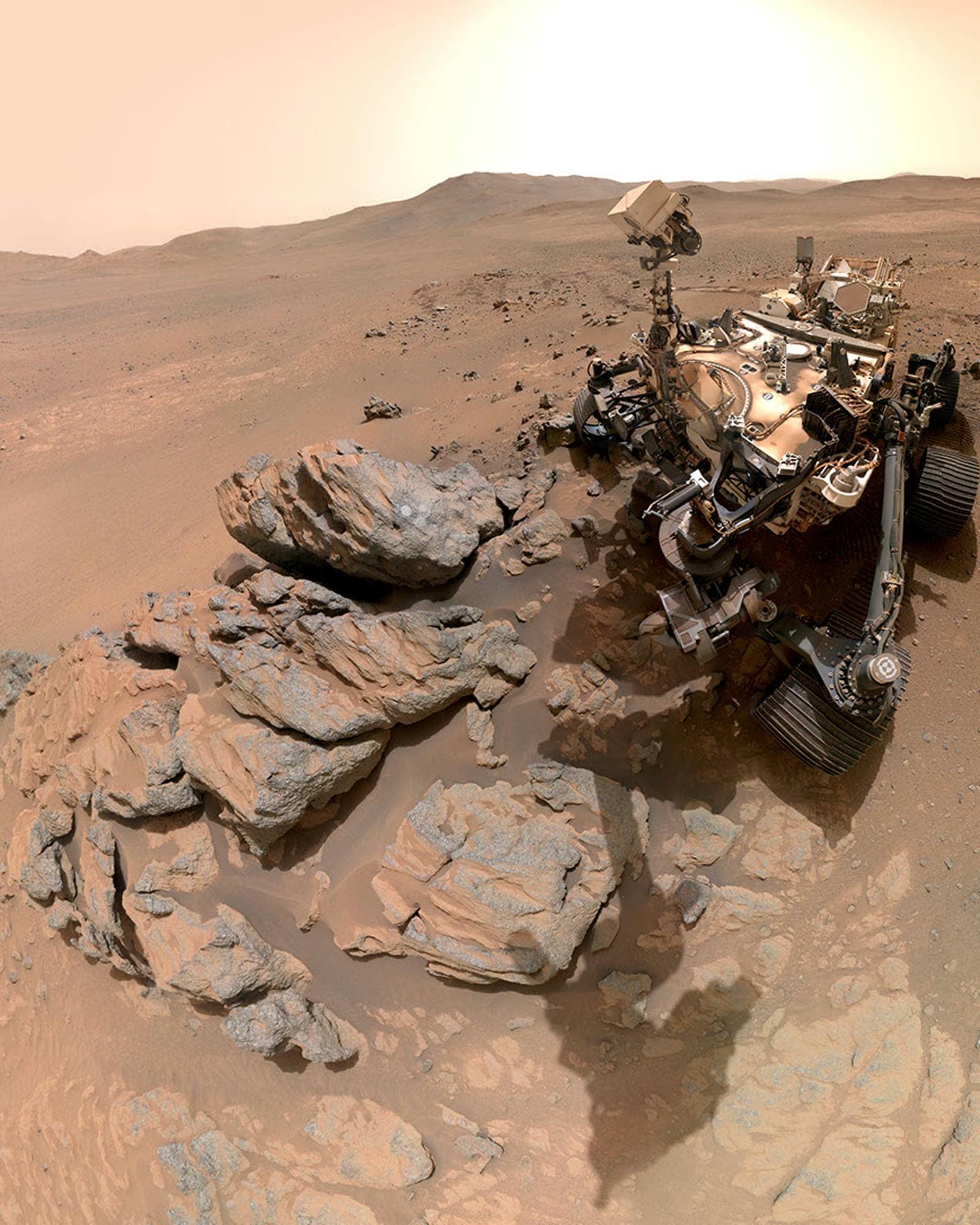
Robotic Mars exploration is operational; human Mars systems remain frontier and dependency-heavy.
What counts as success
- first human landing
- safe return
- recurring missions
- permanently staffed base
- self-sustaining settlement as boundary
Current state
Where mars stands right now.
The strongest evidence to date, what's actively in progress, the next meaningful test, and the biggest thing still in the way.
Then to horizon
From what we've proven to where this is heading.
The pathway moves from demonstrated history through what's operating today and what's actively under construction, out toward the frontier outcomes that still require major breakthroughs.
- flybys and orbiters
- robotic landers
- long-lived rovers
- aerial flight on Mars
- robotic science
- MOXIE oxygen experiment
- architecture studies
- long-duration human research
- heavy cargo landing tests
- surface power
- life-support and radiation systems
- predeployed return architecture
- first human mission
- recurring base
- local propellant economy
- self-sustaining civilization as imagination boundary
Capabilities
What mars actually depends on.
Each card names the system, how mature it is today, and the specific milestone that would genuinely change the outlook.
Robotic Mars exploration
Robotic Mars exploration uses spacecraft, robots, or returned material to turn distant places from unknown terrain into measured environments.
- Next evidence
- More cadence, lower cost, or broader user access.
Heavy Mars cargo entry, descent, and landing
Mars has enough atmosphere to make landing violent and not enough to make it easy. Human-scale cargo landing remains one of the central unsolved gates.
- Outcomes unlocked
- A human landing on Mars, A recurring Mars base
- Next evidence
- A public demonstration that performs the capability in its intended environment.
Human Mars transit
Human Mars transit moves people or cargo far enough and often enough for later systems to matter for mars missions.
- Next evidence
- A public demonstration that performs the capability in its intended environment.
Safe Earth return from Mars-class missions
Safe Earth return from Mars-class missions moves people or cargo far enough and often enough for later systems to matter for mars missions.
- Next evidence
- A public demonstration that performs the capability in its intended environment.
Mars atmospheric oxygen production
MOXIE showed the chemistry can work on Mars at small scale; a crewed architecture would need much more oxygen, uptime, power, and storage.
- Outcomes unlocked
- A human landing on Mars, A recurring Mars base
- Next evidence
- A public demonstration that performs the capability in its intended environment.
Mars water extraction
Mars water extraction turns local material into something missions can actually use, such as water, oxygen, fuel, shielding, or construction feedstock.
- Next evidence
- A public demonstration that performs the capability in its intended environment.
Mars return-fuel production
Mars return-fuel production turns local material into mission supplies instead of importing everything for mars missions.
- Next evidence
- A public demonstration that performs the capability in its intended environment.
Mars surface habitat
Mars surface habitat is the pressurized place where people can live, work, recover, and survive routine problems away from Earth.
- Next evidence
- A public demonstration that performs the capability in its intended environment.
Medical autonomy
Medical autonomy keeps people alive, healthy, and useful when Earth is far away for earth orbit missions.
- Next evidence
- A public demonstration that performs the capability in its intended environment.
Psychological health for isolated crews
Psychological health for isolated crews keeps people alive, healthy, and useful when Earth is far away for earth orbit missions.
- Next evidence
- A public demonstration that performs the capability in its intended environment.
Dependency map
Prerequisites for mars outcomes.
Each outcome shows what already exists, what is being built, and the weakest missing link.
A human landing on Mars
Robots have made Mars familiar, but landing humans requires heavy cargo EDL, long-duration health, power, return, and predeployed systems.
- Weakest link
- heavy Mars landing and safe return architecture
- Closest equivalent today
- robotic landers, long-duration station missions, analog studies, and MOXIE-scale resource experiments
A recurring Mars base
Recurring Mars operations require more than the first landing: cargo cadence, surface power, repair, return fuel, crew health, and financing have to persist over launch windows.
- Weakest link
- sustained logistics and safe return across repeated launch windows
- Closest equivalent today
- Antarctic stations, ISS operations, Mars analogs, and robotic Mars infrastructure
A self-sustaining Mars settlement
A self-sustaining settlement is an imagination-boundary outcome, not a current engineering schedule.
- Weakest link
- industrial, biological, medical, social, and economic independence from Earth
- Closest equivalent today
- no close equivalent; ISS and Antarctic stations remain Earth-dependent
Who is working on it
The organizations actually moving mars forward.
Agencies, commercial teams, researchers, and operators all contribute differently — and they're not all at the same stage.
NASA
Connected to mars through capability evidence, technology work, operations, or program demand.
Planned work
Active programs with real hardware behind them.
Near-term work is shown with its target type, current hardware state, and the sources that back it up.
No single operating program owns this pathway.
Current progress is distributed across research programs, robotic missions, architecture studies, and technology demonstrations rather than one funded deployment stack.
What the teams are trying to prove
The specific tests and demonstrations that could change mars.
Each one is concrete because it clears a real dependency — it's not a milestone for its own sake.
Mars robotic missions
MOXIE-class resource demonstrations
heavy entry, descent, and landing studies
surface power and habitat research
What remains unsolved
The hard problems still standing in mars's way.
These are the unsolved questions that will ultimately determine whether this pathway gets to routine — not whether it gets to demonstration.
Heavy Mars landing
Human missions need much heavier payloads than robotic landers, with accuracy, reliability, and cargo survival.
A Mars entry, descent, and landing system places human-scale cargo on the surface intact.
Deep-space radiation protection
Radiation risk changes with solar activity, mission duration, shielding mass, storm shelters, and individual health.
Mission architectures demonstrate practical storm shelters, exposure monitoring, shielding, and medical response for deep-space crews.
Closed-loop life support
Recycling systems must be reliable, maintainable, safe for humans, and tolerant of failures far from replacement parts.
A long-duration habitat demonstrates high-closure air and water systems with maintainable repair paths.
Long-duration human health
Bone, muscle, vision, radiation, immunity, sleep, mental health, and medical autonomy all interact.
Crews complete longer missions with validated countermeasures and realistic emergency care.
Local resource extraction at useful scale
Extraction needs power, machinery, excavation, processing, storage, maintenance, and a use case nearby.
A surface demonstration produces and uses a meaningful quantity of material in an actual mission loop.
Reliable off-world power
The Moon has long nights, Mars has dust and distance from the Sun, and nuclear systems add safety and deployment challenges.
A surface system runs through difficult environmental cycles while supporting real mission loads.
A day in this future
What mars would actually look like.
A concrete scenario paired with today's reality — so the future stays vivid without losing its honesty.
Scenario
A first Mars crew would likely arrive after cargo, power, communications, habitats, spares, and return systems had already landed. The drama is not only the first footprint; it is whether the crew can live, repair, make decisions, and come home with help many light-minutes away.
Reality check
This is the most sober pathway. The wonder comes from the difficulty: every dependency has to work across distance, time, radiation, dust, politics, and money.
- Already exists
- Robotic Mars exploration
- Weakest link
- heavy cargo landing, radiation, transit duration, surface power, return fuel, medical autonomy, and financing
- Classification
- Operational Now / In Demonstration / Active Development / Plausible Frontier / Imagination Boundary
Latest movement
What's changed on this path recently.
These updates are here because they shift the proof, the schedule, the risk profile, or what this pathway depends on next.
Commercial LEO transition remains an active procurement watch
The post-ISS transition is one of the earliest tests of whether low Earth orbit can become a service market.
Current signals
The live sources that could change how mars reads.
Not every headline earns a place here. These are the surfaces — Space Now, Launch Intelligence, Nations — where a new result or capability shift can genuinely update this pathway's picture.
Read the current briefing
Start with the live editorial view when you want to know which current developments are strong enough to touch the Roadmap.
Current updateStarship Flight 12 investigation
Mars depends on the same hard proof chain: launch reliability, reuse, refueling, high-energy departure, entry, and surface logistics.
LaunchesFollow near-term milestones
Launch Intelligence separates routine cadence from missions that can change schedule confidence, capability evidence, or a pathway's next step.
Related content
Go deeper on the systems this depends on.
Related missions, companies, rockets, and guides put each dependency in sharper context.
Sources and review
Sources behind this pathway.
Last editorial review: 2026-06-18. If something looks wrong, send the claim, the source, and a stronger reference.
MOXIE oxygen production on Mars
MOXIE demonstrated small-scale oxygen production from the Martian atmosphere on Mars.
Open sourceArtemis campaign overview
NASA is pursuing a Moon-to-Mars campaign with Orion, SLS, Gateway, commercial landers, surface systems, and international partners.
Open sourceCommercial Crew Program
NASA purchases crew transportation services to low Earth orbit from commercially developed systems.
Open sourceStay with this pathway
Save your interest in marsand we'll surface relevant updates as the story develops.