
 Your Guide to Space
Company profile
Rocket Lab is the small-launch operator trying to scale up.
Electron is the proof: dedicated smallsat launch, a kick stage, and real customer cadence. Neutron is the harder second act, a reusable medium-lift rocket that would move Rocket Lab into a bigger market if it reaches flight and reuse.
Sort the company into three layers: Electron operations, spacecraft systems, and Neutron scale-up. Electron proves the operating discipline; Neutron has to prove the larger reusable vehicle.
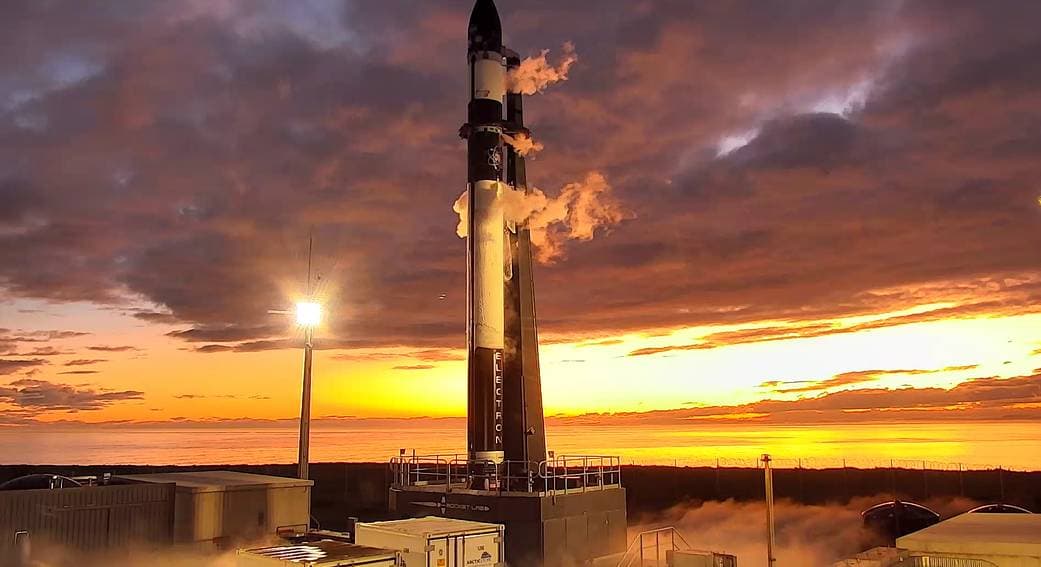
Rocket Lab has flown dedicated smallsat missions, deployed payloads with Electron and kick stages, and built spacecraft buses for NASA, defense, and commercial customers.
The larger promise depends on engine qualification, first flight, launch-site readiness, reuse evidence, and customers trusting a vehicle that has not yet entered service.
Rocket Lab matters if it gives small missions schedule control while adding enough medium-lift capacity to compete beyond the small-launch niche.
The quick read
Rocket Lab: the quick read.
A few fast facts to get oriented before the deeper story on what it builds, what still has to work, and where it is headed.
Small launch, spacecraft manufacturing, launch sites, and reusable medium-lift development.
Where the work happens
Watch Neutron milestones, Electron cadence, reuse experiments, and satellite-platform contracts.
Recent developments
Latest on Rocket Lab
Rocket Lab’s secretive Curveball suborbital mission succeeds
Rocket Lab successfully launched the government-classified Curveball mission on a suborbital HASTE flight from Wallops Flight Facility. The supplied record reports liftoff and launch success, while mission details remain to be announced.
Rocket Lab targets July 1 Electron launch for iQPS radar satellite mission
Rocket Lab is targeting 2026-07-01 01:00 UTC for an Electron launch from Launch Complex 1A in Mahia, New Zealand, carrying the Earth science mission "The Grain Goddess Provides (iQPS Launch 7)." The launch is currently listed as Go for Launch, though recent updates show at least one weather-related slip before the current T-0.
What happened with Electron | Ten Owl Of Ten (StriX Launch 10)
Electron | Ten Owl Of Ten (StriX Launch 10) is now in post-launch review. The latest cached status is launch successful.
Why it matters
What changes if a small-launch survivor scales up?
Most rocket startups never reach orbit. Rocket Lab did, then kept going — building a genuine track record for NASA, the National Reconnaissance Office, the Space Force, and commercial constellation operators. That makes it one of the few real alternatives in a launch market that otherwise bends around SpaceX.
The more interesting thread is vertical integration: Rocket Lab can supply the satellite as well as the ride — bus, solar panels, flight software, the works. If Neutron flies, a company that today owns the small end of the market starts competing for the big contracts.
Active programs
Rocket Lab is more than one rocket.
Electron is the operational small-satellite launcher, for customers who want to pick their own orbit and schedule instead of waiting for a rideshare slot. HASTE is its suborbital variant for hypersonic and defense test flights.
Neutron and the Archimedes engine are the reusable medium-lift bet, while Space Systems — Photon buses, solar arrays, avionics, separation systems — keeps Rocket Lab responsible for the mission beyond liftoff.
Current status
Operational small launch, developmental medium lift.
Read Rocket Lab on two clocks. The Electron clock runs smoothly — operational, a real customer record, flying from multiple pads. The Neutron clock is the tense one: the vehicle is still in development, with Archimedes qualification, Launch Complex 3, first flight, booster recovery, and eventual reflight still lined up ahead of it.
The whole thesis is that Rocket Lab can keep Electron reliable and fund the Neutron leap at the same time. So far it is managing both.
Watch points
Look for events that change the maturity layer.
Neutron's first flight is the moment everything hinges on — and, right behind it, the first recovery. Before that, watch the run-up: Archimedes qualification, Launch Complex 3 coming online, a full static fire.
Electron's cadence matters too, because the operational business funds and proves the company's discipline while Neutron matures. And watch the contracts — every new NASA, defense, or constellation award is a vote that Rocket Lab is becoming a deeper mission supplier with more responsibility than launch alone.
On the launch calendar
| Mission | Status | Why it matters |
|---|---|---|
| Neutron first flight campaign | development watch | Neutron would expand Rocket Lab from small-launch cadence into reusable medium-lift competition. |
How it got here
Electron became one of the most visible dedicated small-launch vehicles for government and commercial payloads.
Rocket Lab expanded from launch services into spacecraft and mission systems.
Neutron is the company's path from small launch toward reusable medium-lift competition.