
 Your Guide to Space
Roadmap pathway
Access to Space
What has to happen before traveling to space becomes available beyond governments, career astronauts, and the extremely wealthy?
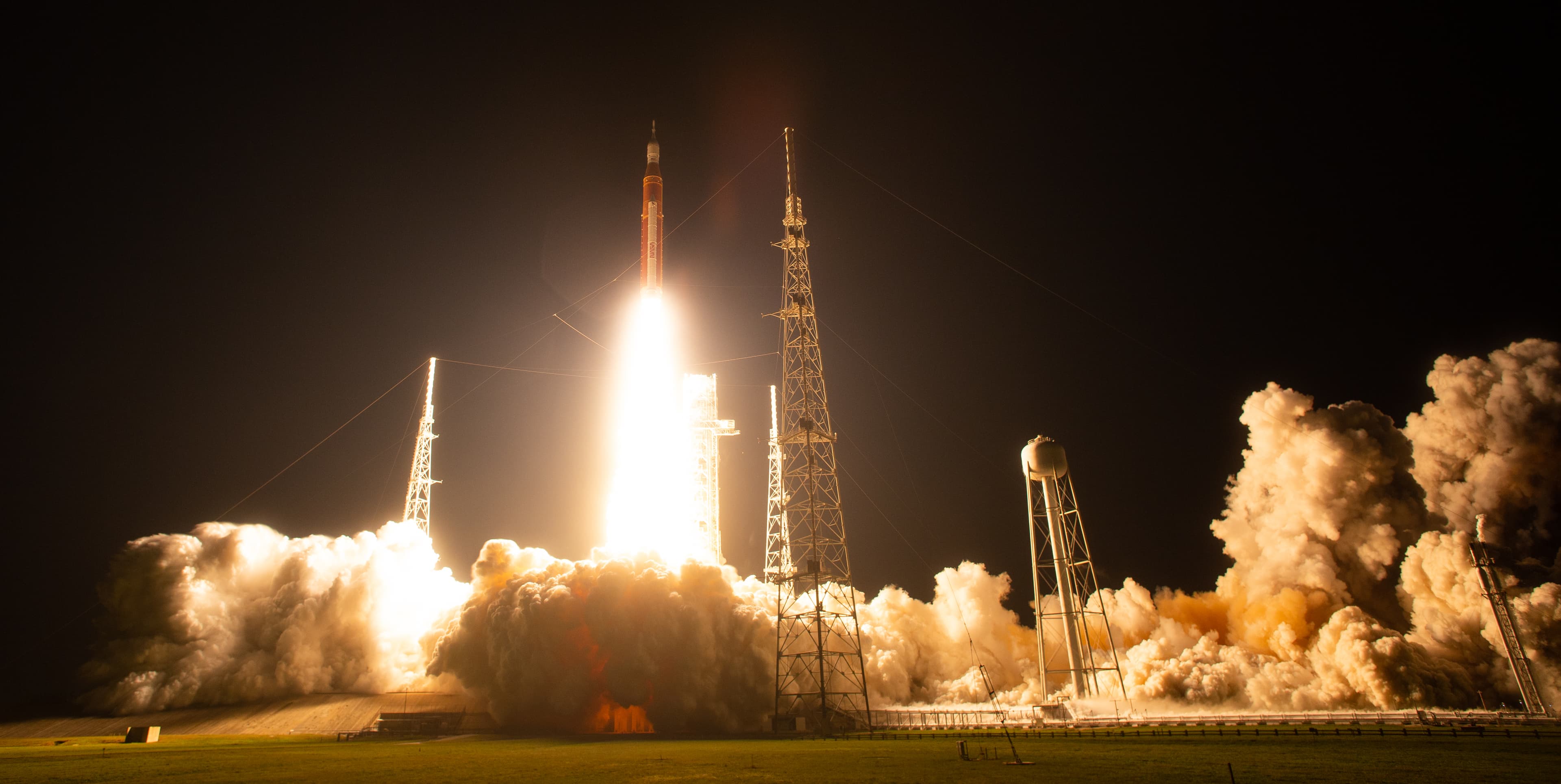
Human question
What has to happen before traveling to space becomes available beyond governments, career astronauts, and the extremely wealthy?
A pathway from professional orbital transport toward broader, safer, more frequent human access.
Plain-language answer
Professional crew transport and limited private astronaut missions are real; routine civilian orbital travel is still frontier.
What counts as success
- private person reaches orbit
- week-long commercial station stay
- regular orbital travel for a larger public
Current state
Where access to space stands right now.
The strongest evidence to date, what's actively in progress, the next meaningful test, and the biggest thing still in the way.
Then to horizon
From what we've proven to where this is heading.
The pathway moves from demonstrated history through what's operating today and what's actively under construction, out toward the frontier outcomes that still require major breakthroughs.
- human orbital flight
- reusable crewed spacecraft
- early private citizens reaching orbit
- commercial crew service
- limited private astronaut missions
- reusable booster operations
- additional crew vehicles
- commercial destinations
- faster turnaround and standardized training
- regular private orbital travel
- broader public access
- airline-like cadence only if safety and economics change
Capabilities
What access to space actually depends on.
Each card names the system, how mature it is today, and the specific milestone that would genuinely change the outlook.
Operational orbital-class launch
Operational orbital-class launch is transportation capacity: getting people or cargo from one place to another often enough to support more than isolated missions.
- Next evidence
- More cadence, lower cost, or broader user access.
Reusable orbital-class first stage
Reusable first stages have made launch cadence visible and measurable, even though upper stages are usually still expended.
- Outcomes unlocked
- Routine civilian orbital travel, A week-long stay in a commercial orbital station, Orbital propellant depots
- Next evidence
- More providers recovering, refurbishing, and reflying boosters with paying customers.
Fully reusable orbital launch system
Full-system reuse is the step that could change mass and cost assumptions across the roadmap, but it remains unfinished.
- Dependencies
- orbital-class launch, Reusable orbital-class first stage
- Outcomes unlocked
- Routine civilian orbital travel, A human landing on Mars, A permanently staffed lunar outpost
- Next evidence
- A complete orbital-class system demonstrates recovery, refurbishment, payload delivery, and reflight at useful cadence.
Crewed transport to low Earth orbit
Professional crew transport to low Earth orbit is operational, but ordinary public access remains constrained by safety, price, training, and destinations.
- Outcomes unlocked
- A private person reaches orbit, A week-long stay in a commercial orbital station
- Next evidence
- More cadence, lower cost, or broader user access.
Private astronaut transport
Private astronaut transport is transportation capacity: getting people or cargo from one place to another often enough to support more than isolated missions.
- Next evidence
- A public demonstration that performs the capability in its intended environment.
Emergency rescue and evacuation
Emergency rescue and evacuation keeps people alive, healthy, and useful when Earth is far away for earth orbit missions.
- Next evidence
- A public demonstration that performs the capability in its intended environment.
Dependency map
Prerequisites for access to space outcomes.
Each outcome shows what already exists, what is being built, and the weakest missing link.
A private person reaches orbit
This has happened, but only through expensive, tightly managed missions with professional support and limited seats.
- Weakest link
- price, seat availability, training, medical screening, and destination capacity
- Closest equivalent today
- private astronaut missions and government-backed orbital crew transport
A week-long stay in a commercial orbital station
Private station stays are plausible near-term only if transport, destination, life support, operations, customers, and certification converge.
- Weakest link
- commercial destination availability and safe post-ISS operations
- Closest equivalent today
- ISS private astronaut missions
Routine civilian orbital travel
Routine travel would require safety, cadence, destinations, medical screening, insurance, and cost to move far beyond today's private missions.
- Weakest link
- safety and economics at high cadence
- Closest equivalent today
- rare private astronaut missions and suborbital tourism
Who is working on it
The organizations actually moving access to space forward.
Agencies, commercial teams, researchers, and operators all contribute differently — and they're not all at the same stage.
NASA
Connected to access to space through capability evidence, technology work, operations, or program demand.
SpaceX Falcon 9
Connected to access to space through capability evidence, technology work, operations, or program demand.
Rocket Lab recovery work
Connected to access to space through capability evidence, technology work, operations, or program demand.
New Glenn development
Connected to access to space through capability evidence, technology work, operations, or program demand.
SpaceX Starship/Super Heavy
Connected to access to space through capability evidence, technology work, operations, or program demand.
Stoke Nova development
Connected to access to space through capability evidence, technology work, operations, or program demand.
Commercial Crew
Connected to access to space through capability evidence, technology work, operations, or program demand.
Soyuz
Connected to access to space through capability evidence, technology work, operations, or program demand.
Shenzhou
Connected to access to space through capability evidence, technology work, operations, or program demand.
Planned work
Active programs with real hardware behind them.
Near-term work is shown with its target type, current hardware state, and the sources that back it up.
Commercial LEO Destinations
The program tests whether low Earth orbit can become a service market rather than a government-owned station.
- Target label
- Official government target: ISS transition before station retirement pressure becomes critical
- Hardware state
- Commercial station modules and free-flyer concepts are in development; no full replacement destination is operational.
What the teams are trying to prove
The specific tests and demonstrations that could change access to space.
Each one is concrete because it clears a real dependency — it's not a milestone for its own sake.
commercial crew certification and flight cadence
commercial station development
fully reusable launch demonstrations
abort, rescue, and medical readiness work
What remains unsolved
The hard problems still standing in access to space's way.
These are the unsolved questions that will ultimately determine whether this pathway gets to routine — not whether it gets to demonstration.
High-cadence affordable transportation
Reuse helps, but safety, refurbishment, range operations, payload integration, insurance, and demand all affect cadence.
Multiple providers repeatedly fly useful payloads with shorter turnaround, transparent reliability, and lower mission cost.
Rescue and medical autonomy
Distance and launch windows can make rescue slow or impossible, so prevention and autonomy matter.
A destination demonstrates realistic abort, evacuation, medical, and contingency paths.
Sustainable economic demand
Many futures need demand outside government exploration budgets.
Multiple non-government customers buy repeat services that cover operations, maintenance, and growth.
A day in this future
What access to space would actually look like.
A concrete scenario paired with today's reality — so the future stays vivid without losing its honesty.
Scenario
A future orbital traveler would not simply buy a seat. They would pass medical screening, train for emergencies, launch on a certified vehicle, dock with a staffed destination, and return through a practiced rescue and recovery system.
Reality check
People can reach orbit today, including private citizens, but ordinary access remains constrained by price, risk, training, and limited destinations.
- Already exists
- orbital-class launch, Reusable orbital-class first stage, Crewed transport to low Earth orbit
- Weakest link
- cost, safety, rescue posture, vehicle cadence, and destination availability
- Classification
- Operational Now / Under Construction / Plausible Frontier
Latest movement
What's changed on this path recently.
These updates are here because they shift the proof, the schedule, the risk profile, or what this pathway depends on next.
Commercial LEO transition remains an active procurement watch
The post-ISS transition is one of the earliest tests of whether low Earth orbit can become a service market.
Current signals
The live sources that could change how access to space reads.
Not every headline earns a place here. These are the surfaces — Space Now, Launch Intelligence, Nations — where a new result or capability shift can genuinely update this pathway's picture.
Read the current briefing
Start with the live editorial view when you want to know which current developments are strong enough to touch the Roadmap.
Current updateStarship Flight 12 investigation
Full reuse cannot move from aspiration to infrastructure until flight-test setbacks become understood engineering progress.
LaunchesFollow near-term milestones
Launch Intelligence separates routine cadence from missions that can change schedule confidence, capability evidence, or a pathway's next step.
Related content
Go deeper on the systems this depends on.
Related missions, companies, rockets, and guides put each dependency in sharper context.
Sources and review
Sources behind this pathway.
Last editorial review: 2026-06-18. If something looks wrong, send the claim, the source, and a stronger reference.
Artemis campaign overview
NASA is pursuing a Moon-to-Mars campaign with Orion, SLS, Gateway, commercial landers, surface systems, and international partners.
Open sourceCommercial Crew Program
NASA purchases crew transportation services to low Earth orbit from commercially developed systems.
Open sourceInternational Space Station
The ISS is the strongest operating proof of sustained human activity in low Earth orbit.
Open sourceStay with this pathway
Save your interest in access to spaceand we'll surface relevant updates as the story develops.