
 Your Guide to Space
Roadmap pathway
Living in Orbit
Can Earth orbit progress from a handful of government astronauts to a place where civilians live, work, research, manufacture, and visit?
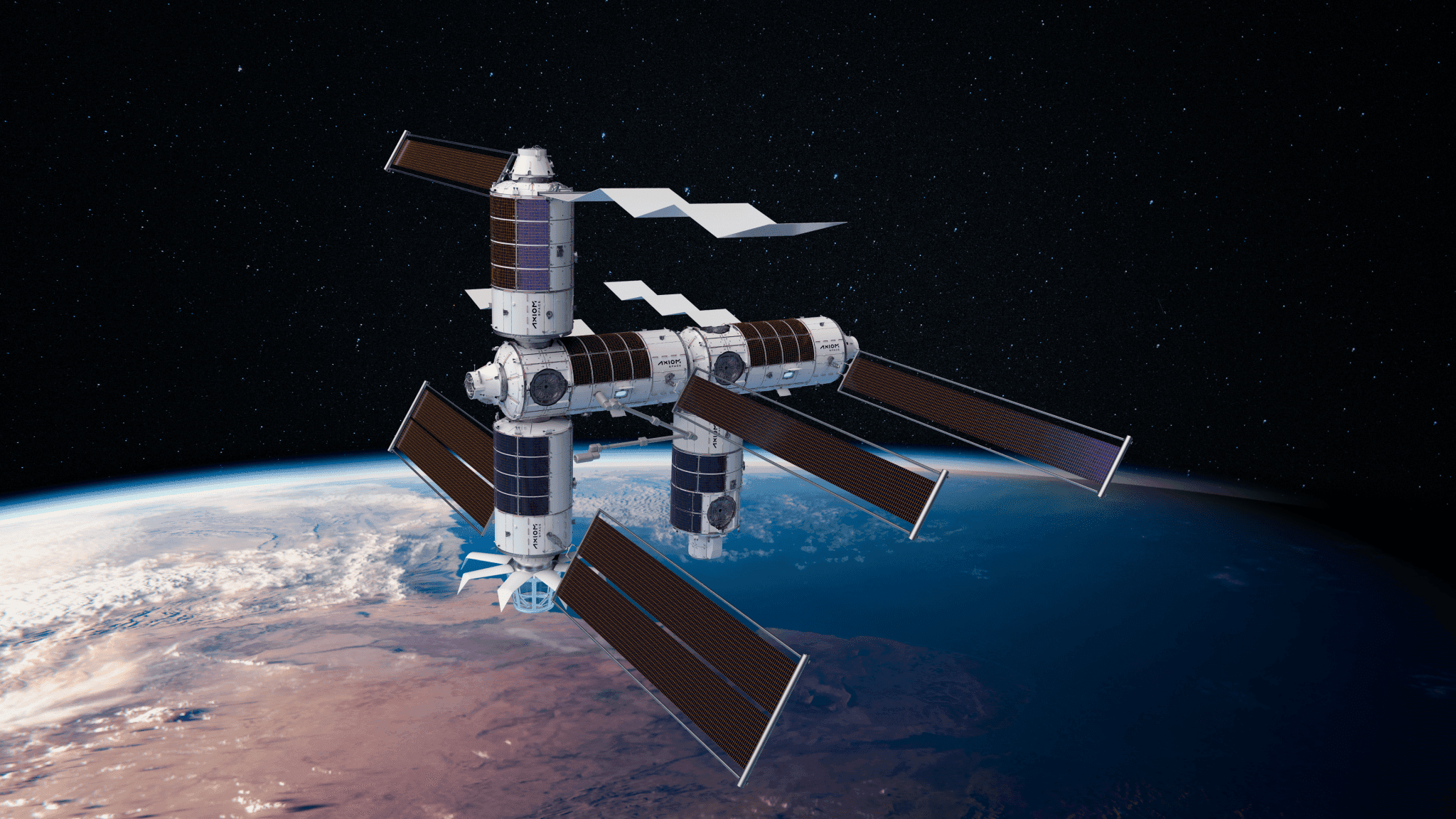
Human question
Can Earth orbit progress from a handful of government astronauts to a place where civilians live, work, research, manufacture, and visit?
A shift from government-backed station operations toward commercial destinations and repeat users.
Plain-language answer
Continuous human presence in orbit is operational; commercial destinations and broader civilian use are still under construction.
What counts as success
- commercial station stay
- orbital workplace
- permanent civilian residence
Current state
Where living in orbit stands right now.
The strongest evidence to date, what's actively in progress, the next meaningful test, and the biggest thing still in the way.
Then to horizon
From what we've proven to where this is heading.
The pathway moves from demonstrated history through what's operating today and what's actively under construction, out toward the frontier outcomes that still require major breakthroughs.
- short orbital stays
- Mir and Skylab long-duration lessons
- ISS assembly
- ISS operations
- private astronaut missions
- crew and cargo transport
- commercial station modules
- free-flying stations
- larger habitats and more closed-loop systems
- permanent civilian residents
- rotating habitats
- station neighborhoods if economics support them
Capabilities
What living in orbit actually depends on.
Each card names the system, how mature it is today, and the specific milestone that would genuinely change the outlook.
Orbital habitation
People can live and work in orbit today, but mainly inside government-backed station operations.
- Outcomes unlocked
- A week-long stay in a commercial orbital station, Routine civilian orbital travel
- Next evidence
- More cadence, lower cost, or broader user access.
Long-duration human spaceflight
Long-duration human spaceflight keeps people alive, healthy, and useful when Earth is far away for earth orbit missions.
- Next evidence
- More cadence, lower cost, or broader user access.
Water recovery
Water recovery keeps crews alive by recovering air, water, and other essentials so every mission is not fully dependent on resupply from Earth.
- Next evidence
- More cadence, lower cost, or broader user access.
Oxygen regeneration
Oxygen regeneration turns local material into something missions can actually use, such as water, oxygen, fuel, shielding, or construction feedstock.
- Next evidence
- More cadence, lower cost, or broader user access.
Closed-loop life support
Station systems recover water and oxygen, but settlement-scale closure still requires stronger reliability and repairability.
- Outcomes unlocked
- A permanently staffed lunar outpost, A recurring Mars base
- Next evidence
- A public demonstration that performs the capability in its intended environment.
Private astronaut transport
Private astronaut transport is transportation capacity: getting people or cargo from one place to another often enough to support more than isolated missions.
- Next evidence
- A public demonstration that performs the capability in its intended environment.
Emergency rescue and evacuation
Emergency rescue and evacuation keeps people alive, healthy, and useful when Earth is far away for earth orbit missions.
- Next evidence
- A public demonstration that performs the capability in its intended environment.
Artificial-gravity demonstration
Artificial-gravity demonstration keeps people alive, healthy, and useful when Earth is far away for earth orbit missions.
- Next evidence
- A public demonstration that performs the capability in its intended environment.
Dependency map
Prerequisites for living in orbit outcomes.
Each outcome shows what already exists, what is being built, and the weakest missing link.
A week-long stay in a commercial orbital station
Private station stays are plausible near-term only if transport, destination, life support, operations, customers, and certification converge.
- Weakest link
- commercial destination availability and safe post-ISS operations
- Closest equivalent today
- ISS private astronaut missions
Routine civilian orbital travel
Routine travel would require safety, cadence, destinations, medical screening, insurance, and cost to move far beyond today's private missions.
- Weakest link
- safety and economics at high cadence
- Closest equivalent today
- rare private astronaut missions and suborbital tourism
Commercial orbital manufacturing
Microgravity manufacturing needs products valuable enough to justify transport, quality control, return, and repeat operations.
- Weakest link
- valuable repeat product and quality control
- Closest equivalent today
- research experiments and limited in-space manufacturing demonstrations
Who is working on it
The organizations actually moving living in orbit forward.
Agencies, commercial teams, researchers, and operators all contribute differently — and they're not all at the same stage.
International Space Station
Connected to living in orbit through capability evidence, technology work, operations, or program demand.
Tiangong
Connected to living in orbit through capability evidence, technology work, operations, or program demand.
commercial destination development
Connected to living in orbit through capability evidence, technology work, operations, or program demand.
NASA
Connected to living in orbit through capability evidence, technology work, operations, or program demand.
Planned work
Active programs with real hardware behind them.
Near-term work is shown with its target type, current hardware state, and the sources that back it up.
Commercial LEO Destinations
The program tests whether low Earth orbit can become a service market rather than a government-owned station.
- Target label
- Official government target: ISS transition before station retirement pressure becomes critical
- Hardware state
- Commercial station modules and free-flyer concepts are in development; no full replacement destination is operational.
What the teams are trying to prove
The specific tests and demonstrations that could change living in orbit.
Each one is concrete because it clears a real dependency — it's not a milestone for its own sake.
commercial LEO destination procurement
private station hardware and testing
closed-loop life-support upgrades
crew evacuation and medical autonomy planning
What remains unsolved
The hard problems still standing in living in orbit's way.
These are the unsolved questions that will ultimately determine whether this pathway gets to routine — not whether it gets to demonstration.
Closed-loop life support
Recycling systems must be reliable, maintainable, safe for humans, and tolerant of failures far from replacement parts.
A long-duration habitat demonstrates high-closure air and water systems with maintainable repair paths.
Long-duration human health
Bone, muscle, vision, radiation, immunity, sleep, mental health, and medical autonomy all interact.
Crews complete longer missions with validated countermeasures and realistic emergency care.
Rescue and medical autonomy
Distance and launch windows can make rescue slow or impossible, so prevention and autonomy matter.
A destination demonstrates realistic abort, evacuation, medical, and contingency paths.
Sustainable economic demand
Many futures need demand outside government exploration budgets.
Multiple non-government customers buy repeat services that cover operations, maintenance, and growth.
A day in this future
What living in orbit would actually look like.
A concrete scenario paired with today's reality — so the future stays vivid without losing its honesty.
Scenario
A week in orbit starts with air, water, power, communications, docking, sleep, hygiene, medical rules, emergency procedures, and a vehicle that can bring people home. The view is spectacular, but the invisible system is what makes the visit credible.
Reality check
Earth orbit is occupied today, but the market beyond government demand has not yet proven it can sustain multiple private stations.
- Already exists
- Orbital habitation, Long-duration human spaceflight, Water recovery, Oxygen regeneration
- Weakest link
- station financing, life-support reliability, customer demand, debris, and emergency evacuation
- Classification
- Operational Now / Under Construction / Plausible Frontier
Latest movement
What's changed on this path recently.
These updates are here because they shift the proof, the schedule, the risk profile, or what this pathway depends on next.
Commercial LEO transition remains an active procurement watch
The post-ISS transition is one of the earliest tests of whether low Earth orbit can become a service market.
Current signals
The live sources that could change how living in orbit reads.
Not every headline earns a place here. These are the surfaces — Space Now, Launch Intelligence, Nations — where a new result or capability shift can genuinely update this pathway's picture.
Read the current briefing
Start with the live editorial view when you want to know which current developments are strong enough to touch the Roadmap.
LaunchesFollow near-term milestones
Launch Intelligence separates routine cadence from missions that can change schedule confidence, capability evidence, or a pathway's next step.
NationsCompare national capability
The Nations map shows which space programs can launch, crew, explore, build infrastructure, or contribute to the same capability stack.
Related content
Go deeper on the systems this depends on.
Related missions, companies, rockets, and guides put each dependency in sharper context.
Sources and review
Sources behind this pathway.
Last editorial review: 2026-06-18. If something looks wrong, send the claim, the source, and a stronger reference.
International Space Station
The ISS is the strongest operating proof of sustained human activity in low Earth orbit.
Open sourceCommercial Low Earth Orbit Program Office
NASA is facilitating commercially owned and operated low Earth orbit destinations from which NASA and other customers can purchase services.
Open sourceCommercial Low Earth Orbit Destination Contract
NASA's commercial LEO destination procurement remains an active, evolving source of program evidence.
Open sourceArtemis campaign overview
NASA is pursuing a Moon-to-Mars campaign with Orion, SLS, Gateway, commercial landers, surface systems, and international partners.
Open sourceStay with this pathway
Save your interest in living in orbitand we'll surface relevant updates as the story develops.