
 Your Guide to Space
Nation capability profile
Europe & ESA
Europe's power in space comes from cooperation, not a single flag. ESA, national agencies, Arianespace, Airbus, EU programs, and a web of industrial partners share the work — launching Ariane 6, running the Copernicus and Galileo satellite systems, and building the European hardware that powers NASA's Orion capsule.
Europe is a capability network, not a single country: launch autonomy, Earth observation, navigation, science, and lunar systems all sit across different institutions that have to pull together.
Read Europe through coordination. ESA, EU programs, national agencies, and companies can build durable infrastructure together, but what always matters is which institution is actually responsible for a given capability.
Sources reviewed June 2026
Who sets the national direction
multinational capability base with launch autonomy and coordination complexity
Ariane 6 cadence, Vega-C recovery and reliability, Copernicus and Galileo continuity, Gateway modules, Orion service modules, Moonlight, Argonaut, and science missions.
Operating today
Ariane 6 has moved from first flight into cadence and customer evidence, which is the practical test of European launch autonomy.
Copernicus and European Earth-observation programs make space capability visible to public benefit, climate, security, and disaster-response users.
ESA science and exploration missions give Europe deep non-launch relevance across planetary science, astronomy, and long-duration mission operations.
Still being built
Ariane 6 still has to prove cadence, commercial competitiveness, and reliability under real customer pressure.
Gateway contributions, Moonlight, and Argonaut need integration, launch, and operations proof before they become durable lunar infrastructure.
Europe's coordination challenge is structural: ESA, EU, national agencies, and industry do not always move on one schedule.
Recent developments
Latest on Europe & ESA
Artemis reaches 70 partners, with hardware cooperation behind the signatures
Mauritius became the 70th Artemis Accords signatory after Serbia joined as member 69. ESA’s crew visit to ESTEC showed how that diplomatic network connects to flight hardware.
JAXA and ESA cooperate on planetary defense and RAMSES mission
JAXA and ESA signed a broader memorandum of cooperation along with a specific mission agreement for RAMSES, enhancing their collaboration in planetary defense efforts.
What happened with Ariane 64 Block 2 | Amazon Leo (LE-03)
Ariane 64 Block 2 | Amazon Leo (LE-03) is now in post-launch review. The latest cached status is launch successful.
Who runs it
| Agency or organization | Role |
|---|---|
| ESA | Multinational agency coordinating exploration, science, Earth observation, transportation, and technology. |
| Arianespace | Launch services operator for Ariane and Vega missions. |
| ArianeGroup | Prime contractor and design authority for Ariane 6. |
| Avio | Vega-C and solid-booster industrial role. |
| European Union space programs | Galileo, Copernicus, secure connectivity, and regulatory demand signals. |
ESA
ESA: European Space Agency coordinating European exploration, science, Earth observation, Ariane 6, and international mission contributions.
ArianeGroup
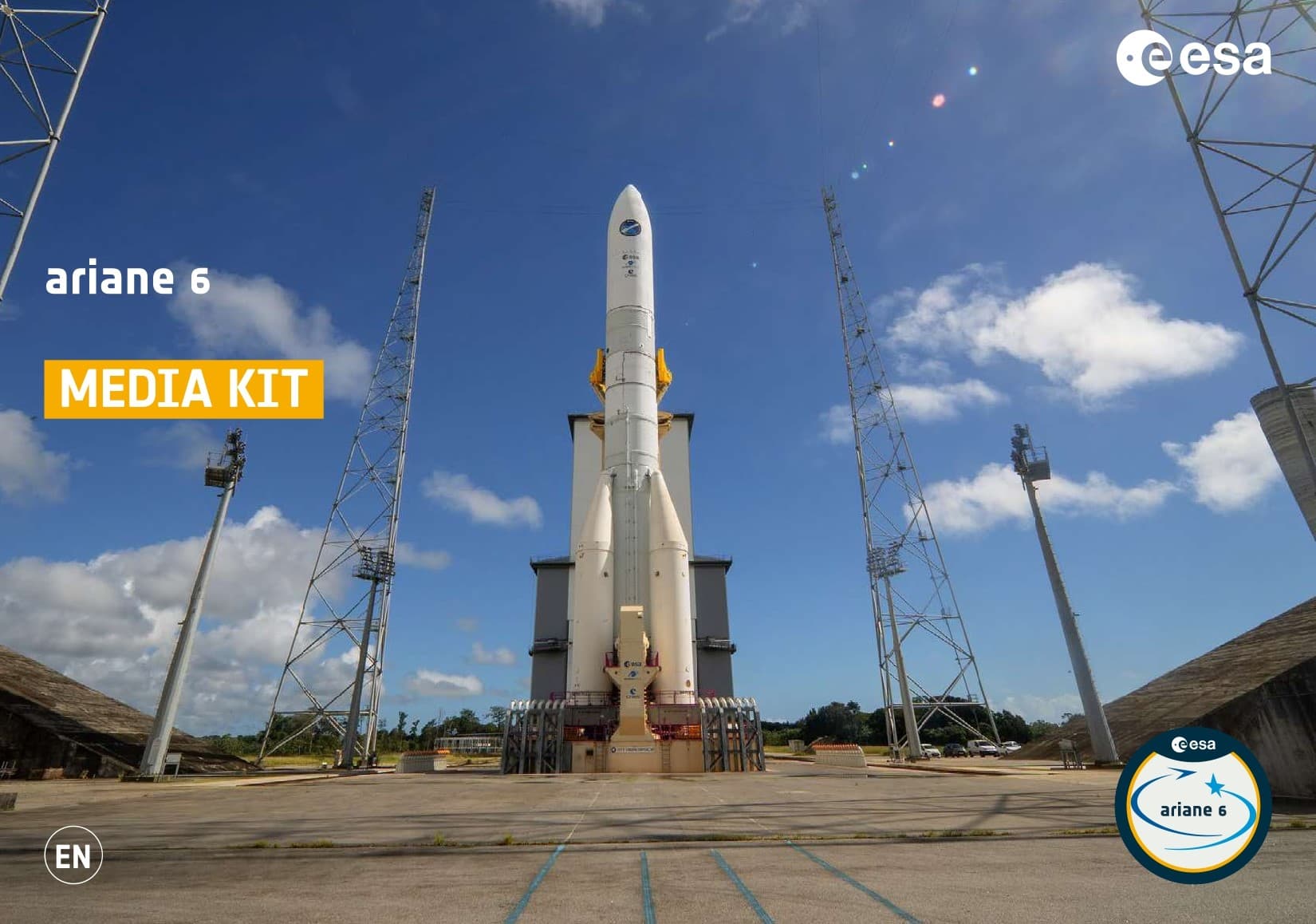
Ariane 6: Europe's expendable Ariane 5 successor, built by ArianeGroup for ESA and operated by Arianespace to restore sovereign launch access while serving institutional and commercial payloads.
Rockets and missions in play
| Rocket, mission, or system | Role | Current status |
|---|---|---|
| Ariane 6 | European heavy-lift and autonomous access path | operational ramp |
| Gateway contributions | Lunar I-Hab, Lunar View, Lunar Link, and Orion service modules | Artemis partnership architecture |
| Copernicus | Earth observation for climate, environment, and civil applications | operational public-service infrastructure |
| Moonlight and Argonaut | Lunar communications/navigation and cargo delivery | planned infrastructure |
Ariane 6
Ariane 6: Europe's expendable Ariane 5 successor, built by ArianeGroup for ESA and operated by Arianespace to restore sovereign launch access while serving institutional and commercial payloads.
Gateway contributions
Can the Moon evolve from a destination visited briefly into a place where humans remain, build infrastructure, and eventually travel for reasons beyond government exploration? Human lunar landing has historical proof; the modern surface-return and infrastructure stack is still under construction.
Copernicus
Earth Observation: A guide to how satellites monitor weather, climate, agriculture, disasters, ships, emissions, and economic activity.
Moonlight and Argonaut
What infrastructure would make spacecraft operate as part of a network rather than as isolated, disposable missions? Station logistics, rendezvous, docking, communications, and data relay are operational; depots, routine refueling, and shipyards are not.
What has changed lately
ESA's Ariane 6 pages now provide current evidence for Europe moving from first flight toward operational cadence.
Gateway, Lunar I-Hab, Lunar View, and Lunar Link keep Europe inside the Artemis infrastructure chain even without an independent crew launcher.
ESA Strategy 2040 frames autonomy, resilience, science, climate, commercialization, and European capability as long-range priorities.
How it fits the bigger picture
Europe matters because a spacefaring future cannot rely on one country's launch, science, navigation, Earth-observation, and lunar infrastructure choices.
Europe is best understood as a network of institutions and companies, not a single country — which is why its capabilities and its dependencies both have to be named clearly.
Access
What has to happen before traveling to space becomes available beyond governments, career astronauts, and the extremely wealthy? Professional crew transport and limited private astronaut missions are real; routine civilian orbital travel is still frontier.
Infrastructure
What infrastructure would make spacecraft operate as part of a network rather than as isolated, disposable missions? Station logistics, rendezvous, docking, communications, and data relay are operational; depots, routine refueling, and shipyards are not.
Power & Compute
Could orbital infrastructure one day provide electricity, computing, storage, communications, and other services used directly by people on Earth? Solar-powered spacecraft, communications, and onboard processing exist; orbital data centers and utility power remain frontier.
Industry
Can space become a place where useful products, structures, fuel, and materials are created rather than merely delivered? Research and limited demonstrations exist; useful industrial scale is not yet proven.
Still unsettled
Can Ariane 6 become frequent and competitive enough to restore confidence in European autonomous launch?
Which lunar infrastructure contributions survive Artemis architecture changes and become operating hardware?
How will ESA, EU, national agencies, and companies divide responsibility for commercial demand and strategic autonomy?
Where these facts come from
| Source | How it is used |
|---|---|
| ESA: Ariane 6 | Current ESA source for Ariane 6 status, European launch autonomy, launch cadence, and Europe's Spaceport context. |
| ESA: Ariane 6 launches with more powerful boosters: a new record for Europe | Official ESA source for Ariane 6 flight VA269 on 2026-06-17, 36 Amazon Leo satellites, P160C-based boosters, and the eighth successful mission insertion in a row. |
| ESA: Orion | Official source for ESA's European Service Module role in Orion, Artemis II/III updates, and European human-exploration contributions. |
| ESA: Gateway | Official ESA source for European Gateway contributions, while noting the page is pending updates to reflect the latest Artemis architecture. |
| ESA: Moonlight | ESA connectivity source for Moonlight's planned lunar communications and navigation service role. |
| ESA: Argonaut | Official source for Argonaut as ESA's planned autonomous lunar cargo lander family from the 2030s. |
| ESA: Introducing Copernicus | Official source for Copernicus as Europe's Earth-observation component for environment, climate, and civil-security information. |
| ESA: ESA Strategy 2040 | Official source for ESA's long-range goals around autonomy, resilience, science, climate, commercialisation, and European capability. |
Keep exploring
ESA
ESA: European Space Agency coordinating European exploration, science, Earth observation, Ariane 6, and international mission contributions.
Ariane 6
Ariane 6: Europe's expendable Ariane 5 successor, built by ArianeGroup for ESA and operated by Arianespace to restore sovereign launch access while serving institutional and commercial payloads.
Infrastructure Roadmap
What infrastructure would make spacecraft operate as part of a network rather than as isolated, disposable missions? Station logistics, rendezvous, docking, communications, and data relay are operational; depots, routine refueling, and shipyards are not.
Next steps
Keep the roadmap in view
Get major space updates, set launch reminder interest, or keep exploring the Roadmap that turns space progress into a readable system.