
 Your Guide to Space
Nation capability profile
India
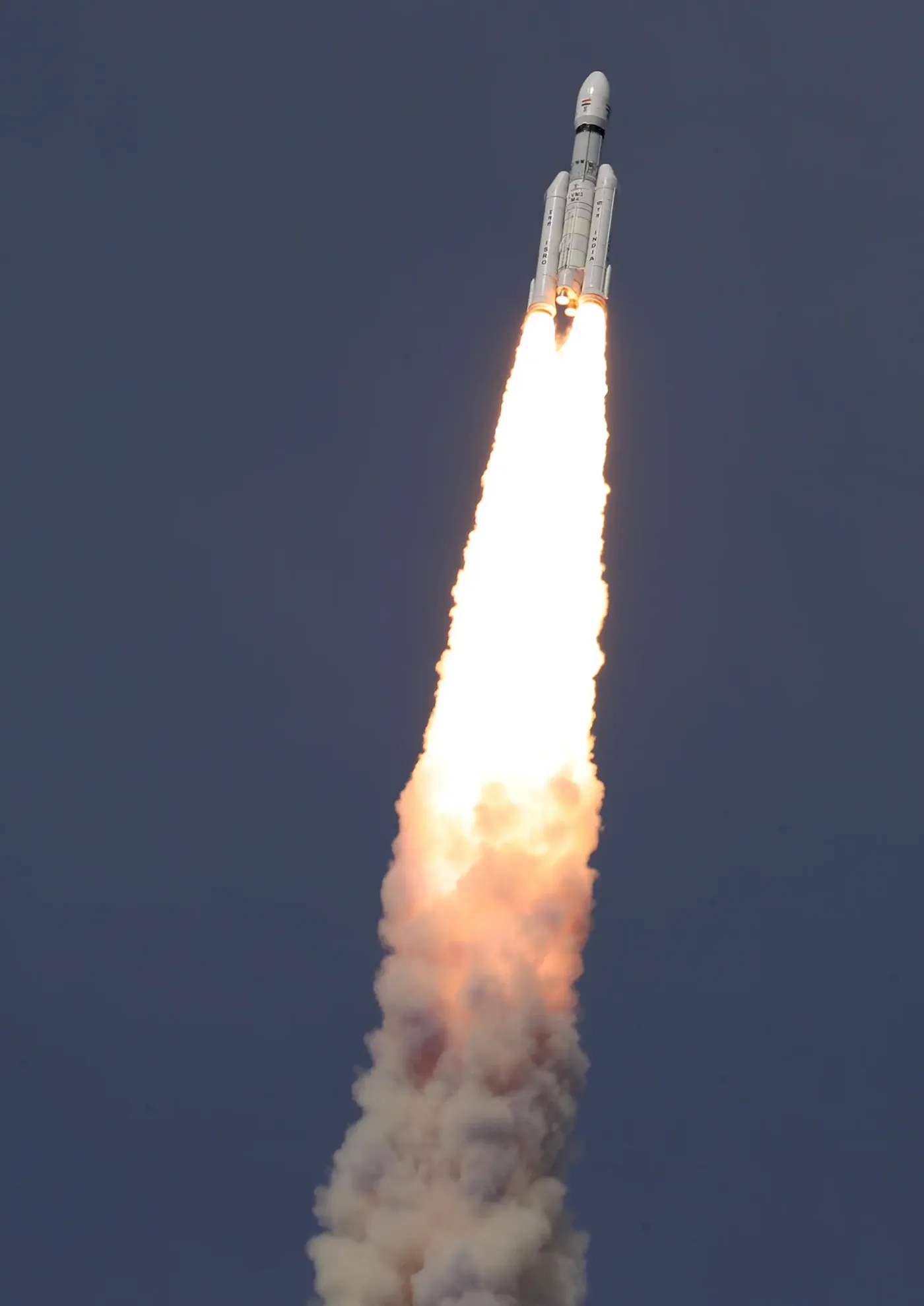
India has vaulted into the top tier of spacefaring nations, and on a famously lean budget. It launches its own rockets, landed Chandrayaan-3 near the Moon's south pole — a world first — runs a busy science and applications program, and is building Gaganyaan to fly its own astronauts.
India shows how a program can climb from reliable launch and satellite applications to genuine lunar achievement and human-spaceflight development — without yet being a routine crew operator.
Separate India's proven wins from its harder next step. The launches and the Moon landing are real; Gaganyaan still has to clear uncrewed tests, crewed flight, and safe recovery before India can call independent human spaceflight a settled capability.
Sources reviewed June 2026
Who sets the national direction
rising operational power with human spaceflight under construction
Gaganyaan, human-rated LVM3, Chandrayaan follow-ons, launch cadence, space applications, and the longer arc toward an Indian station and crewed lunar ambition.
Operating today
ISRO launchers give India independent access to orbit across mission classes.
Chandrayaan-3 is a concrete lunar capability proof because it demonstrated safe landing and rover operations.
India's space applications, Earth observation, navigation, and science missions make the program useful beyond prestige milestones.
Still being built
Gaganyaan must complete uncrewed tests, crew safety validation, launch, orbital operations, and recovery before India has independent crew capability.
A future Indian station and crewed lunar landing are strategic goals, but the evidence chain still has to pass through Gaganyaan and sustained LEO operations.
Commercial growth shows up in launch service, satellite operations, customer demand, and repeatable private hardware — not announcements.
Recent developments
Latest on India
Skyroot’s Vikram-I demo flight reached orbit on its first launch
Skyroot Aerospace’s first Vikram-I launch is listed as successful, with mission updates noting liftoff and payload deployment during the Demo Flight to low Earth orbit from Satish Dhawan Space Centre’s First Launch Pad on 2026-07-18.
Who runs it
| Agency or organization | Role |
|---|---|
| ISRO | National space agency for launch, science, applications, lunar, and human-spaceflight programs. |
| NewSpace India Limited | Commercial arm for launch and space-service activity. |
| Human Space Flight Centre | Gaganyaan mission planning, crew systems, and human-spaceflight development. |
Rockets and missions in play
| Rocket, mission, or system | Role | Current status |
|---|---|---|
| LVM3 / HLVM3 | Heavy-lift and human-rated launch path | operational launcher with human-rating work |
| Gaganyaan | India's first independent crewed orbital demonstration | under construction |
| Chandrayaan-3 | Lunar landing and rover proof | successful mission evidence |
| ISRO applications missions | Earth observation, navigation, communication, and public services | operational public value |
LVM3 / HLVM3
See the next rocket launches, local target times, watch links, schedule certainty, and plain-English context for why each mission is worth following.
Gaganyaan
Commercial human spaceflight is not routine tourism. It is a set of transport, private astronaut, station, suit, and customer experiments trying to make orbital access more service-like.
Chandrayaan-3
Commercial landers, international lunar missions, and non-Artemis Moon programs show whether the Moon race is becoming broader than one NASA campaign.
ISRO applications missions
Earth Observation: A guide to how satellites monitor weather, climate, agriculture, disasters, ships, emissions, and economic activity.
What has changed lately
ISRO's Gaganyaan source frames the program as a demonstration of human spaceflight capability, not yet routine crew operations.
Chandrayaan-3 remains the key public evidence for India's lunar-surface capability.
Public statements about a station and crewed lunar goals point to direction, not settled capability, until Gaganyaan and follow-on infrastructure clear visible milestones.
How it fits the bigger picture
India shows how a national program can move from applications and reliable launch into lunar proof, human-spaceflight development, and a larger commercial ecosystem.
Its next roadmap jump is crew capability: Gaganyaan will decide whether India becomes a sustained human-spaceflight actor or remains primarily robotic, launch, and applications focused.
Access
What has to happen before traveling to space becomes available beyond governments, career astronauts, and the extremely wealthy? Professional crew transport and limited private astronaut missions are real; routine civilian orbital travel is still frontier.
Moon
Can the Moon evolve from a destination visited briefly into a place where humans remain, build infrastructure, and eventually travel for reasons beyond government exploration? Human lunar landing has historical proof; the modern surface-return and infrastructure stack is still under construction.
Infrastructure
What infrastructure would make spacecraft operate as part of a network rather than as isolated, disposable missions? Station logistics, rendezvous, docking, communications, and data relay are operational; depots, routine refueling, and shipyards are not.
Industry
Can space become a place where useful products, structures, fuel, and materials are created rather than merely delivered? Research and limited demonstrations exist; useful industrial scale is not yet proven.
Still unsettled
When will Gaganyaan produce uncrewed and crewed evidence strong enough to call independent crew capability operational?
Will Chandrayaan success lead to repeated lunar surface missions, payload services, or infrastructure contributions?
How quickly will private Indian space firms produce public operating proof rather than policy momentum alone?
Where these facts come from
| Source | How it is used |
|---|---|
| ISRO: Launchers | Official launch-vehicle source for PSLV, GSLV, LVM3, human-rated LVM3, and Indian launch infrastructure context. |
| ISRO: Gaganyaan | Official human-spaceflight source for India's Gaganyaan program and crewed LEO demonstration path. |
| ISRO: Chandrayaan-3 Details | Official mission source for Chandrayaan-3's safe landing and rover demonstration on the lunar surface. |
| ISRO/DOS: Chandrayaan-3 gallery | Official ISRO visual source for Chandrayaan-3 launch and lunar mission imagery used to show that lunar progress is international. |
Keep exploring
Commercial Moon Missions
Commercial landers, international lunar missions, and non-Artemis Moon programs show whether the Moon race is becoming broader than one NASA campaign.
Moon Roadmap
Can the Moon evolve from a destination visited briefly into a place where humans remain, build infrastructure, and eventually travel for reasons beyond government exploration? Human lunar landing has historical proof; the modern surface-return and infrastructure stack is still under construction.
Robotic Exploration
Robotic Exploration: A guide to probes, landers, rovers, sample return, outer-planet missions, and why robots often go first.
Next steps
Keep the roadmap in view
Get major space updates, set launch reminder interest, or keep exploring the Roadmap that turns space progress into a readable system.