
 Your Guide to Space
Nation capability profile
Japan
Japan is the quiet powerhouse — a nation whose space skills are easy to underestimate. It flies its own H3 rocket, sends cargo to the station, returned asteroid samples to Earth with Hayabusa2, contributes hardware to the lunar Gateway, and runs precise science and Earth-observation missions.
Japan matters because so much of what makes big missions work is quiet infrastructure: station modules, logistics, launch reliability, robotics, sample return, and precision science — exactly the things Japan does exceptionally well.
Read Japan as a risk-reducing partner rather than a flag-planting rival. The signals that count are H3 finding its cadence, Kibo and HTV-X operations, Gateway contributions, the MMX Mars-moon sample mission, and whether its commercial lunar efforts become repeatable.
Sources reviewed June 2026
Who sets the national direction
advanced partner nation with launch modernization and infrastructure depth
H3 reliability, HTV-X logistics, Gateway cooperation, Kibo operations, lunar science, MMX, and Earth-observation and technology missions.
Operating today
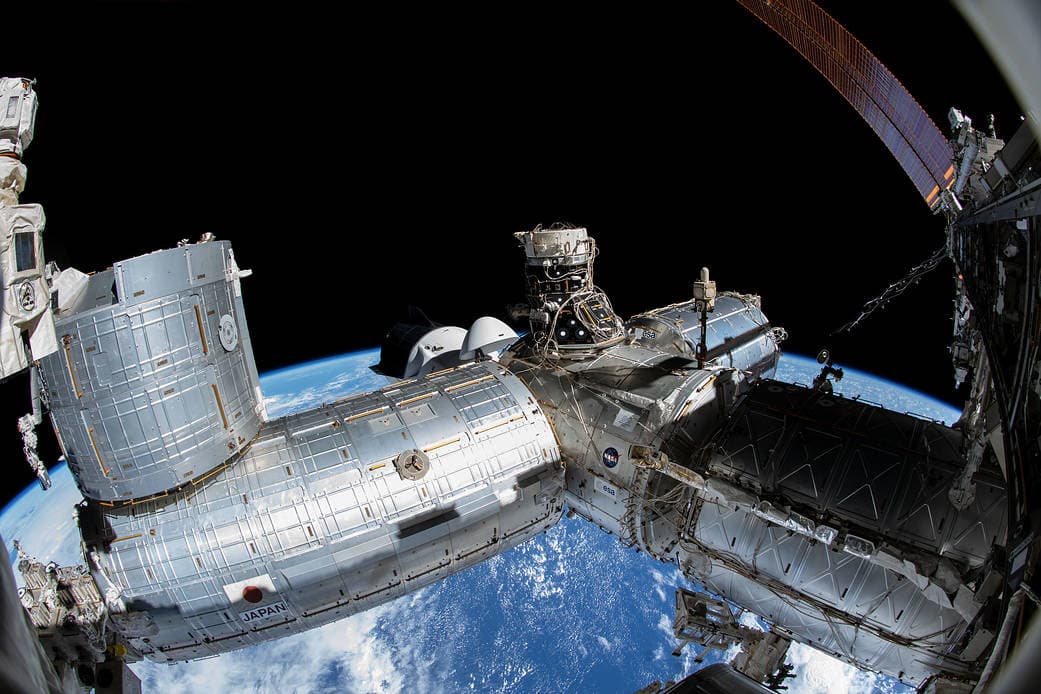
JAXA's ISS role gives Japan long-duration human-spaceflight operations experience through Kibo and station partnership work.
H3 is Japan's main launch modernization path, with recent flight results providing current evidence for cadence and reliability evaluation.
Japanese science and sample-return missions show that national space capability is not only crew launch or heavy lift.
Still being built
H3 has to build repeated mission success before it fully replaces older launch confidence.
HTV-X and Gateway-related work need launch, logistics, integration, and operations evidence to become visible roadmap infrastructure.
Lunar commercial and robotic ambitions should be separated from JAXA's already proven science and station-partner capabilities.
Recent developments
Latest on Japan
H3-30 completes successful debut test flight
Mitsubishi Heavy Industries launched the H3-30 from Tanegashima at 00:53:59 UTC on June 12, 2026. The debut configuration successfully reached its target sun-synchronous orbit and carried a dummy main payload plus several small satellites.
Who runs it
| Agency or organization | Role |
|---|---|
| JAXA | National aerospace and space agency for launch, science, exploration, ISS, and international cooperation. |
| Mitsubishi Heavy Industries | Industrial launch-system role around H3 and Japanese space transportation. |
| Japanese lunar and satellite companies | Commercial layer that needs repeated mission proof to become roadmap-changing. |
Rockets and missions in play
| Rocket, mission, or system | Role | Current status |
|---|---|---|
| H3 | Japan's current main launch vehicle | operational ramp and reliability proof |
| Kibo / ISS | Japanese human-spaceflight operations and research module | operational partnership |
| Gateway cooperation | Habitation and logistics contributions | partnership architecture |
| MMX | Mars moon sample-return mission | development for Mars-system science |
H3
See the next rocket launches, local target times, watch links, schedule certainty, and plain-English context for why each mission is worth following.
Kibo / ISS
The ISS is the operating human-spaceflight platform that proves daily orbital life is hard even before the private-station transition begins.
Gateway cooperation
What infrastructure would make spacecraft operate as part of a network rather than as isolated, disposable missions? Station logistics, rendezvous, docking, communications, and data relay are operational; depots, routine refueling, and shipyards are not.
MMX
Mars missions matter because they turn settlement talk into hard evidence about samples, landing systems, robotic endurance, and international competition.
What has changed lately
JAXA's June 2026 H3 flight result gives the page a current launch-cadence signal rather than relying only on program descriptions.
Gateway cooperation keeps Japan connected to Artemis-era infrastructure even without an independent crew launcher.
Japan's most valuable roadmap contributions often appear as logistics, science, robotics, and reliability rather than headline race language.
How it fits the bigger picture
Japan advances the roadmap through reliable partnership infrastructure: launch modernization, station operations, logistics, habitation cooperation, robotics, and sample-return science.
Its challenge is visibility. Many of Japan's most important contributions reduce risk for shared missions rather than producing a single dramatic national milestone.
Access
What has to happen before traveling to space becomes available beyond governments, career astronauts, and the extremely wealthy? Professional crew transport and limited private astronaut missions are real; routine civilian orbital travel is still frontier.
Infrastructure
What infrastructure would make spacecraft operate as part of a network rather than as isolated, disposable missions? Station logistics, rendezvous, docking, communications, and data relay are operational; depots, routine refueling, and shipyards are not.
Mars
What stands between today's robotic Mars exploration and a recurring human presence? Robotic Mars exploration is operational; human Mars systems remain frontier and dependency-heavy.
Moon
Can the Moon evolve from a destination visited briefly into a place where humans remain, build infrastructure, and eventually travel for reasons beyond government exploration? Human lunar landing has historical proof; the modern surface-return and infrastructure stack is still under construction.
Still unsettled
Can H3 build enough flight cadence and mission diversity to become a trusted mainstay?
Which HTV-X and Gateway milestones become visible to public audiences as Artemis architecture changes?
Will Japanese commercial lunar and satellite companies prove repeated operations at scale?
Where these facts come from
| Source | How it is used |
|---|---|
| JAXA: Introduction of JAXA | Official agency source for JAXA's integrated aerospace research, development, and utilization role. |
| JAXA: H3 Launch Vehicle | Official launch-vehicle source for H3 transportation capability and Japan's launch-access roadmap. |
| JAXA: Launch Result of H3 Launch Vehicle flight No. 6 | Official JAXA source for a June 2026 H3 flight result, useful as current evidence for Japan's launch-access cadence. |
| JAXA: Joint Statement on Cooperation in Lunar Exploration | Official source for Japan's Gateway and lunar-exploration cooperation lane with NASA, including habitation and logistics proposals. |
| JAXA: Martian Moons eXploration | Official JAXA source for MMX, the FY2026 Phobos sample-return mission and its role in Mars-system science. |
| NASA: Japanese Experiment Module Kibo | NASA station source for Kibo as Japan's ISS laboratory module, including its exposed facility, robotic arm, research role, and JAXA/NASA station partnership context. |
| NASA: International Space Station Reference | NASA reference source for the five partner agencies, including Roscosmos, and the interdependent ISS operating model. |
Keep exploring
Infrastructure Roadmap
What infrastructure would make spacecraft operate as part of a network rather than as isolated, disposable missions? Station logistics, rendezvous, docking, communications, and data relay are operational; depots, routine refueling, and shipyards are not.
ISS
The ISS is the operating human-spaceflight platform that proves daily orbital life is hard even before the private-station transition begins.
Robotic Exploration
Robotic Exploration: A guide to probes, landers, rovers, sample return, outer-planet missions, and why robots often go first.
Next steps
Keep the roadmap in view
Get major space updates, set launch reminder interest, or keep exploring the Roadmap that turns space progress into a readable system.