
 Your Guide to Space
Past briefing
Space Now
What changed, why it matters, and what to watch next.
News from the last 24 hours, plus the ongoing storylines shaping the roadmap
Catch up fast
Today in 60 seconds
The three fastest entry points into today's briefing.
The Briefing
The developments worth your attention right now
If you only have a minute, start here. These are the changes most likely to affect missions, schedules, or the longer arc of the story.
Long March 4C set for a source-listed launch window from Jiuquan, but mission details remain unclear
Long March 4C | Unknown mission cargo is tracked as go for launch with target Jul 1, 2026, 11:45 PM UTC. This mission is worth watching because it adds another data point to the launch cadence that keeps science, security, and exploration mission cargo moving.
Even with the mission cargo undisclosed, this launch is a useful development of CASC's operational cadence and Long March 4C's continuing role in moving Chinese mission cargo to orbit. Falcon 9 cadence is the baseline for modern orbital launch, so the meaningful question is whether the target, status, webcast, or post-launch result confirms routine tempo or shows schedule movement readers should keep watching.
Long March 4C | Unknown mission cargo is tracked as go for launch with target Jul 1, 2026, 11:45 PM UTC. This mission is worth watching because it adds another data point to the launch cadence that keeps science, security, and exploration mission cargo moving. Attention now moves from older program context to whether this near-term target holds and what the post-attempt result confirms.
What we know
- Long March 4C | Unknown mission cargo is tracked as go for launch with target Jul 1, 2026, 11:45 PM UTC. This mission is worth watching because it adds another data point to the launch cadence that keeps science, security, and exploration mission cargo moving.
What remains unknown
- Whether the target, status, webcast, or mission outcome changes again after the next public update.
Watch for official target-time, webcast, status, or post-attempt confirmation.
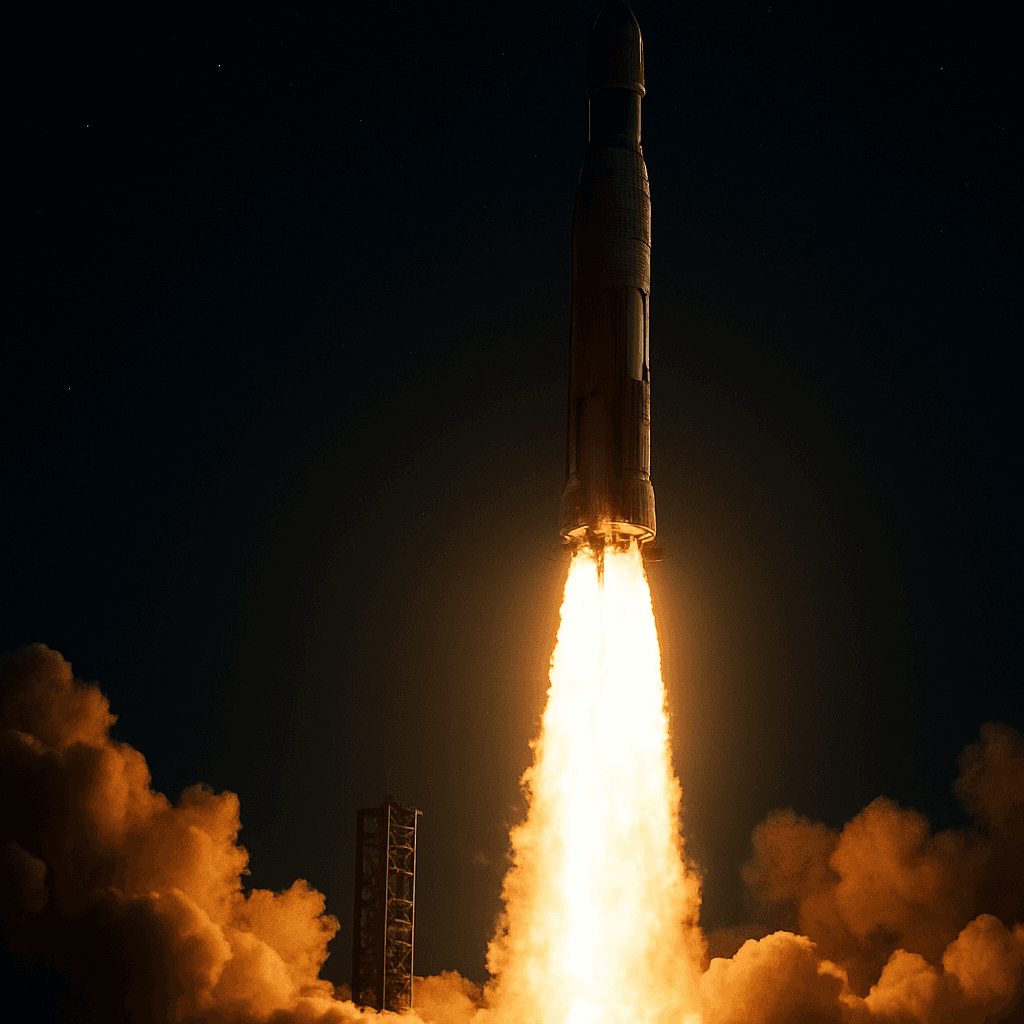
China Aerospace Science and Technology Corporation
Long March 4C | Unknown mission cargo is tracked as go for launch with target 2026-07-01T23:45:00+00:00. This mission is worth watching because it adds another data point to the launch cadence that keeps science, security, and exploration mission cargo moving.
Open sourceStarship’s next test is still gated by the Flight 12 mishap review
The FAA says Starship Flight 12 requires a SpaceX-led mishap investigation before return-to-flight decisions can be made.
Starship shapes SpaceX’s long-range reuse plans and major parts of NASA’s lunar architecture. The next real shift will be return-to-flight clarity, not speculation.
NASA’s Artemis III update reframed the 2027 mission as a crewed systems test
NASA has named the Artemis III crew and described the mission as a 2027 demonstration involving Orion and commercial lander test systems.
This is less about a single launch date than about architecture readiness across several interdependent systems.
Direct from the Source
What the agencies and companies actually said
The official statements worth reading — so you don't have to hunt through every agency feed and press release yourself.
Rocket Lab
launch providerRocket Lab added another HASTE launch from Virginia for the Defense Innovation Unit.
- Source type
- Company statement
- Source status
- official statement only
It shows Rocket Lab's hypersonic-test lane is active alongside ordinary satellite-launch cadence.
NASA Webb
space science missionNASA described Webb evidence for a black hole that may have formed before its surrounding galaxy.
- Source type
- NASA source context
- Source status
- NASA's Webb team is the primary source
The finding is a reminder that space exploration is not only about launch cadence; observatories like Webb are changing what astronomers think the young universe looked like.
What Moved
Changes that stick around after the headlines fade
These aren't just news cycles — they're real shifts in program state that will still matter next week.
It shows Rocket Lab has a defense and test-services lane separate from ordinary satellite deployment cadence.
- Previous
- HASTE looked like a niche variant behind Electron and Neutron
- Current
- New DIU demand gives HASTE a clearer defense test-services lane
The Bigger Picture
What this week's news is really about
Every update here connects to a longer question about where spaceflight is heading. Here's what's actually at stake.
Can Starship become operationally reusable?
The program is still in high-value flight-test mode, but return-to-flight confidence now depends on a formal mishap closeout.
- Latest development
- Flight 12 moved the next milestone from another launch target to a corrective-action and regulator-approval gate.
- Progress would look like
- A clean Flight 13 authorization, successful booster control, upper-stage data return, and a credible path toward recovery and refueling tests.
- Obstacle
- Full reuse needs repeatable vehicle survival, fast pad turnaround, regulatory confidence, and orbital refueling demonstrations.
- Next milestone
- FAA acceptance of Flight 12 investigation results and an official Flight 13 target.
Quick hits
Also worth knowing
Three smaller developments worth keeping on your radar.
It keeps responsive-space demand visible while Neutron remains the bigger medium-lift question.
Science missionsNASA's public launch schedule lists the Nancy Grace Roman Space Telescope for August 30, 2026.Roman is one of the next major astrophysics missions, but the date should be treated as a schedule entry until mission-specific updates confirm it.
Lunar infrastructureNASA lists multiple CLPS lunar-delivery items across 2026 and 2027.The Moon roadmap depends on cargo and surface services, not just crewed Artemis flights.
Artemis III prime crew members
Crew assignment is not evidence the mission will launch on time, but it is a concrete development that NASA is moving from architecture drawings into flight preparation.
This turns Artemis III from a program milestone into a named crewed mission with training and integration work now visible.
Webb caught a clue about black holes that may have formed first
NASA's Webb team reports evidence that a massive early-universe black hole in Abell2744-QSO1 may have formed before a mature host galaxy.
The image shows a lensed Little Red Dot in Pandora's Cluster, magnified into multiple views that let Webb study gas motion near a distant black hole.
It is a reminder that the same space ecosystem tracking rockets also expands the story of how the universe built its first structures.
You're caught up. Check back after the next source and editorial review.
What to Watch Next
The moments this briefing was watching
These were the events Space Now was watching from this briefing date.
Flight 12 mishap report or corrective-action summary
This will show whether Flight 13 is a short procedural reset or a deeper development pause.
New Glenn hotfire anomaly follow-up
It determines whether New Glenn's next mission returns to a normal campaign or remains under investigation pressure.
Swift Boost firms up or slips
It is the nearest NASA science schedule item and a useful example of when broad windows become watchable events.