
 Your Guide to Space
Nation capability profile
United States
The United States runs the busiest, most capable space program on Earth — but it is really a whole ecosystem, not one thing. SpaceX and its rivals launch on a cadence no one else matches, NASA runs Artemis and a deep bench of science missions, and a growing roster of private firms builds everything from crew capsules to commercial space stations.
The American story is a test of whether private launch muscle, NASA's exploration ambitions, and public science can reinforce each other — or whether they end up pulling the schedules in different directions.
Think of the United States less as a single agency and more as a giant integration problem: crew, cargo, stations, landers, orbital refueling, procurement, safety, and launch cadence all have to line up at once. When they do, it is spectacular. When one slips, the whole campaign waits.
Sources reviewed June 2026
Who sets the national direction
operational superpower with several high-risk transition programs
Artemis sequencing, Starship and Falcon cadence, the commercial-station transition, CLPS lunar delivery, Gateway, and science missions that keep the public invested.
Operating today
Falcon 9 and Dragon give the United States routine reusable launch and independent crew transport evidence.
NASA-led ISS operations, commercial crew, commercial cargo, and private astronaut missions give low Earth orbit a real operating base.
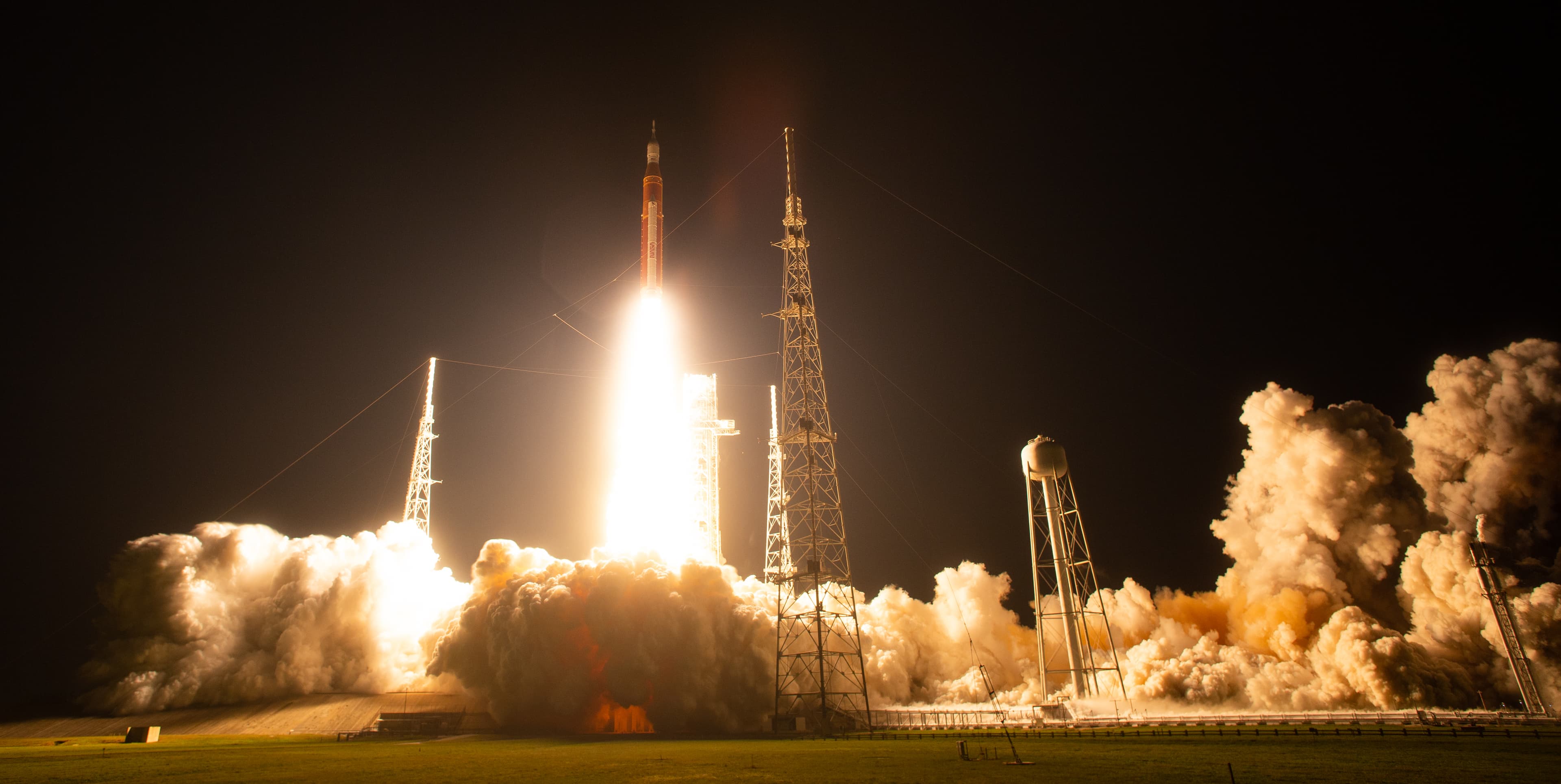
SLS and Orion have flight evidence in the Artemis campaign, while later missions must integrate landers, suits, Gateway, and surface systems.
NASA science, Earth observation, Mars, telescope, and outer-planet missions give the US program public value beyond transportation.
Still being built
Artemis still has to turn SLS, Orion, Starship HLS, Blue Moon, Gateway, suits, rovers, CLPS, and surface systems into a repeatable sequence.
Commercial LEO destinations have to clear certification, customer, transport, and service-procurement gates before ISS retirement pressure becomes acute.
Starship has to prove reliable payload delivery, recovery, refueling, and lunar-lander operations before it changes the whole roadmap.
Recent developments
Latest on United States
NASA Selects Starlink for Artemis III Mission
NASA has awarded SpaceX a contract to deliver laser communications capabilities for its Artemis III mission using Starlink. The post NASA Selects Starlink for Artemis III Mission.
Artemis attention has moved from audience size to hardware progress and partner follow-through
New Artemis coverage is less about NASA’s big Artemis II viewership claim and more about the next steps: Space.com points to Artemis III stacking work, while ESA highlighted an Artemis II crew visit tied to Orion’s European service module.
Starship hardware is progressing; flight status is still the real gate
Recent coverage centered on SpaceX’s 33-engine Super Heavy static fire and earlier Ship engine tests ahead of Flight 13, but no official launch date has followed.
Who runs it
| Agency or organization | Role |
|---|---|
| NASA | Civil exploration, science, commercial partnerships, Artemis, ISS, and commercial LEO. |
| SpaceX | Reusable launch, Dragon, Starlink, Starship, and Starship HLS. |
| Blue Origin | New Glenn, BE-4, Blue Moon, and reusable launch development. |
| ULA | High-value launch, Vulcan, national-security access, and mission assurance. |
| Axiom Space | Private astronaut missions and commercial station module path. |
| Vast | Fast commercial free-flyer station path and private ISS mission access. |
NASA
NASA: United States civil space agency leading Artemis, robotic science, commercial crew, commercial LEO transition, and major telescope missions.
SpaceX
SpaceX: Launch operator and spacecraft builder driving Falcon cadence, Starship development, Starlink deployment, Dragon missions, and lunar lander work.
Blue Origin
Blue Origin: Rocket and space-infrastructure company building New Glenn, lunar landers, engines, and long-term reusable launch capability.
ULA
United Launch Alliance: Launch provider operating Vulcan and Atlas-class heritage missions for national-security, science, civil, and commercial customers.
Axiom Space
Axiom Space: Commercial human-spaceflight company operating private ISS missions while developing Axiom Station modules and Artemis spacesuit services.
Vast
Vast: Commercial space-station company building Haven-1, flying precursor hardware, and pursuing a faster path to private crewed stations.
Rockets and missions in play
| Rocket, mission, or system | Role | Current status |
|---|---|---|
| Falcon 9 | Reusable orbital launch baseline | operational cadence |
| Starship | Full-reuse and lunar logistics test campaign | development and flight testing |
| Space Launch System | NASA crewed exploration launcher | Artemis flight evidence with cadence risk |
| Artemis | Moon-to-Mars exploration architecture | active multi-mission sequence |
| Commercial human spaceflight | ISS, private crews, and station transition | operational but demand still forming |
Falcon 9
Falcon 9: Operational partially reusable medium-lift rocket that made high-cadence commercial launch and booster landing routine.
Starship
Starship: Fully reusable super-heavy launch system under test for high-mass orbital transport, lunar logistics, Mars architecture, and Starlink deployment.
Space Launch System
Space Launch System: NASA's expendable super-heavy Artemis rocket for launching Orion and crew beyond low Earth orbit.
Artemis
NASA's Moon campaign is now a sequence of crewed flight evidence, Earth-orbit lander tests, Gateway and surface-system work, and a later lunar-surface return target.
Commercial human spaceflight
Commercial human spaceflight is not routine tourism. It is a set of transport, private astronaut, station, suit, and customer experiments trying to make orbital access more service-like.
What has changed lately
NASA's commercial LEO procurement language keeps the post-ISS transition as a live national capability question.
Artemis mission definitions now make the near-term sequence more about integration proof than a simple race back to the surface.
Starship, New Glenn, Vulcan, Neutron, Terran R, and Nova mean US launch advantage is no longer one vehicle story.
How it fits the bigger picture
The United States is the main test of whether private launch and public exploration can reinforce each other instead of pulling schedules apart.
Its roadmap risk is not ambition; it is integration. Crew, cargo, landers, stations, refueling, safety, and procurement all have to line up at once.
Access
What has to happen before traveling to space becomes available beyond governments, career astronauts, and the extremely wealthy? Professional crew transport and limited private astronaut missions are real; routine civilian orbital travel is still frontier.
Moon
Can the Moon evolve from a destination visited briefly into a place where humans remain, build infrastructure, and eventually travel for reasons beyond government exploration? Human lunar landing has historical proof; the modern surface-return and infrastructure stack is still under construction.
Infrastructure
What infrastructure would make spacecraft operate as part of a network rather than as isolated, disposable missions? Station logistics, rendezvous, docking, communications, and data relay are operational; depots, routine refueling, and shipyards are not.
Industry
Can space become a place where useful products, structures, fuel, and materials are created rather than merely delivered? Research and limited demonstrations exist; useful industrial scale is not yet proven.
Still unsettled
Can Artemis maintain a credible sequence after the first crewed lunar flight evidence without losing lander, suit, Gateway, and budget alignment?
Will commercial stations be ready early enough to avoid an ISS-to-private-destination gap?
How much of Starship's promise becomes operational service rather than a spectacular development campaign?
Where these facts come from
| Source | How it is used |
|---|---|
| NASA: Artemis campaign overview | Primary current source for Moon-to-Mars pages, Artemis sequencing, SLS/Orion, Gateway, CLPS, landers, surface systems, and Artemis Accords context. |
| NASA: Commercial Crew Program | Source for commercial crew and cargo service framing in the New Space Age and station guides. |
| NASA: Commercial Low Earth Orbit Development Program | Current public source for commercial station development, NASA's post-ISS transition model, and phased certification/service procurement language. |
| NASA: Commercial Space Stations | NASA source for the 2030 ISS transition pressure and the commercial station service model. |
| NASA: International Space Station Reference | NASA reference source for the five partner agencies, including Roscosmos, and the interdependent ISS operating model. |
| SpaceX: Starship | Primary company source for Starship capability claims and architecture descriptions. |
Keep exploring
NASA
NASA: United States civil space agency leading Artemis, robotic science, commercial crew, commercial LEO transition, and major telescope missions.
Moon Roadmap
Can the Moon evolve from a destination visited briefly into a place where humans remain, build infrastructure, and eventually travel for reasons beyond government exploration? Human lunar landing has historical proof; the modern surface-return and infrastructure stack is still under construction.
Why the Moon Matters
Why the Moon Matters: A guide to why lunar missions matter for technology, science, geopolitics, operations, resources, and Mars preparation.
Next steps
Keep the roadmap in view
Get major space updates, set launch reminder interest, or keep exploring the Roadmap that turns space progress into a readable system.